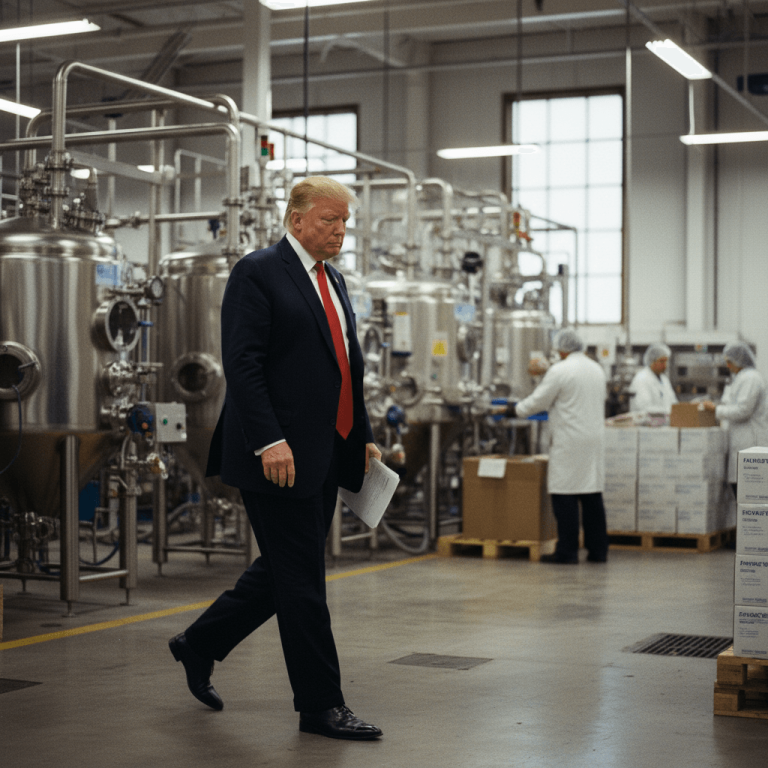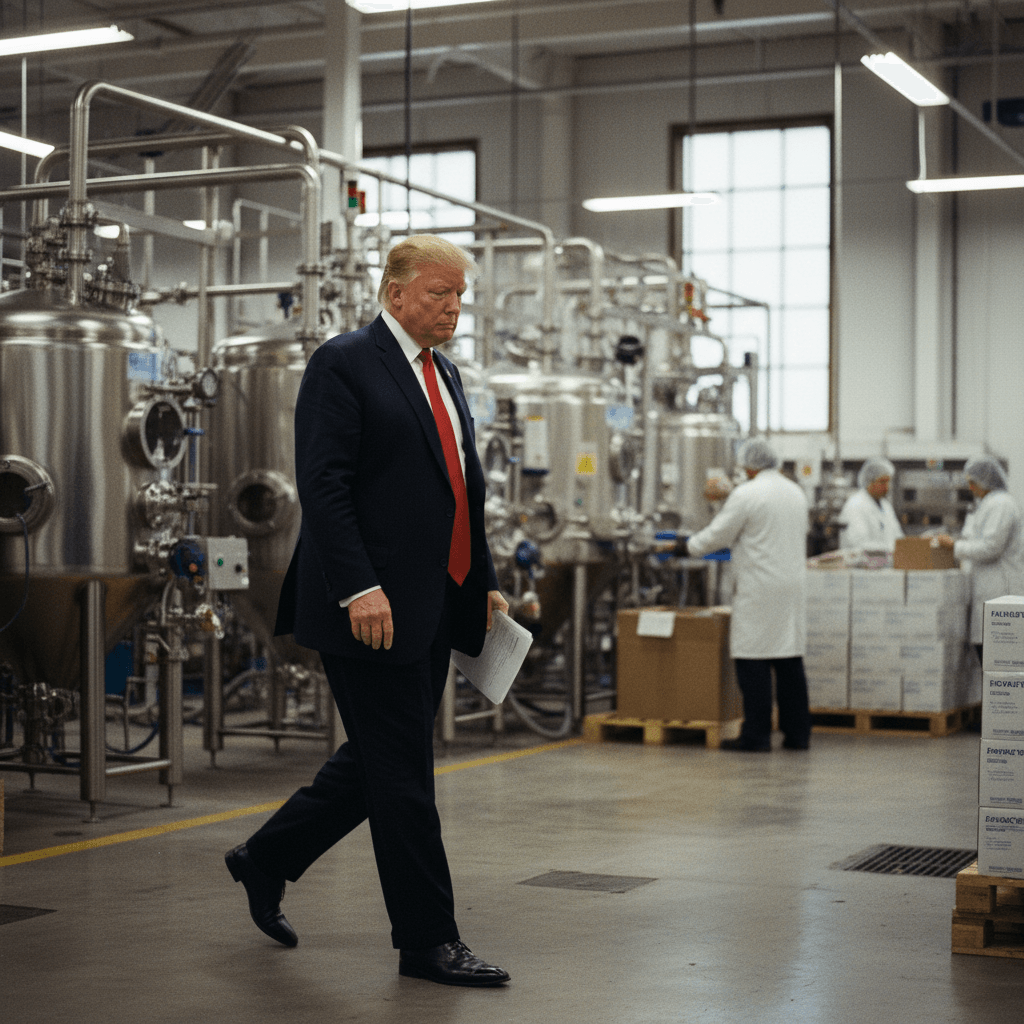
Trump walks through a bustling pharmaceutical factory, documents in hand.
The potential imposition of a 100% tariff on brand-name pharmaceuticals in the USA, as reported by USA Today, introduces a new layer of complexity for investors in the pharmaceutical sector. Such a policy shift could significantly alter the landscape for private equity and venture capital firms with holdings in pharmaceutical companies, particularly those focused on brand-name drugs.
Private equity firms often invest in pharmaceutical companies with the aim of improving operational efficiency and driving revenue growth through strategic initiatives. A substantial tariff could erode profit margins, potentially leading to decreased valuations and returns on investment. Venture capital firms backing innovative drug developers may also face challenges as the cost of bringing new drugs to market increases, impacting their ability to attract further funding or achieve successful exits.
The implications extend beyond direct investments in pharmaceutical companies. Institutional investors, including pension funds and endowments, which allocate capital to private equity and venture capital funds, could see adjustments in their portfolio performance. Fund managers may need to re-evaluate their investment strategies, shifting focus towards generic drug manufacturers or exploring opportunities in international markets less affected by the tariff.
The proposed tariff could also spur increased M&A activity as companies seek to consolidate operations and achieve economies of scale to offset the tariff’s impact. This may create opportunities for private equity firms to act as consolidators or to invest in companies positioned to benefit from the changing market dynamics. However, it also introduces uncertainty and risk, requiring investors to conduct thorough due diligence and assess the long-term implications of the policy on their investments.
About the Author