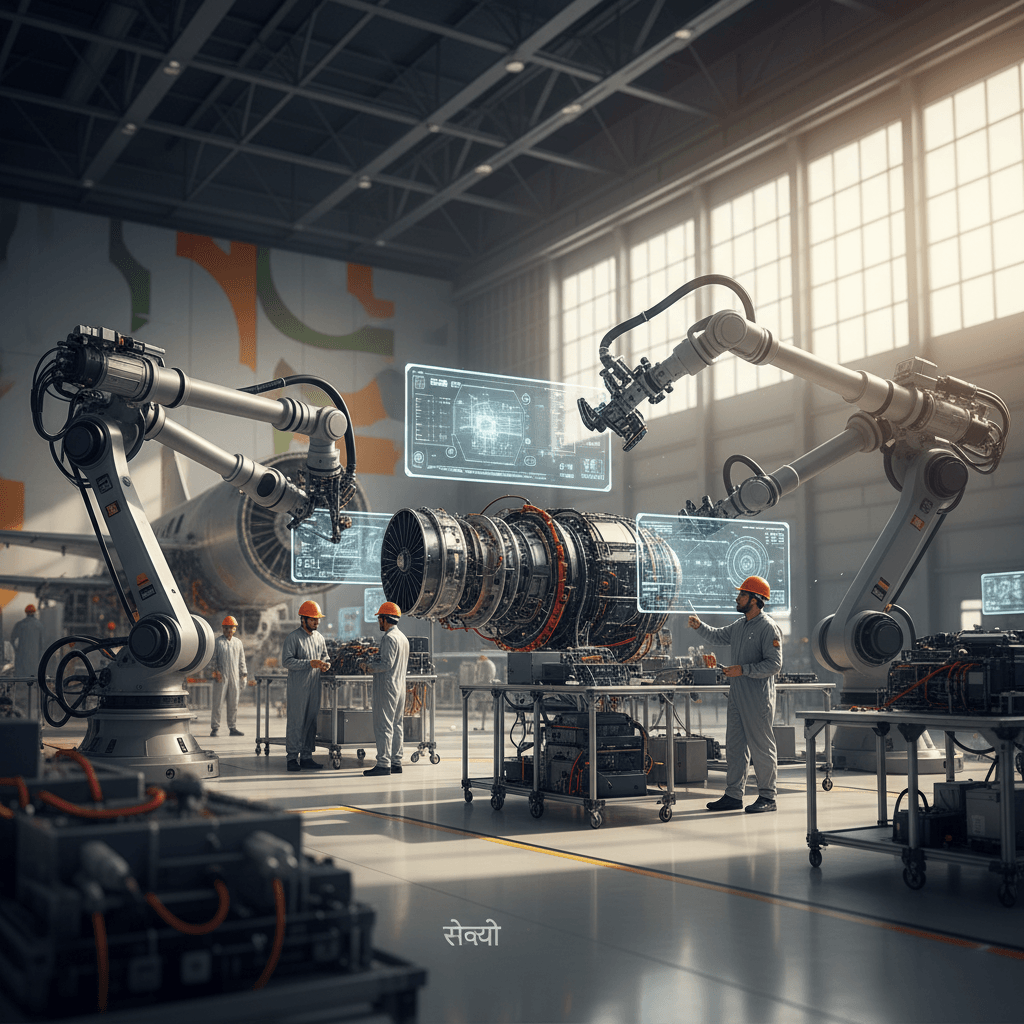
Engineers integrate aerospace systems with robotic assistance in a hangar.
India’s aerospace sector, known for its precision in manufacturing components, is now setting its sights on systems integration to enhance its strategic position and capture more significant value in the global market. According to a recent report, the sector must evolve beyond component manufacturing to take on responsibilities for performance, certification, and lifecycle support.
Currently, India excels in producing aerospace components. However, to become a strategic partner, Indian companies need to integrate these components into complete systems. This shift involves a higher level of responsibility, including ensuring the performance of the integrated systems, obtaining necessary certifications, and providing comprehensive lifecycle support.
This transition is essential for India to move up the value chain in the aerospace industry. By taking on systems integration, Indian firms can capture a larger share of the market value, positioning themselves as more than just component suppliers.
The move towards systems integration requires significant investment in research and development, as well as the development of new skills and capabilities within the Indian aerospace workforce. It also necessitates closer collaboration between industry, government, and academia to foster innovation and ensure the sector’s competitiveness.
Ultimately, India’s aerospace sector’s graduation to systems integration will not only enhance its value capture but also strengthen its role as a key player in the global aerospace market.
About the Author