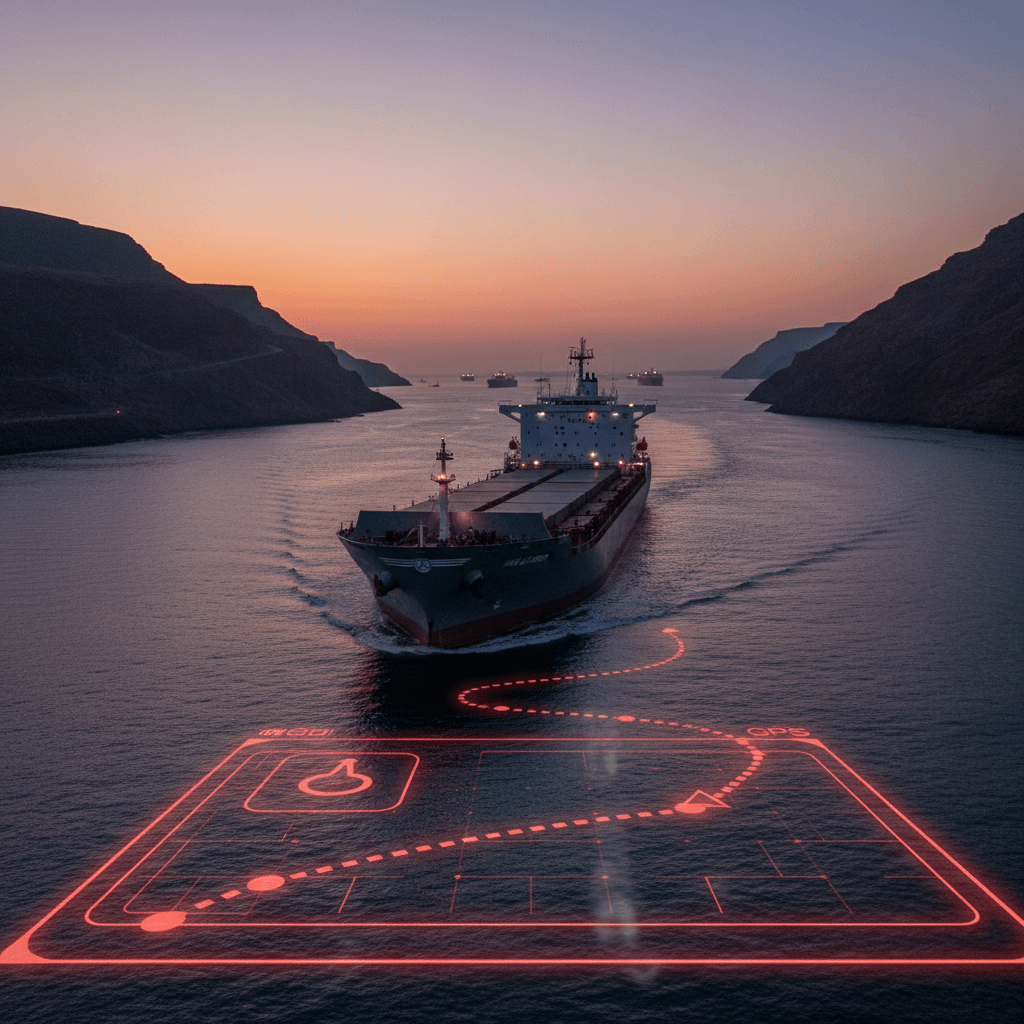
Ship navigating the Strait of Hormuz at dusk with disrupted GPS overlay.
Escalating tensions in the Strait of Hormuz are creating significant challenges for Indian shipping companies, with reports of GPS blackouts and increased mine warnings. These disruptions are not only complicating navigation but also raising concerns about the safety of vessels, particularly those carrying oil and chemicals.
The Strait of Hormuz, a critical waterway for global oil and gas transport, has seen a marked increase in navigational hazards. According to maritime officials, GPS systems are failing, forcing ships to rely on alternative, less precise methods of navigation. Additionally, frequent warnings of underwater mines are compelling vessels to navigate through specifically marked routes, adding time and complexity to their journeys.
“The situation is unprecedented,” stated a spokesperson for the Indian National Shipowners’ Association. “Our members are facing increased operational risks, which are directly impacting insurance premiums and overall shipping costs.” The association has advised its members to exercise extreme caution and implement enhanced security protocols when transiting the strait.
The decreased traffic volume in the region reflects the heightened risk environment. Insurers are reassessing their coverage terms, with some reportedly increasing premiums for vessels operating in the Strait of Hormuz. This could lead to higher transportation costs for oil and chemical shipments, potentially affecting commodity prices and supply chains.
Industry analysts suggest that these developments could prompt shipping companies to explore alternative routes, where feasible, or to invest in advanced navigation technologies to mitigate the risks. The long-term implications include potential shifts in shipping patterns and increased scrutiny of maritime security measures in the region.
About the Author