India's fuel policy: balancing global prices and consumer impact.
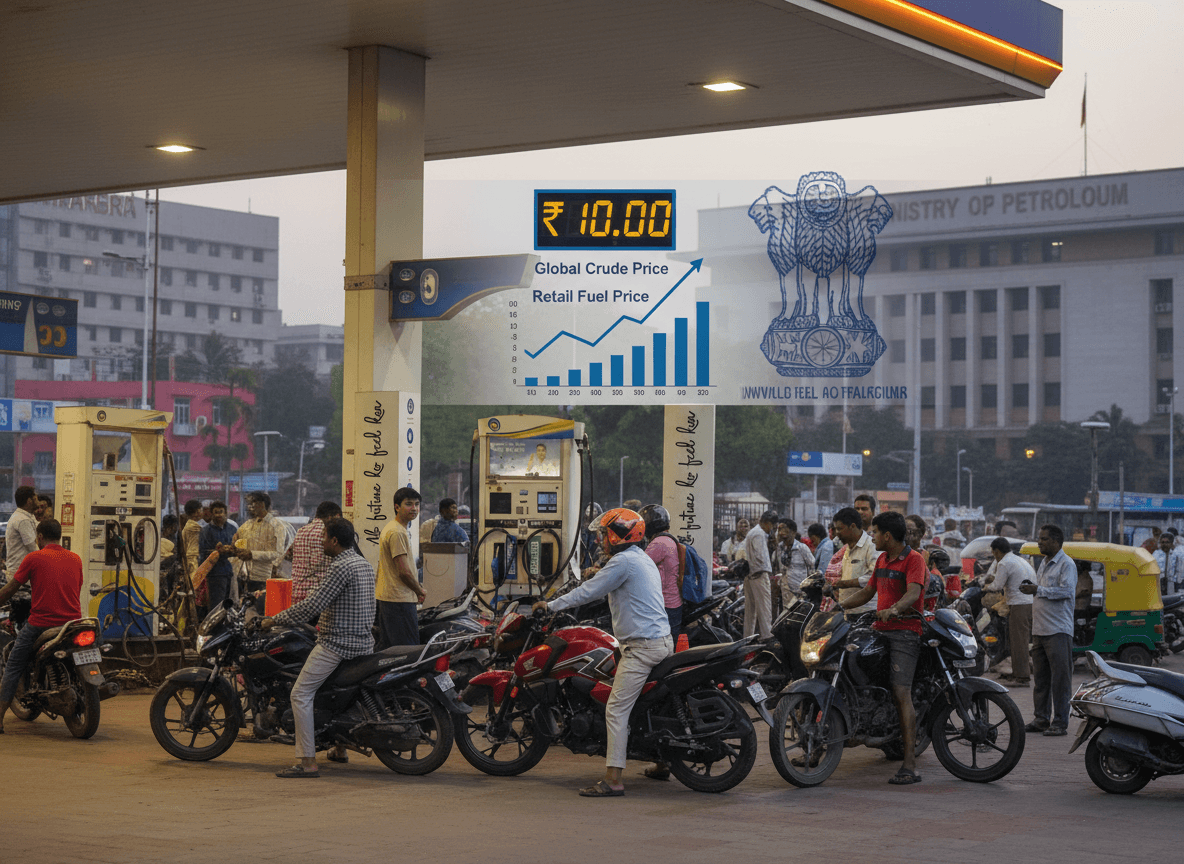
The Indian government has reduced the excise duty on petrol and diesel by ₹10, a move primarily aimed at easing the burden on oil companies grappling with surging global crude prices. This decision, reported by Economictimes.indiatimes.com, arrives as fuel costs continue to climb, potentially stirring public concern, especially with upcoming state elections on the horizon.
While the excise duty reduction might appear beneficial, consumers may not experience immediate price drops at the pump. The government’s intention is to stabilize the current rates rather than instigate a significant decrease. This approach suggests a focus on managing the financial health of oil companies during a period of high volatility in the global oil market.
The timing of this excise duty cut is noteworthy. With state elections looming, the government is likely attempting to mitigate potential public dissatisfaction over rising fuel costs. By absorbing some of the price pressure through reduced excise duties, the government aims to strike a balance between supporting oil companies and addressing voter concerns.
However, the long-term impact on consumers remains uncertain. If global crude prices continue to rise, the excise duty cut may only provide a temporary buffer. The effectiveness of this measure will depend on the interplay between global market dynamics and domestic policy adjustments.
About the Author