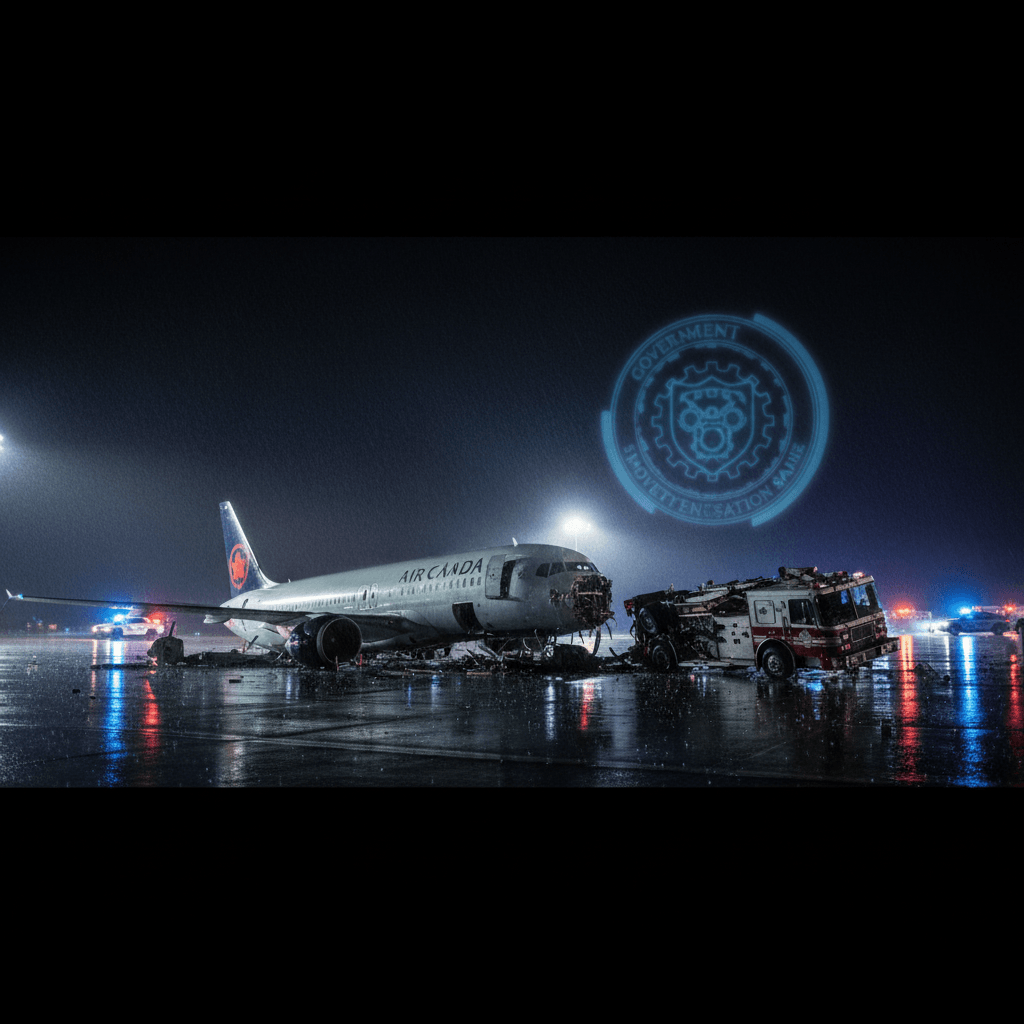
Aftermath of a runway incident involving an Air Canada jet and firetruck.
A recent incident at LaGuardia Airport, where an Air Canada jet collided with a firetruck, resulting in fatalities, has exposed critical failures in the airport’s safety systems. According to a report by the U.S. safety agency, the tracking system did not alert personnel to the impending collision, raising concerns about the effectiveness of current safety protocols.
The incident occurred when an Air Canada jet struck a firetruck on the runway. The firetruck, notably, was not equipped with a transponder, a device essential for tracking vehicle movements on airport grounds. The absence of this technology prevented the safety system from identifying and alerting controllers to the potential hazard.
The ongoing investigation is focusing on several key factors, including controller workload and staffing levels at LaGuardia. Preliminary findings suggest that the combination of system failure and potential human factors contributed to the deadly collision. The investigation aims to determine the root causes and recommend measures to prevent similar incidents in the future.
This event underscores broader concerns about runway safety at major airports. The lack of a functional tracking system, combined with potential staffing challenges, creates a heightened risk of accidents. The findings from the LaGuardia investigation are expected to prompt a review of safety procedures and technology investments across the aviation industry.
The incident serves as a reminder of the critical importance of robust safety systems and well-supported air traffic control operations in maintaining aviation safety standards. As the investigation progresses, the aviation industry will be closely monitoring the findings and recommendations to ensure the safety of passengers and personnel at airports worldwide.
About the Author