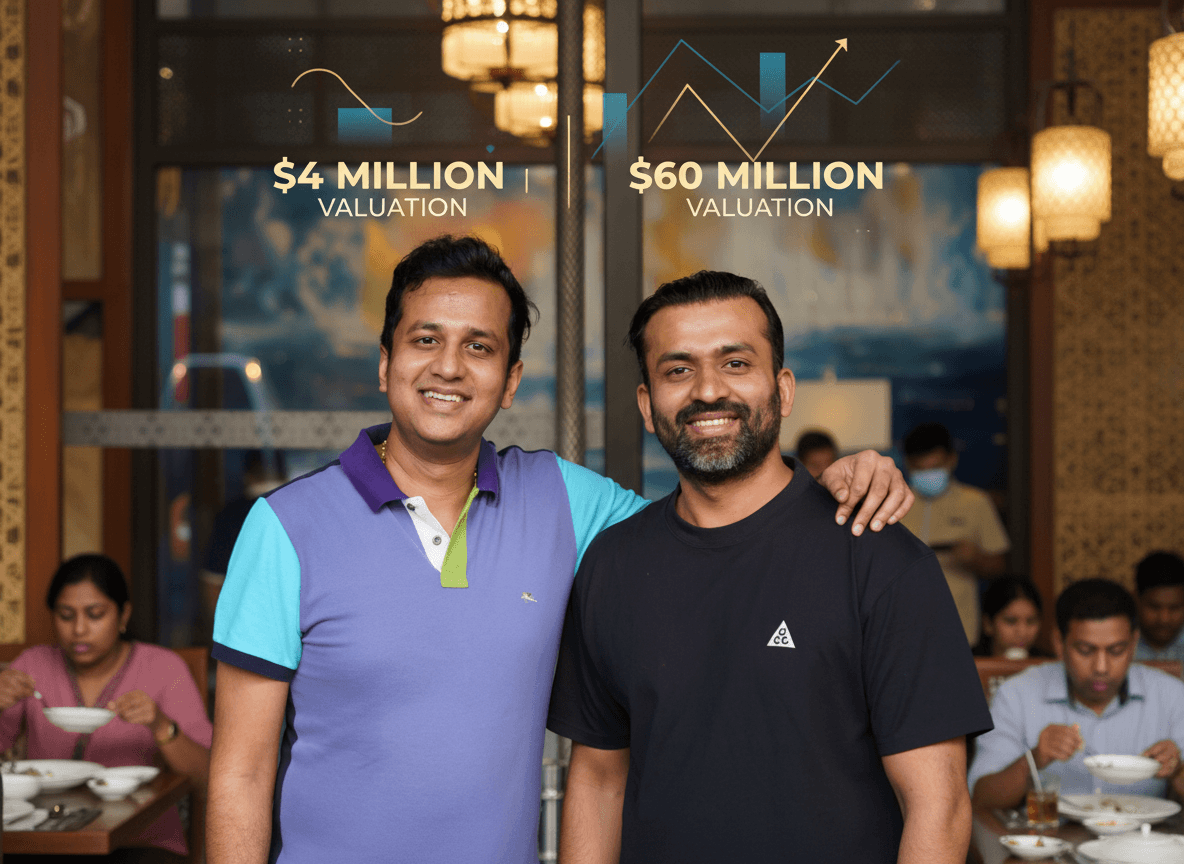
Burma Burma founders with valuation figures.
Mumbai-based restaurant chain Burma Burma has secured over ₹38 Cr (approximately $4 million) in a recent funding round, valuing the company at ₹500 Cr (about $60 million). Existing investor Negen Capital led the round, with participation from Endurance Capital and Coheron Wealth.
The company’s valuation has seen a significant increase, soaring 233% over the past three years from ₹150 Cr to ₹500 Cr. This latest capital infusion brings Burma Burma’s total funding to $11 million.
Burma Burma plans to allocate the new funds to expand its footprint into new cities and strengthen its presence in existing markets. Founded in 2014 by Ankit Gupta and Chirag Chhajer, the restaurant chain operates 21 locations across Delhi NCR, Mumbai, Bengaluru, Hyderabad, Kolkata, Ahmedabad, and Chandigarh, serving authentic Burmese cuisine.
Financially, Burma Burma reported a 48% increase in revenue to ₹106.1 Cr in FY25, up from ₹71.9 Cr in the previous fiscal year. The company also reduced its net loss by 79% to ₹1.3 Cr from ₹6.3 Cr in FY24. According to Burma Burma, outlet-level profitability stood at over 21% in FY25, with an EBITDA margin of around 8%.
Cofounders Chhajer and Gupta stated that the current fundraise would enable them to accelerate expansion in a measured way while solidifying their presence in markets where the brand has already shown strong traction.
Burma Burma faces competition from other casual dining Asian and Pan-Asian restaurants, including Berco’s, Mamagoto, Yum Yum Cha, and Mainland China.
This funding comes amid challenges in the restaurant sector, including a persistent LPG shortage caused by ongoing conflict in West Asia, which has led to losses for many restaurants. The central government has directed refineries to increase production to stabilize supplies.
The Indian food service market is projected to reach $125 billion to $153 billion by 2030-2031, with an expected CAGR of 10% to 12%. This growth is driven by rising incomes, urbanization, and digitization, with organized players expected to capture 55% of the market share by 2030.
About the Author