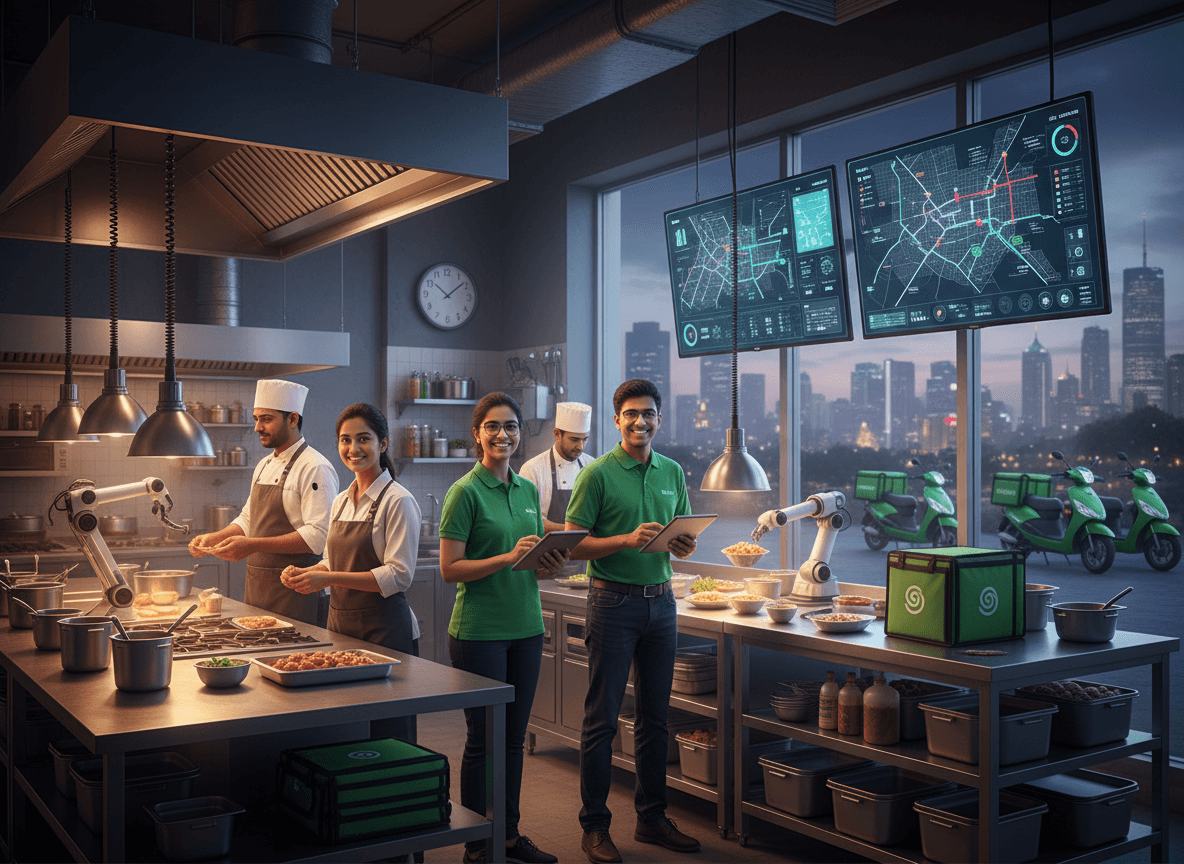
Quick food delivery team in a modern kitchen with city views.
Bengaluru-based quick food delivery startup Swish has raised $38 million in a Series B round led by Hara Global and Bain Capital Ventures, with participation from Alteria Capital, Stride Ventures, and existing backer Accel. The funding, announced in November 2024, will fuel Swish’s expansion across urban cities and investments in team growth, kitchen automation, and supply chain infrastructure.
Founded in 2024 by Aniket Shah, Ujjwal Sukheja, and Saran S, Swish aims to deliver fresh food in under 10 minutes by owning the entire delivery process, from kitchens to the delivery fleet. This model avoids third-party commissions and allows Swish to target densely populated urban areas, setting up cloud kitchens within a 1 km radius of customers.
Swish reports processing 20,000 orders per day, offering breakfast items, healthy bowls, desserts, and protein-rich meals. According to cofounder and CEO Aniket Shah, owning the food supply chain is crucial for delivering high-quality, fresh food quickly and at scale. The company plans to use the new funding to accelerate its expansion across more neighborhoods and cities.
With the latest round, Swish has raised a total of $58 million across three funding rounds, starting from a single cloud kitchen in Bengaluru. In March of the previous year, the company raised $14 million from Accel, Hara Global, and Unacademy founder Gaurav Munjal. Currently, Swish operates exclusively in Bengaluru but plans to expand to multiple cities.
The quick food delivery market faces intense competition. While quick commerce platforms like Blinkit, Zepto, and Instamart have gained traction, quick food delivery has proven challenging. Swiggy sunsetted its 15-minute food delivery platform Snacc due to unviable unit economics. Similarly, Zing abandoned its quick food delivery plans to focus on quick commerce delivery.
Eternal’s Blinkit operates a separate app called ‘Bistro’ for 15-minute food delivery, while Zepto has rolled out ‘Zepto Cafe’ in select cities. Cloud kitchen unicorn Rebel Foods also launched ‘Quickies’ for 15-minute deliveries. The performance metrics for these verticals remain undisclosed, with doubts lingering about the scalability of quick food delivery due to its capital-intensive nature and weak unit economics.
About the Author