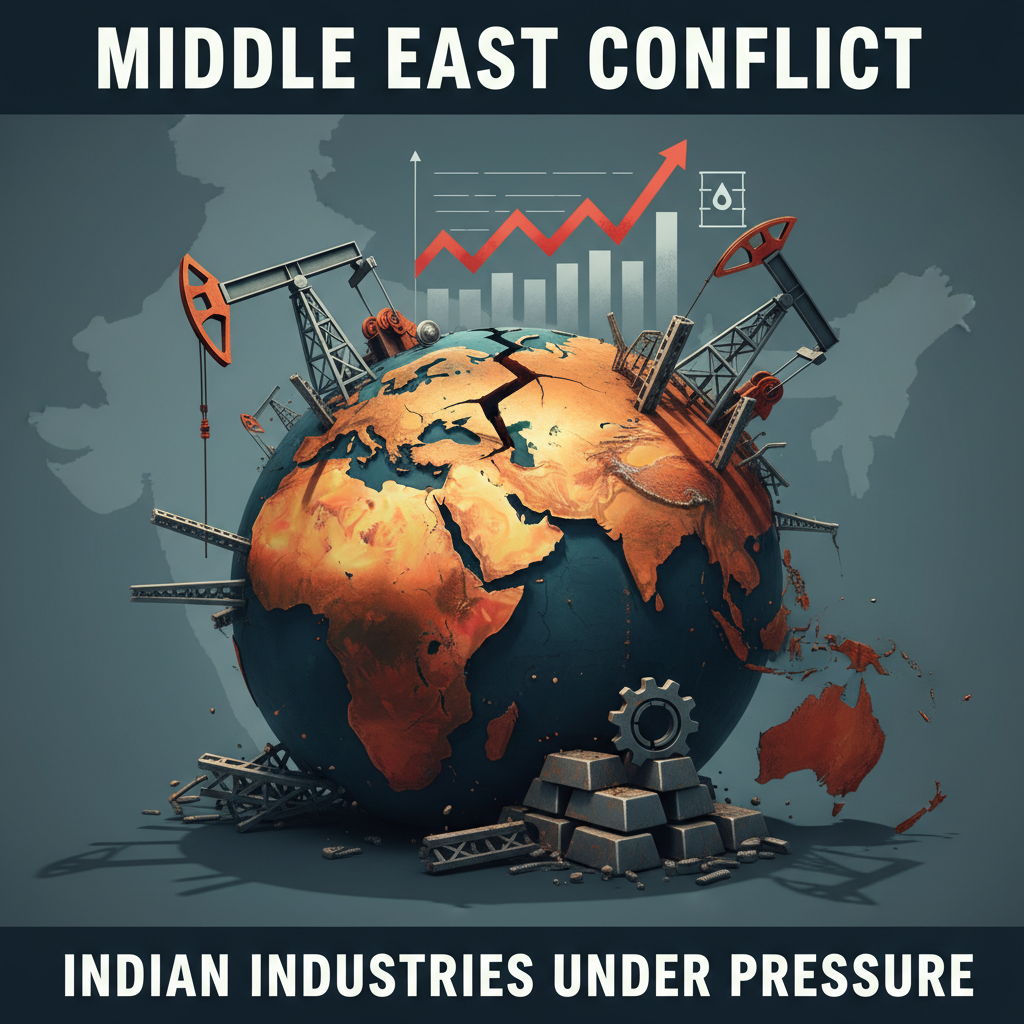
Middle East Conflict Impacting Indian Industries: Edible Oil Prices Surge and Steel Production Faces Cuts
The echoes of the ongoing Middle East conflict are reverberating far beyond the region, with significant consequences now rippling through the Indian economy. The conflict has triggered a series of events that are creating substantial challenges for key sectors, particularly impacting the cost of essential goods and the operational viability of crucial industries. This article examines the dual impact of these geopolitical tensions on India’s edible oil market and the steel production sector.
Edible Oil Market Under Pressure
One of the immediate effects of the conflict has been a surge in edible oil prices. Indian edible oil buyers are actively seeking to secure prompt shipments of vegetable oil, a direct response to rising prices and freight rates. The primary driver behind this scramble is concern over potential delivery delays for critical commodities like soyoil and sunflower oil. This situation underscores the interconnectedness of global markets and the vulnerability of supply chains to geopolitical instability.
The situation is further complicated by the reluctance of refiners to purchase at current high price levels. This dynamic could potentially lead to shifts in global prices and, subsequently, impact local supplies within India. The Middle East conflict, acting as a catalyst, has exposed the fragility of the edible oil market and the heightened risks associated with sourcing essential food supplies during times of geopolitical uncertainty.
Steel Production Faces Cuts
Simultaneously, the Indian steel industry is facing its own set of challenges. Numerous small Indian steel producers are warning of impending production cuts, with some even facing complete shutdowns. The root cause of these difficulties is the disruption in gas supplies, which is a critical component of steel production processes. These disruptions, coupled with escalating coal costs fueled by the broader geopolitical tensions, are severely impacting the margins of steel manufacturers, especially in the industrial hub of Gujarat.
The confluence of these factors paints a concerning picture for the Indian steel sector. The rising costs of production, combined with supply chain disruptions, threaten to slow down manufacturing output, potentially impacting broader economic growth and employment within the industry. The Middle East conflict is thus not only affecting the cost of consumer goods but also undermining the operational stability of key industrial sectors.
The Broader Economic Impact
The combined effect of these disruptions – rising edible oil prices and potential steel production cuts – creates a challenging environment for the Indian economy. The increased costs of essential food items and industrial inputs can contribute to inflationary pressures, potentially impacting consumer spending and overall economic stability. The situation highlights the critical need for diversified supply chains and proactive measures to mitigate the risks associated with geopolitical instability.
The current scenario serves as a stark reminder of how quickly and profoundly global events can impact local industries. The Indian industries, in particular, are feeling the pinch of the Middle East conflict, underscoring the importance of strategic planning and risk management in an increasingly volatile global landscape. The interplay of supply chain disruptions, price fluctuations, and geopolitical tensions is creating a complex web of challenges that require careful navigation by both industry stakeholders and policymakers. The economic impact is clearly negative, as the ongoing issues related to edible oil prices and steel production continue to evolve, demanding constant monitoring and adaptive strategies.
Source: Industry-Economic Times
About the Author