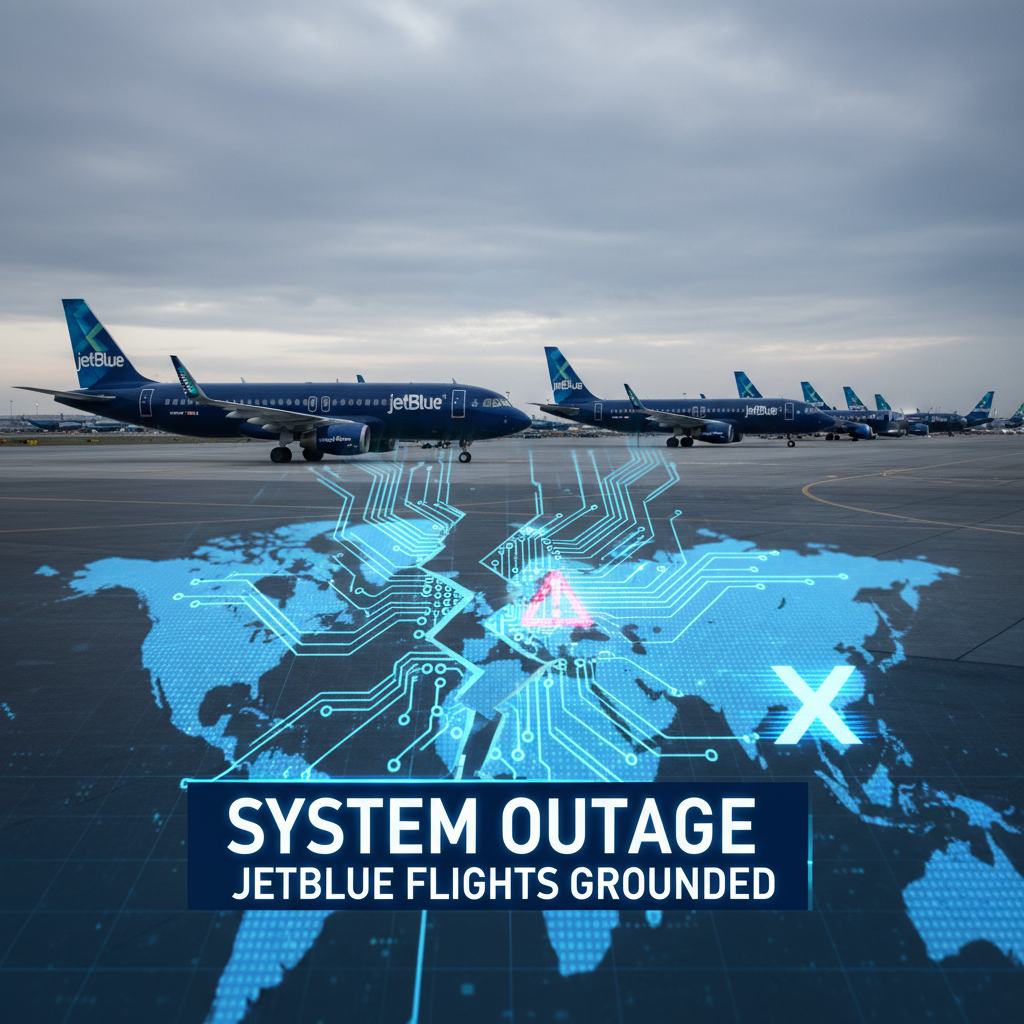
The hum of servers filled the air, a familiar backdrop to the JetBlue operations center in New York. On the screens, a sea of red alerts flickered, each one a digital flag signaling the nationwide ground stop. It was a Tuesday morning, and the airline, along with its passengers, was caught in the throes of a system outage.
The Federal Aviation Administration (FAA) had issued a ground stop, a rare but critical measure, preventing all JetBlue flights from taking off. The cause: a system-wide failure, the details of which were still emerging. For the IT team, it was a race against the clock. Every minute of downtime translated to thousands of dollars in losses and countless frustrated travelers.
“It’s a reminder of how fragile these systems can be,” said aviation analyst, Mary Jones, in a call with reporters later that day. Jones noted that the incident, though brief, highlighted the airline industry’s increasing reliance on complex technological infrastructure. The grounding, which lasted for a few hours, impacted flights across the country. It was a stark illustration of the cascading effects of a single point of failure.
The outage, which started earlier that morning, was resolved within a few hours. JetBlue’s systems were back online, and flights gradually resumed. But the incident served as a wake-up call. According to a report by the Department of Transportation, system outages cost airlines an estimated $100 million annually in 2023. The cost includes not only direct losses from delayed or canceled flights, but also the ripple effects on crew scheduling, customer service, and long-term brand reputation.
The technical details remain somewhat opaque. JetBlue has not released specifics about the nature of the system failure, citing ongoing investigations. However, experts point to the increasing complexity of airline IT systems. They are a network of interconnected software and hardware components, from flight management systems to reservation platforms, all of which are vulnerable to glitches and cyber threats.
Moving forward, the industry is focused on enhancing system resilience. This includes investing in redundant systems, strengthening cybersecurity protocols, and developing more robust disaster recovery plans. The goal is to minimize the impact of future disruptions and keep the skies open for travelers.
The incident serves as a lesson in the delicate balance between technological advancement and operational reliability. It’s a reminder that even the most sophisticated systems are ultimately dependent on their weakest link, and that vigilance is a constant requirement in the world of aviation.
About the Author