India’s API Exports Surge, Surpassing Imports in FY25: A Boost for Self-Reliance
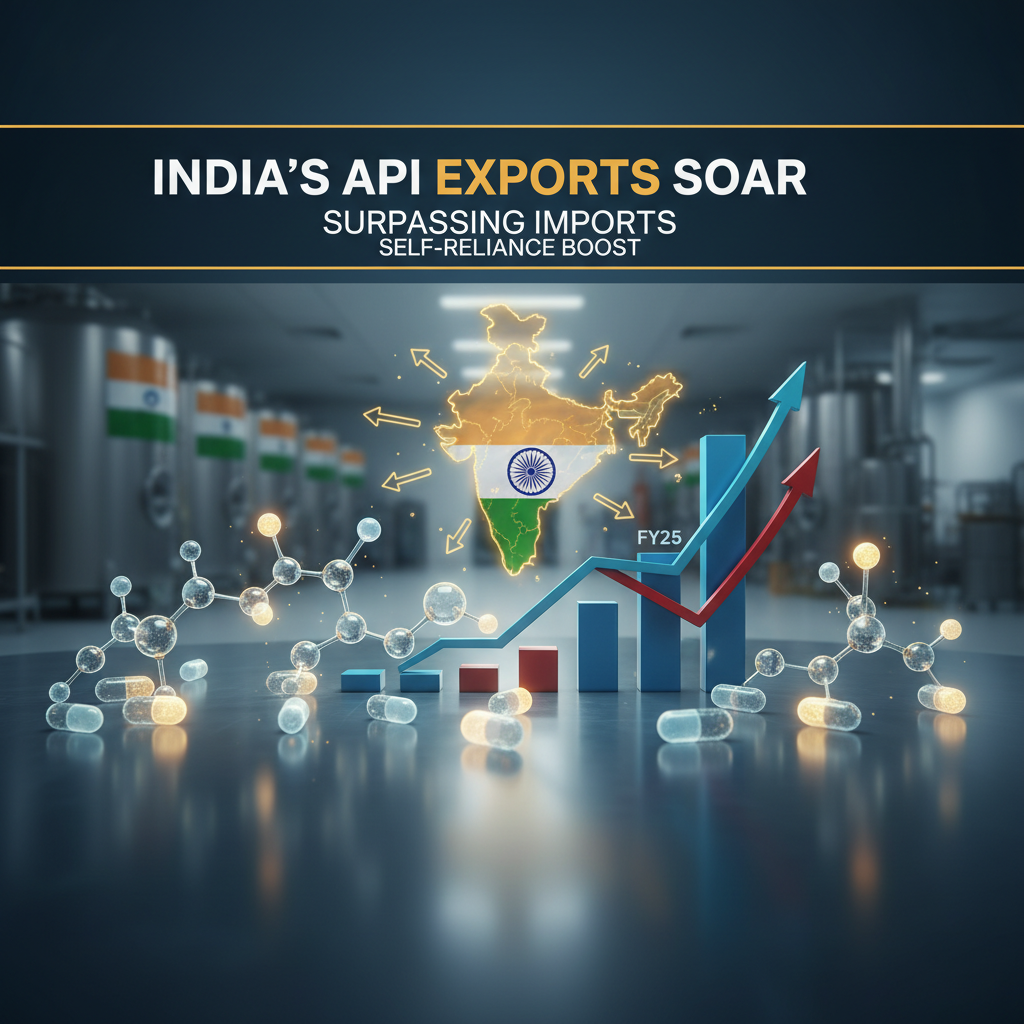
India’s pharmaceutical sector is experiencing a significant transformation, marked by a notable shift in its trade dynamics. According to recent reports, the nation’s exports of active pharmaceutical ingredients (APIs) reached an impressive Rs 41,500 crore during the last fiscal year (FY25). This achievement is particularly noteworthy because it surpasses the import figures, which stood at Rs 39,215 crore. This positive trend underscores India’s growing strength in the pharmaceutical manufacturing sector and its strategic moves towards self-reliance.
The Rise of API Exports: A Strategic Shift
The surge in API exports reflects a concerted effort by India to strengthen its position in the global pharmaceutical market. APIs are the crucial components that make up the active part of any drug. This increase in exports indicates a greater capacity for API manufacturing within India, reducing the need to depend on imports. This is a crucial step for the Indian government in its goal of establishing a self-reliant economy.
Government Policy: The Production Linked Incentive (PLI) Scheme
A key driver behind this shift is the government’s Production Linked Incentive (PLI) scheme. This scheme is strategically designed to boost domestic manufacturing by providing incentives to companies that invest in local production. The PLI scheme is particularly aimed at reducing import connections, especially those with China. By encouraging local manufacturing, the government aims to decrease dependency on external sources and strengthen the domestic pharmaceutical industry.
Cutting Ties with China
The focus on reducing import connections with China is a significant aspect of this policy. China has been a major supplier of APIs to India. By promoting local manufacturing, India seeks to reduce its vulnerability to supply chain disruptions and geopolitical risks. This strategy aligns with the broader goal of making India a more resilient and self-sufficient economy.
Implications for the Pharma Manufacturing Sector
This positive trend has several implications for the pharmaceutical manufacturing sector. First, it highlights the growing competitiveness of Indian API manufacturers on a global scale. Second, it suggests that the government’s policy initiatives are beginning to yield tangible results, fostering growth and innovation within the sector. Third, the increase in exports will likely contribute to economic growth, creating jobs and attracting investment.
Looking Ahead
The success of India in surpassing its API imports with exports in FY25 marks a turning point for its pharmaceutical industry. With continued government support and strategic policy implementation, the sector is well-positioned for sustained growth. The focus on self-reliance, coupled with the PLI scheme, is set to further enhance India‘s role as a key player in the global pharmaceutical market. The nation’s ability to reduce reliance on external suppliers, particularly China, demonstrates its commitment to economic independence and resilience in the face of global challenges.
The Indian government’s strategic initiatives, coupled with the efforts of domestic manufacturers, are paving the way for a more robust and self-reliant pharmaceutical sector. This shift not only benefits the Indian economy but also strengthens its position on the global stage, making it a more significant player in the pharmaceutical industry. The future looks promising, with continued growth and innovation expected to drive further success.
Source: Industry-Economic Times
About the Author