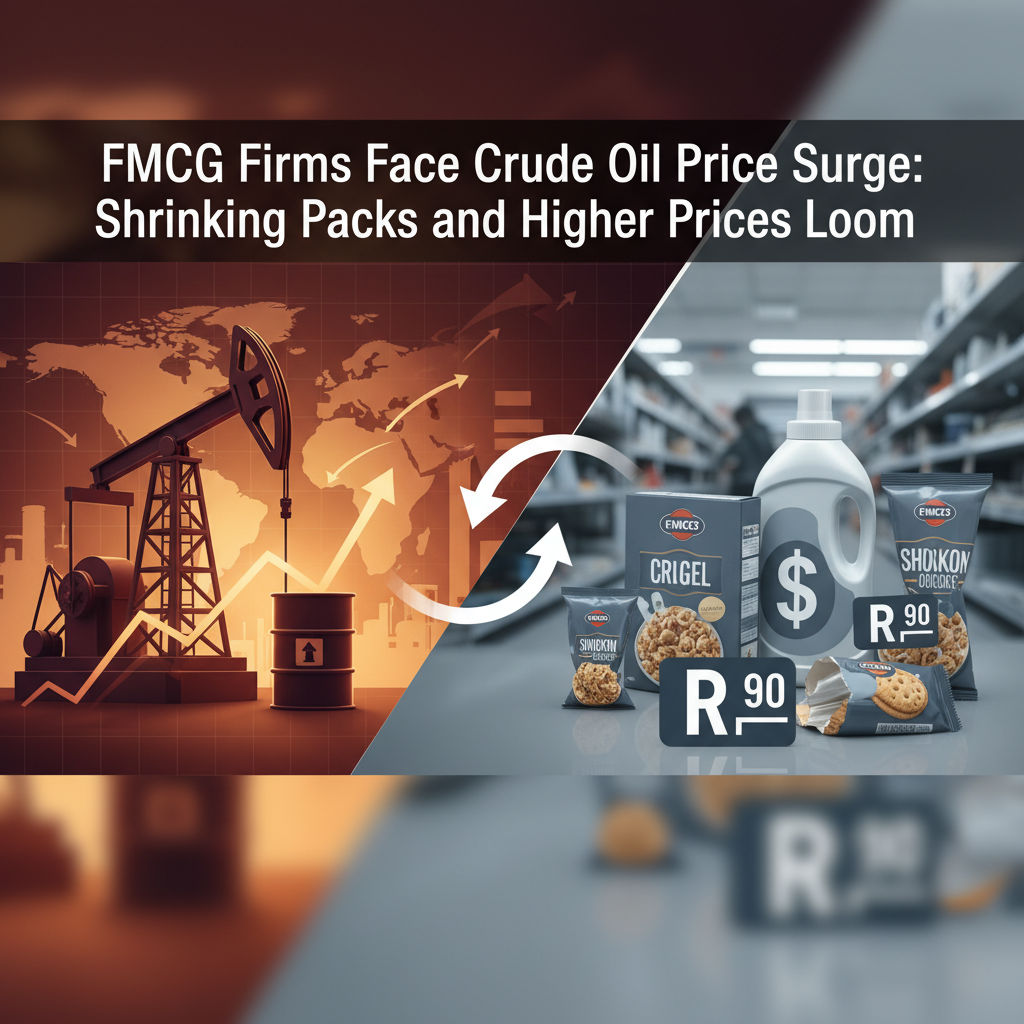
FMCG Companies Grapple with Crude Oil Price Surge: A Shift in Packaging and Pricing
The fast-moving consumer goods (FMCG) sector is once again at a crossroads. Just as the industry began to breathe a collective sigh of relief following recent GST cuts, a new challenge has emerged: a sharp increase in crude oil prices. This unwelcome development is forcing FMCG companies to revisit their packaging strategies and consider difficult decisions regarding product pricing. The ripple effects of this situation are poised to impact both businesses and consumers alike.
The Dual Challenge: Shrinking Pack Sizes and Rising Prices
The primary response from FMCG companies to the rising cost of crude oil, as reported by the Economic Times, involves two key strategies: shrinking pack sizes and, potentially, increasing prices. These measures are being considered to mitigate the impact of the crude oil shock. The decision to downsize product packaging or raise prices is not taken lightly. It reflects the delicate balance FMCG companies must maintain between profitability and consumer affordability.
The connection between crude oil prices and packaging is direct. Crude oil is a fundamental component in the production of polymers, the raw materials used extensively in packaging. As crude oil prices climb, so do the costs of these essential materials. This, in turn, increases the overall cost of producing and distributing consumer goods. The options available to FMCG companies are limited, making the situation even more complex. They can either absorb the increased costs, which would impact their profit margins, or pass them on to consumers, which could affect sales volumes.
Navigating Global Disruptions and Inflationary Pressures
The current situation is compounded by broader macroeconomic factors. FMCG companies are not operating in a vacuum; they are grappling with global supply disruptions and persistent inflationary pressures. The Economic Times article highlights these concerns, underscoring the interconnectedness of these challenges. Supply chain bottlenecks, which have plagued the global economy, can further inflate costs and create uncertainty. Inflation erodes consumer purchasing power, making it more difficult for FMCG companies to pass on increased costs without risking a decline in demand.
Packaging Companies Seek Alternative Polymer Sources
The impact of rising crude oil prices is not confined to FMCG companies. Packaging companies, which supply the materials for product packaging, are also feeling the strain. These companies are actively seeking alternative polymer sources to reduce their reliance on crude oil-based materials. This proactive approach underscores the industry’s commitment to finding sustainable and cost-effective solutions. The search for alternative materials may involve exploring bio-based polymers or investing in more efficient manufacturing processes. However, these transitions require time, investment, and careful evaluation to ensure that they meet the necessary performance and safety standards.
The Aftermath of GST Cuts and Future Prospects
The timing of the crude oil price surge is particularly unfortunate for the FMCG sector. The recent GST cuts had provided a temporary respite, offering some relief to both businesses and consumers. However, this positive development is now overshadowed by the escalating cost of raw materials. The future prospects for the FMCG industry will depend on several factors: the trajectory of crude oil prices, the effectiveness of cost-saving measures, and the overall health of the global economy. FMCG companies will need to demonstrate agility and innovation to navigate these challenges successfully.
In conclusion, the combination of rising crude oil prices, global supply disruptions, and inflationary pressures presents a significant challenge for the FMCG industry. FMCG companies and packaging companies are responding by revisiting packaging strategies, exploring alternative polymer sources, and considering necessary pricing adjustments. The coming months will be critical in determining how the sector adapts to these shifting market dynamics and maintains its ability to serve consumers effectively. The Economic Times article highlights the urgent need for strategic planning and decisive action within the FMCG sector.
About the Author