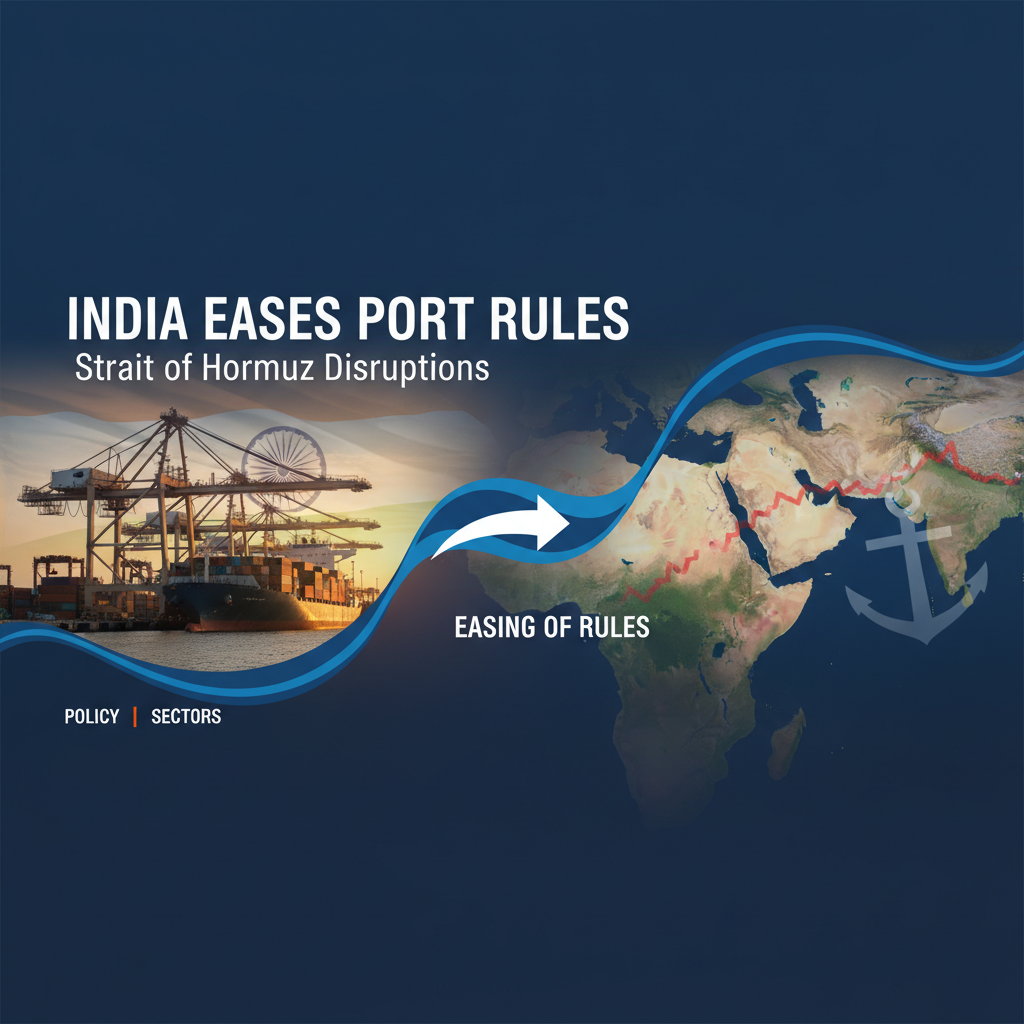
India Eases Port Procedures Amidst Strait of Hormuz Disruptions
In a move designed to alleviate the pressures faced by businesses and shipping lines, India has temporarily relaxed its import regulations for export shipments that have been forced to return due to the ongoing crisis in the Strait of Hormuz. This proactive measure, announced recently, underscores India’s commitment to supporting its trade partners during times of global instability, specifically when it comes to maritime routes.
Easing the Burden: Temporary Waiver of Procedures
The core of this policy change involves a 15-day waiver of standard port procedures. This means that vessels carrying export cargo, which have been compelled to turn back due to the volatile situation in the Strait of Hormuz, can now unload their goods at Indian ports without having to undergo the usual, often time-consuming, import processes. This streamlined approach offers immediate relief to traders and shipping companies, minimizing potential delays and reducing operational costs. The decision by India, as reported by the Industry-Economic Times, reflects a pragmatic response to the challenges posed by disrupted shipping routes.
The Customs authorities will, however, remain vigilant. While simplifying the process, they will meticulously verify all details related to the returned cargo. Furthermore, the policy stipulates that any export incentives previously granted for these goods will be cancelled. This aspect ensures compliance and prevents misuse of the relaxed regulations, maintaining the integrity of the trade system while providing necessary support. The Customs is taking this step to ensure that the process is streamlined and there is no room for discrepancies.
Why This Matters: Supporting Businesses and Addressing Disruptions
The primary motivation behind this policy shift is to offer crucial support to businesses that are directly affected by the disruptions in maritime routes. The Strait of Hormuz, a critical chokepoint for global oil and trade, has seen increased tensions, leading to potential delays and increased shipping costs. By easing import rules, India aims to help traders and shipping lines navigate these challenging circumstances, ensuring that goods can be rerouted and handled with minimal disruption.
This proactive stance by India is a testament to its understanding of the interconnectedness of global trade and its willingness to act decisively to mitigate the impact of geopolitical events. The policy not only provides immediate relief but also sends a clear signal of India’s commitment to maintaining a stable and supportive environment for international trade, even in the face of adversity. This is especially important for the sectors that are directly involved with the import and export of goods.
Looking Ahead
The temporary nature of this waiver, with a defined 15-day timeframe, suggests a measured approach. India is carefully balancing the need to support businesses with the importance of maintaining the integrity of its trade regulations. As the situation in the Strait of Hormuz evolves, it is likely that India will continue to monitor the situation and adapt its policies as necessary. This approach allows for flexibility and responsiveness, ensuring that India remains a reliable partner in global trade.
The decision to ease port procedures for rerouted cargo is a significant step, demonstrating India’s commitment to supporting the shipping industry and international trade during times of crisis. The temporary waiver, coupled with the measures to ensure compliance, reflects a well-considered strategy to minimize disruption and provide necessary assistance to businesses affected by the ongoing situation. The swift action by India, as highlighted in the Industry-Economic Times, underscores its dedication to maintaining a stable and supportive environment for trade.
About the Author