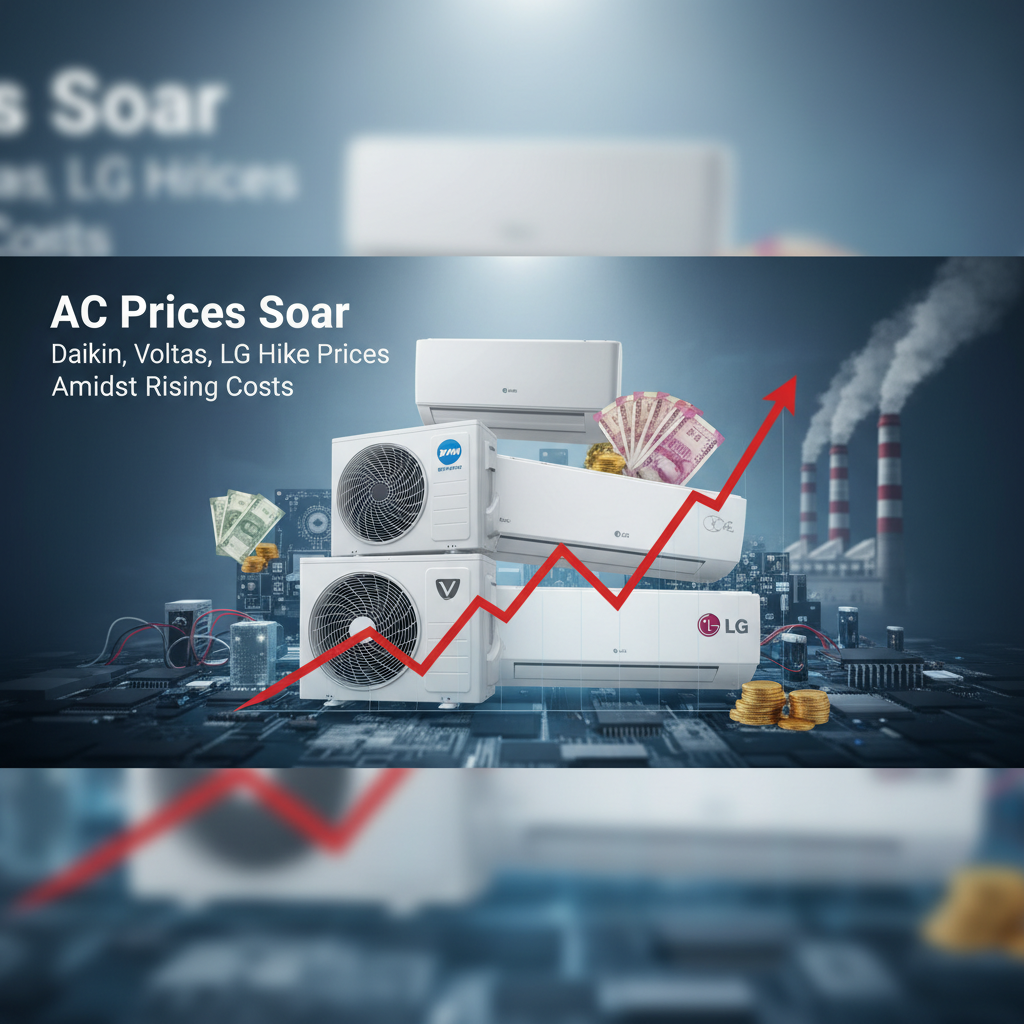
AC Prices Soar: Daikin, Voltas, LG Hike Prices Amidst Rising Costs
As the mercury climbs, so too are the prices of staying cool. Consumers can anticipate paying more for air conditioners this year, with leading brands like Daikin, Voltas, and LG set to implement price hikes ranging from 5% to 15% between February and April. This adjustment reflects a confluence of factors impacting the electronics manufacturing sector, ultimately affecting the wallets of consumers seeking relief from the summer heat.
Why Are Air Conditioner Prices Increasing?
Several key drivers are pushing up the cost of air conditioners. According to industry reports, the primary culprits include the escalating costs of raw materials, the depreciation of the Indian rupee, and increased freight charges. These elements combine to create a challenging environment for manufacturers, who are compelled to pass on some of these costs to the end-user. The specifics of these influences are:
- Increased Raw Material Costs: Materials like copper, essential for AC production, have become more expensive, increasing the overall manufacturing expenses.
- Weakening Rupee: A weaker rupee makes importing components and materials more expensive, further contributing to higher costs.
- Higher Freight Charges: Rising transportation costs add another layer of expense, affecting the final price of the product.
The Impact on Consumers
The price increases by Daikin, Voltas, and LG, among other brands, will likely affect consumer purchasing decisions, especially as the demand for air conditioning units typically surges during the hot summer months. Consumers may need to reassess their budgets and explore different options to stay within their financial constraints. The price hikes could potentially impact sales volumes and market dynamics within the electronics manufacturing sector.
Key Players in the Price Hike
Several major players in the air conditioning market are directly involved in these price adjustments. Daikin, Voltas, and LG, known for their significant market presence, are among the companies implementing these price increases. These brands are responding to the economic pressures by strategically adjusting their pricing models to maintain profitability in a challenging market environment.
Looking Ahead
As the summer season approaches, the market dynamics for air conditioners will be closely watched. The interplay of consumer demand, raw material costs, and currency fluctuations will determine the industry’s trajectory. Consumers are encouraged to compare prices and consider energy efficiency when selecting air conditioning units, as these factors will influence both the initial purchase and the long-term operational costs.
The decision by Daikin, Voltas, and LG to raise prices underscores the broader economic challenges facing the electronics manufacturing sector. These changes highlight the interconnectedness of global markets and the impact of macroeconomic factors on consumer goods. Understanding these dynamics is key for both businesses and consumers navigating the evolving landscape of the air conditioning market.
About the Author