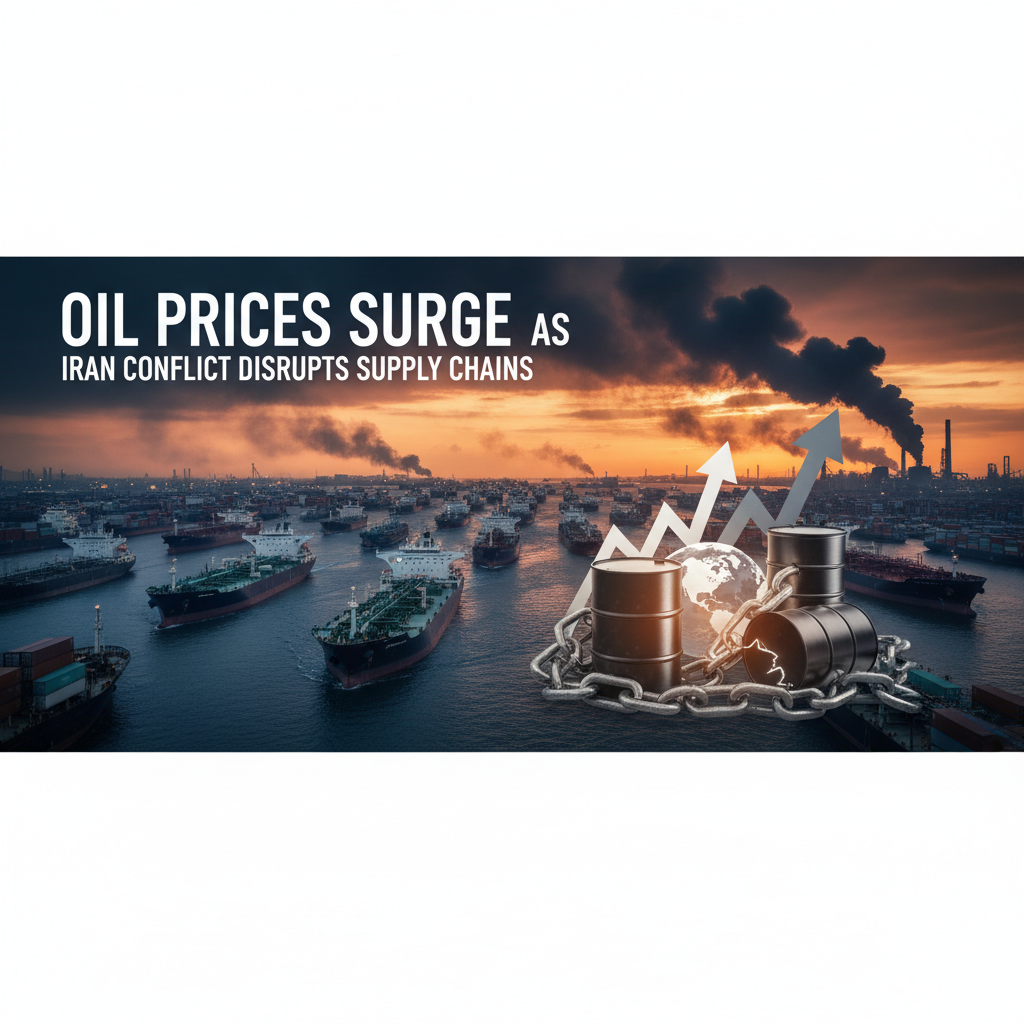
Oil Prices Surge as Iran Conflict Disrupts Supply Chains
The global oil market experienced a significant shock on Friday, with U.S. crude oil futures climbing over 12% per barrel. This surge, outpacing the gains seen in Brent, is a direct result of the escalating U.S.-Iran conflict. As tensions rise in the Middle East, the potential disruption to oil supplies has sent prices soaring, creating considerable concern among industry analysts and consumers alike.
The Impact of Conflict on Oil Exports
The core of the problem lies in the effective closure of the Strait of Hormuz, a critical chokepoint for global oil transit. The U.S.-Iran conflict has brought a halt to significant oil exports through this vital waterway. This closure has far-reaching consequences, as the Strait of Hormuz is a key route for a substantial portion of the world’s oil supplies. The situation is further complicated by the fact that buyers are actively seeking available barrels, exacerbating the supply crunch and pushing prices even higher.
The Middle East is the epicenter of this crisis. The region’s geopolitical instability, fueled by the U.S.-Iran conflict, is casting a long shadow over the oil market. The potential for further escalation and the resulting supply disruptions are the primary drivers of the current price surge. This situation underscores the vulnerability of the global oil supply chain to geopolitical events.
Understanding the Market Dynamics
The rapid increase in oil prices reflects a fundamental shift in market dynamics. The uncertainty surrounding oil exports and the potential for prolonged supply disruptions are causing investors to hedge their bets. The market is also grappling with the possibility of oil prices exceeding $100 a barrel, a level that could have significant implications for global economic growth and inflation. The situation demands close monitoring by policymakers and industry stakeholders.
When Friday arrived, the market’s reaction was swift and decisive. Traders and investors, anticipating potential supply constraints, immediately began adjusting their positions. How the U.S.-Iran conflict unfolded and its impact on the Strait of Hormuz ultimately determined the direction of the market. The why behind the increase is clear: Middle Eastern supply disruptions and the halting of oil exports.
Looking Ahead
The situation remains highly volatile. The trajectory of oil prices will largely depend on the duration and intensity of the U.S.-Iran conflict. Any further escalation could exacerbate the supply disruptions and lead to even higher prices. Conversely, any de-escalation could provide some relief to the market. The coming days and weeks will be crucial in determining the long-term impact on the global economy.
As the U.S. and Iran navigate this precarious situation, the world watches with bated breath. The implications of this conflict extend far beyond the energy sector, impacting everything from inflation to geopolitical stability. The price of oil is not just a commodity; it’s a barometer of global tensions and economic prospects.
About the Author