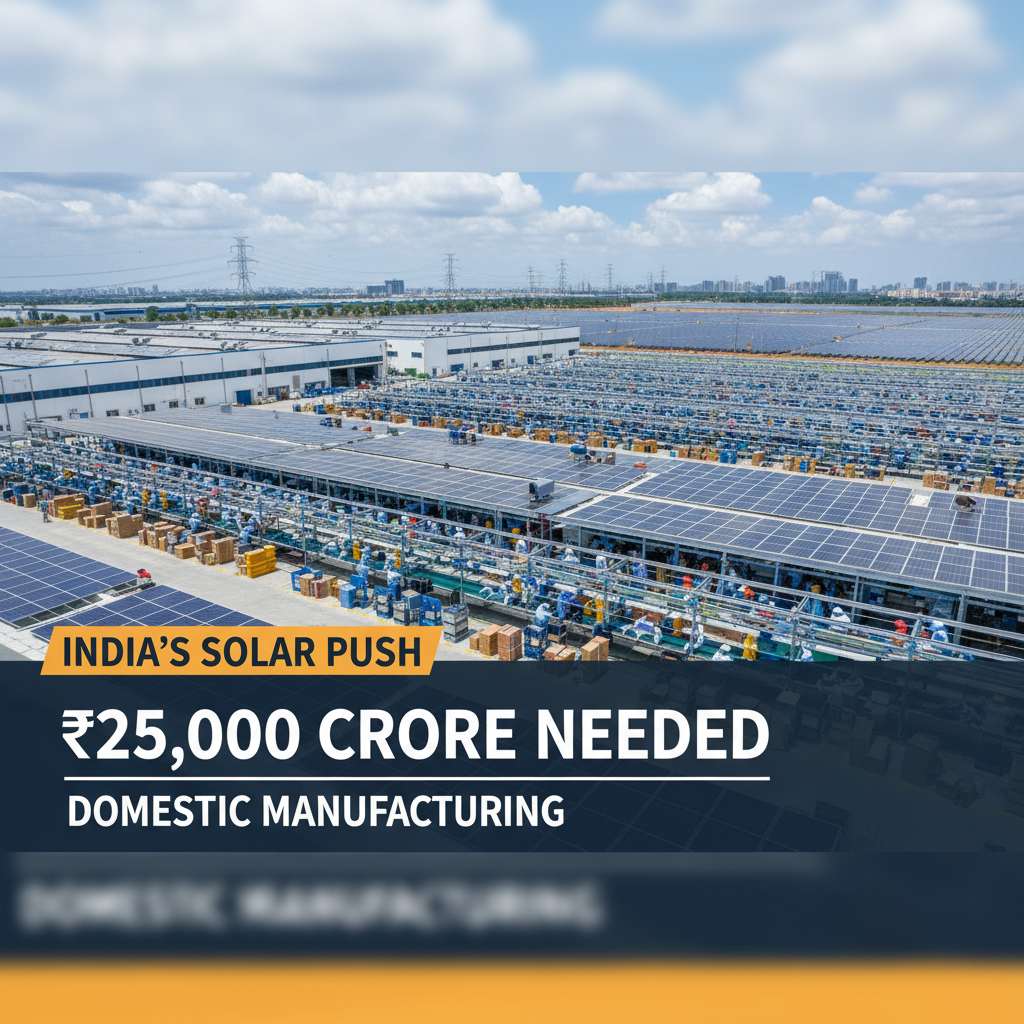
India’s Solar Industry Seeks ₹25,000 Crore Boost for Domestic Manufacturing
India’s ambitious goals for renewable energy have placed its solar industry at a critical juncture. To realize its vision, the industry is calling for significant financial backing. The National Solar Energy Federation of India (NSEFI) has formally requested substantial support, signaling a pivotal moment for the sector’s growth and self-reliance.
The Call for Investment
At the heart of the matter is a request for ₹20,000-25,000 crore in viability gap funding (VGF). This financial injection is earmarked to catalyze the development of 50 GW of local solar capacity. The aim is to reduce reliance on imports and fortify India’s position as a global player in solar energy. This initiative aligns with the broader national objective of promoting domestic manufacturing across various sectors.
The National Solar Energy Federation of India is advocating for this level of investment to ensure the long-term sustainability and competitiveness of the domestic solar manufacturing landscape. The policy push is designed to create a conducive environment for local manufacturers, enabling them to scale up production and compete effectively in the global market. Furthermore, the industry is also seeking incentives for machinery, which would further reduce the cost of production and enhance efficiency.
Strategic Goals and Policy Implications
The push for enhanced domestic manufacturing has several strategic implications. Firstly, it aims to create a robust ecosystem that supports the entire value chain of the solar industry, from raw material sourcing to final product assembly. Secondly, it is expected to generate employment opportunities, contributing to India’s economic growth. Finally, it reinforces India’s commitment to reducing its carbon footprint and transitioning towards cleaner energy sources.
The policy recommendations from India’s solar industry are not merely about financial assistance; they are also about shaping the future of the renewable energy sector in India. By supporting domestic manufacturing, the government can ensure greater control over the supply chain, reduce vulnerabilities to external shocks, and foster technological innovation within the country.
The Road Ahead
The success of this initiative hinges on effective policy implementation and collaboration between the government and industry stakeholders. The proposed VGF and machinery incentives are designed to mitigate the financial risks associated with setting up large-scale manufacturing facilities. This will encourage both existing players to expand their operations and new entrants to enter the market. As India moves forward with its renewable energy goals, the support for domestic manufacturing will be crucial.
The National Solar Energy Federation of India‘s proposal represents a significant step towards achieving energy independence and sustainability. By investing in domestic manufacturing, India can not only meet its growing energy demands but also establish itself as a leader in the global solar market.
Source: Top ET Manufacturing
About the Author