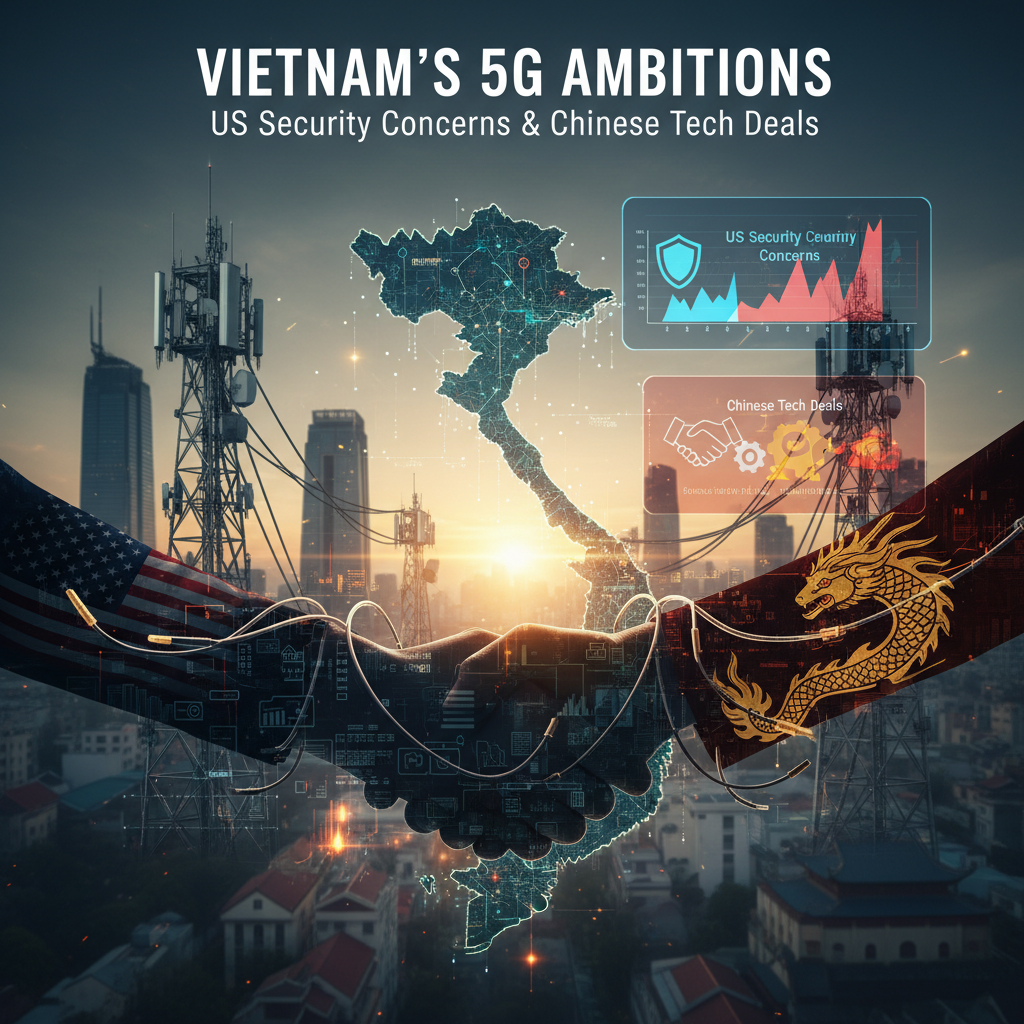
Vietnam’s 5G Ambitions: Navigating US Security Concerns and Chinese Tech Deals
Vietnam’s telecommunications sector is at a critical juncture, as it navigates the complex landscape of 5G network development. The nation’s ambitions are clear: to build a robust and advanced 5G infrastructure. However, this pursuit is complicated by geopolitical tensions and security concerns, particularly those raised by the United States regarding the involvement of Chinese technology companies.
Mobifone’s Strategic Moves and Chinese Tech Partnerships
At the heart of this story is Mobifone, a key player in Vietnam’s mobile network market. Sources indicate that Mobifone is currently in discussions with Chinese technology companies to secure partnerships for its 5G network expansion. This move is significant, especially considering the backdrop of warnings from the United States about potential security risks associated with Chinese technology firms. The plan includes tendering for advanced antennas, which could lead to a substantial portion of Mobifone’s network being built by Chinese companies.
Earlier, market leaders such as Viettel and VNPT had already established their presence in the 5G arena by signing contracts with ZTE and Huawei, both prominent Chinese technology firms. This earlier trend sets a precedent and highlights the existing reliance on Chinese technology within Vietnam’s telecommunications infrastructure. The decision by Mobifone to potentially follow suit underscores a calculated strategy to expedite the deployment of 5G, despite the associated risks.
The US Perspective: Security Risks and Geopolitical Implications
The United States has voiced concerns about the involvement of Chinese tech firms in 5G networks globally. These concerns often revolve around the potential for these firms to be used by the Chinese government for espionage or to disrupt critical infrastructure. Why these concerns exist is rooted in the geopolitical dynamics and the ongoing tech competition between the US and China. The US has actively encouraged its allies to consider these security risks when making decisions about 5G infrastructure.
The situation in Vietnam is a microcosm of this broader geopolitical struggle. The country must balance its need for advanced technology with the potential security implications raised by the US. This balancing act requires careful consideration of national interests, economic benefits, and strategic alliances.
The Role of Huawei and ZTE
Huawei and ZTE, two of the world’s largest telecommunications equipment manufacturers, are central to this narrative. These companies have established a strong presence in the global 5G market, offering competitive pricing and advanced technology. How they have achieved this is through significant investment in research and development, allowing them to provide comprehensive solutions for 5G network deployment. Their involvement in Vietnam’s 5G rollout is a testament to their market position.
The what of the 5G contracts signed by Viettel and VNPT with Huawei and ZTE includes the provision of network equipment, software, and services. These contracts are critical to building the infrastructure necessary to support 5G services, where in Vietnam. The potential expansion of these partnerships with Mobifone could further solidify the role of Chinese technology in Vietnam’s telecommunications future.
Navigating the Future of 5G in Vietnam
Vietnam is at a crossroads. Its decisions regarding 5G infrastructure will have long-term implications for its national security, economic development, and international relations. The government faces a complex challenge in balancing the need for advanced technology with the security concerns raised by the United States. The choices made by Mobifone, and the broader telecommunications sector, will shape the future of 5G in Vietnam, influencing its technological landscape for years to come.
The potential for further deals between Vietnamese operators and Chinese tech firms, especially the tendering of advanced antennas by Mobifone, suggests a continued commitment to this path. This trajectory will undoubtedly be closely watched by both the United States and other international actors. The story of Vietnam and 5G is a compelling illustration of the intricate interplay between technology, geopolitics, and national strategy.
Sources:
- Industry-Economic Times
About the Author