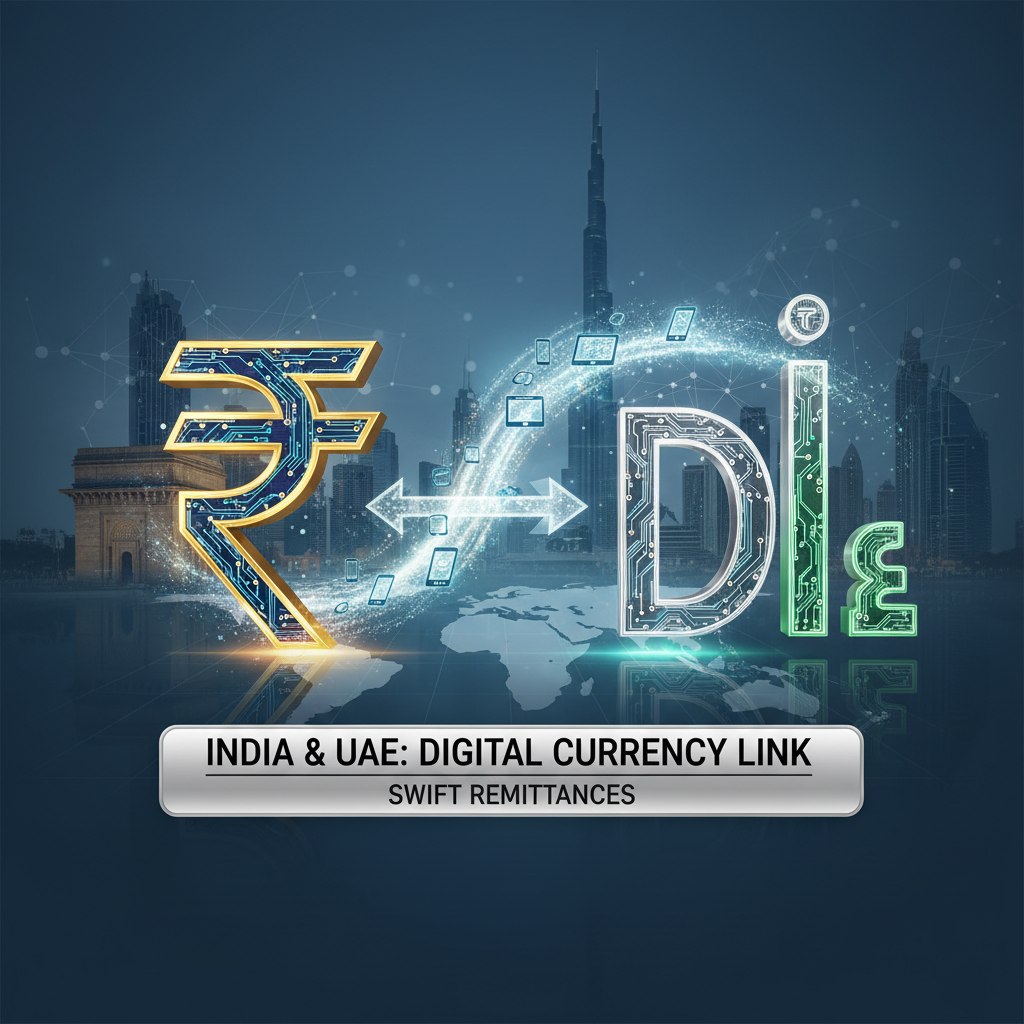
India and UAE Explore Linking Digital Currencies for Swift Remittances
In a move signaling a significant step forward in financial technology and international cooperation, India and the United Arab Emirates (UAE) are reportedly exploring the possibility of linking their central bank digital currencies (CBDCs). This initiative aims to facilitate faster and more efficient cross-border remittances, according to a recent report by Inc42 Media. The discussions highlight a growing trend in the financial sector, where countries are increasingly leveraging digital currencies to modernize their financial systems and improve international transactions.
The Drive for Faster Remittances
The primary motivation behind this collaboration is to expedite the process of remittances. As the Inc42 Media report indicates, the current methods of transferring money across borders can be time-consuming and involve multiple intermediaries, leading to delays and higher costs. By linking their CBDCs, India and the UAE aim to create a more streamlined and cost-effective system. This could be particularly beneficial for the large number of Indian expatriates working in the UAE, who send significant remittances back home. The integration of CBDCs could bypass traditional banking channels, reducing transaction times and associated fees, ultimately benefiting both the senders and recipients.
How Linking CBDCs Works
The mechanism involves linking the CBDCs of India and the UAE, allowing for direct transfers between the two countries. This system would leverage blockchain technology, which underpins most CBDCs, to ensure secure and transparent transactions. The process would likely involve the creation of a bridge or interface that allows the digital currencies to interact seamlessly. When an individual in the UAE wants to send money to India, the funds would be converted into the UAE’s CBDC, transferred through the linked system, and then converted into India’s CBDC upon arrival. This eliminates the need for multiple currency conversions and reduces the involvement of traditional financial institutions, thereby accelerating the process and reducing associated charges.
Policy, Macro, and Deals: A Convergence
This initiative falls squarely within the intersection of policy, macroeconomics, and deal-making. From a policy perspective, it represents a proactive step by both India and the UAE to embrace financial innovation and strengthen their economic ties. Macroeconomically, it could boost remittance flows, contributing to the economic stability of both nations. The deal itself, if finalized, would set a precedent for other countries looking to modernize their cross-border payment systems. The collaboration between India and the UAE exemplifies a broader trend where nations are seeking to leverage technology to enhance their financial ecosystems and foster deeper international relationships.
Broader Implications and Future Outlook
The potential linking of digital currencies between India and the UAE has broader implications for the global financial landscape. It demonstrates the growing acceptance and adoption of CBDCs as a viable alternative to traditional financial instruments. This move could encourage other countries to explore similar collaborations, leading to a more interconnected and efficient global financial system. As more nations adopt CBDCs, the need for standardized protocols and interoperability will become increasingly important. The India-UAE initiative could serve as a model for future partnerships, paving the way for a new era of cross-border payments. The success of this endeavor could significantly influence the trajectory of financial technology and international relations in the coming years.
According to the Inc42 Media report, the discussions are reportedly ongoing, and the details of the implementation are still being worked out. However, the fact that such talks are underway underscores the commitment of both India and the UAE to innovation and collaboration in the financial sector. The potential benefits, including faster remittances and reduced costs, make this a significant development to watch. As the world moves towards a more digital and interconnected financial future, initiatives like this will play a crucial role in shaping the landscape of international finance.
About the Author