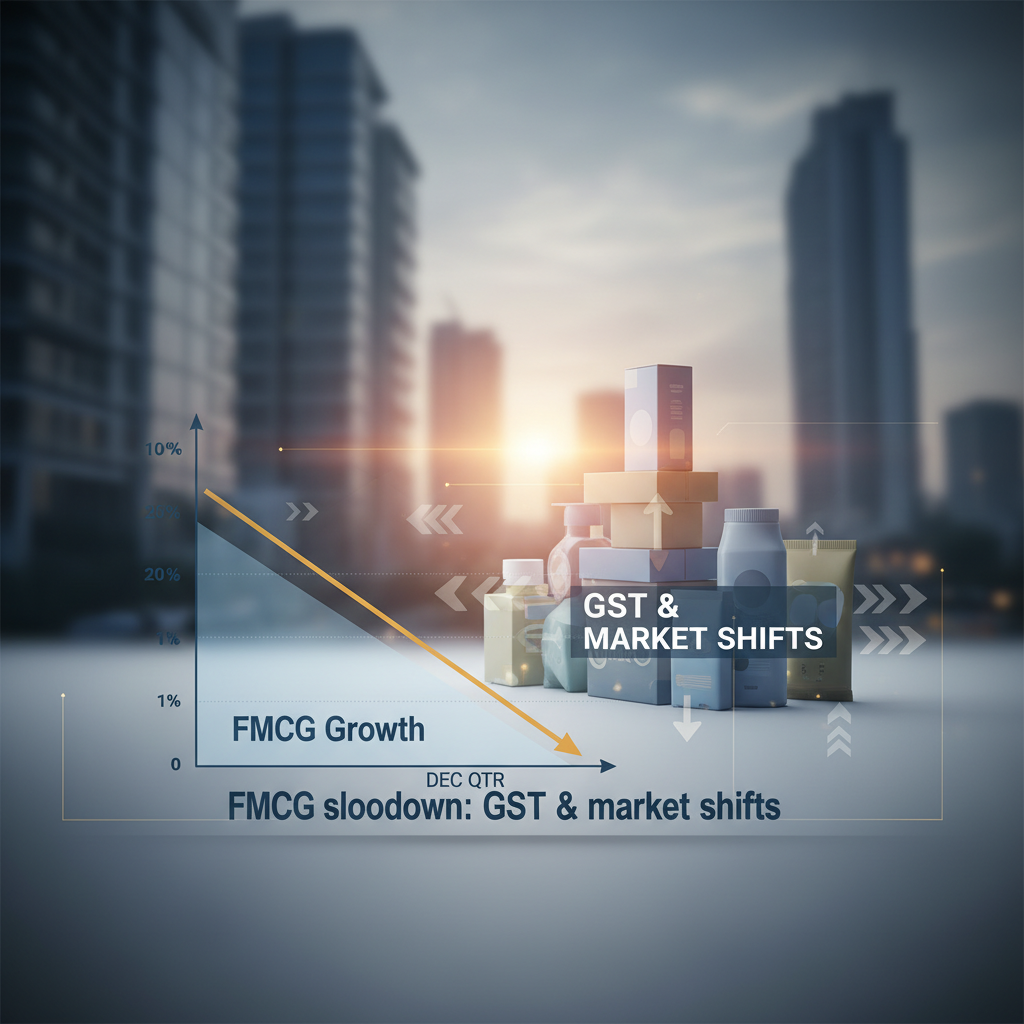
FMCG Growth Moderates in December Quarter Amidst GST and Market Shifts
The fast-moving consumer goods (FMCG) sector experienced a slowdown in the December quarter of 2025, with sales growth moderating to 7.8 percent. This shift in momentum, as reported by the Economic Times, reflects the impact of several key factors, including the Goods and Services Tax (GST) transition and a high sales base established during the preceding festival season. This analysis delves into the underlying dynamics that shaped the FMCG landscape during this period.
Deceleration in Sales and Volume Growth
The deceleration in FMCG sales growth signifies a notable change from previous periods. The moderation to 7.8 percent indicates a cooling off in the rapid expansion previously observed. Simultaneously, the volume growth, a critical indicator of actual consumption, also experienced a dip, registering at 2.6 percent. This decline in volume suggests that while sales continued to increase, the rate at which consumers were purchasing FMCG products slowed down during this quarter. These changes underscore the sensitivity of the FMCG market to economic and regulatory adjustments.
Impact of GST Transition
One of the primary drivers behind the sales moderation was the GST rationalisation. The adjustments to GST rates and implementation strategies directly influenced pricing strategies adopted by FMCG companies. These changes often led to price fluctuations, which, in turn, affected consumer behavior. The GST transition’s impact extended to the entire supply chain, from manufacturers to retailers, creating a ripple effect that influenced both sales and volume figures. The industry had to navigate these changes, adapting strategies to maintain competitiveness and consumer engagement.
Adaptation in Retail Channels
A key aspect of the December quarter’s performance was the agility demonstrated by organized retail channels. These channels showed a remarkable ability to adapt to the price changes resulting from the GST adjustments. They quickly recalibrated their pricing models and promotional strategies to mitigate the impact of the tax changes on consumer spending. This adaptability was crucial in maintaining sales momentum and ensuring that consumers continued to have access to FMCG products at competitive prices. The efficiency of organized retail in responding to market dynamics highlighted its growing importance in the overall FMCG ecosystem.
Rural vs. Urban Consumption Dynamics
The rural markets continued to show more robust consumption compared to their urban counterparts during the December quarter. However, a notable trend was the narrowing of the growth gap between rural and urban markets. While rural areas maintained their lead in consumption, the rate of growth in these regions was closer to that of urban areas than in previous periods. This shift could be attributed to a variety of factors, including changing consumer preferences, evolving distribution networks, and varying impacts of the GST transition across different geographical regions.
Key Takeaways and Market Implications
The December quarter of 2025 offered several significant insights into the FMCG sector. The moderation in sales growth, driven by GST adjustments and a high base effect, underscores the importance of adaptability and strategic pricing. The quick response of organized retail channels highlights their critical role in navigating market changes. Furthermore, the evolving dynamics between rural and urban consumption patterns reflect broader economic trends and shifts in consumer behavior.
The FMCG sector remains a dynamic and vital part of the economy. The ability of companies and retail channels to respond to market changes, such as the GST transition, will be crucial for sustained growth. The focus on understanding and adapting to evolving consumer preferences in both rural and urban markets will be key to success in the coming quarters. This period serves as a reminder of the sector’s resilience and its capacity to adjust to economic and regulatory changes.
Source: Industry-Economic Times
About the Author