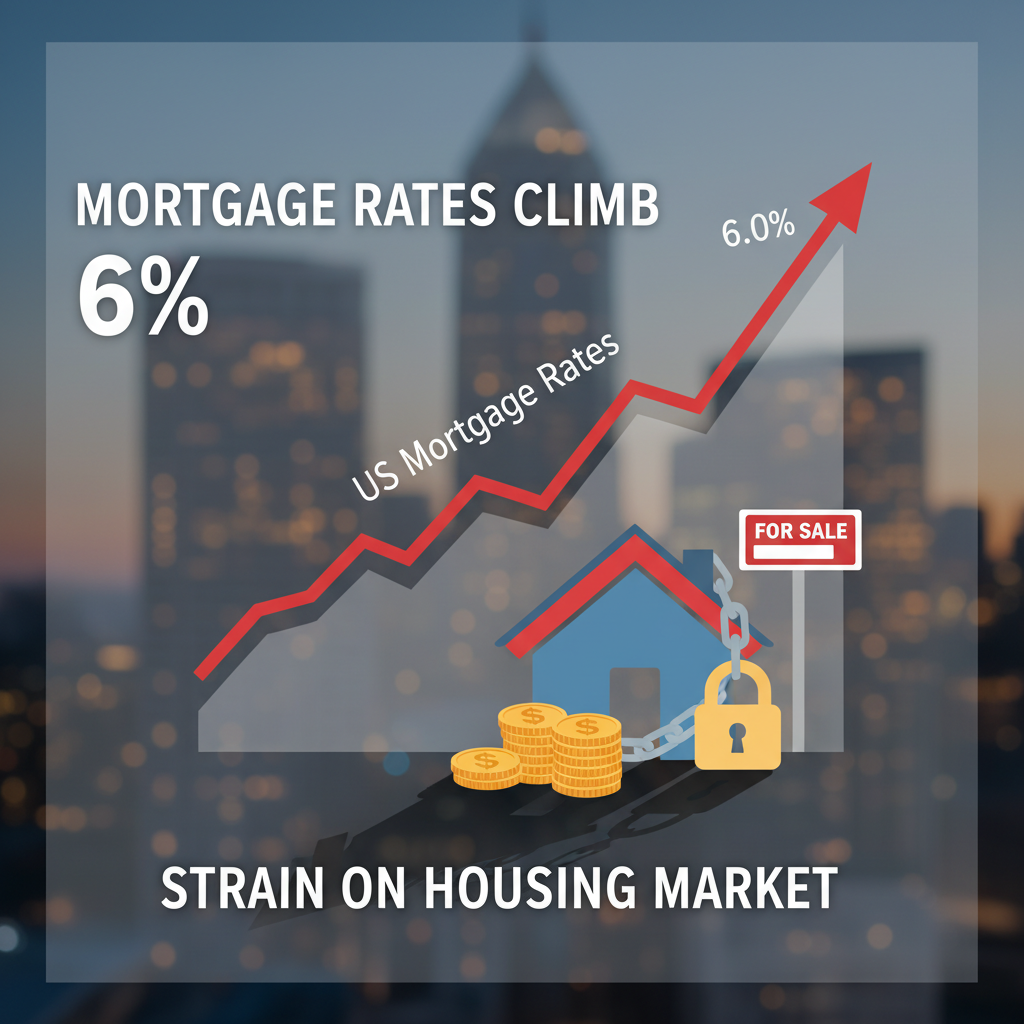
The average rate on a 30-year fixed mortgage has risen to 6% this week, according to the latest data released Thursday by Freddie Mac. This increase, up from last week’s 5.98%, adds further strain to the housing market and reflects ongoing economic uncertainty.
Context: The rise in mortgage rates is a key indicator of the health of the real estate market and the broader economy. These rates directly influence the affordability of homes, impacting both buyers and sellers. Higher rates typically lead to decreased demand, which can cool down the housing market and potentially lead to price corrections.
Analysis: The increase to 6% signals a continuation of the trend of rising interest rates, driven by factors such as inflation and Federal Reserve monetary policy. Freddie Mac’s data provides a crucial benchmark for the market, influencing decisions by lenders, investors, and potential homebuyers. The impact is likely to be felt across the real estate sector, potentially leading to slower sales and a decline in new construction.
Implications:
- For Homebuyers: Higher mortgage rates mean increased monthly payments, reducing affordability and potentially pushing some buyers out of the market.
- For Sellers: Reduced demand can lead to longer listing times and potentially lower sale prices.
- For the Economy: A cooling housing market can have ripple effects, impacting related industries such as construction, home improvement, and retail.
Conclusion: The rise in mortgage rates to 6% is a significant development, underscoring the challenges in the current real estate market. As interest rates continue to fluctuate, both buyers and sellers should stay informed and adjust their strategies accordingly. The data from Freddie Mac will continue to be a critical resource for monitoring these trends.
Keywords: mortgage rates, interest rates, housing market, Freddie Mac, 30-year fixed mortgage, economy, real estate, finance
About the Author