India’s Tractor Industry Faces Headwinds: El Niño and Monsoon Concerns
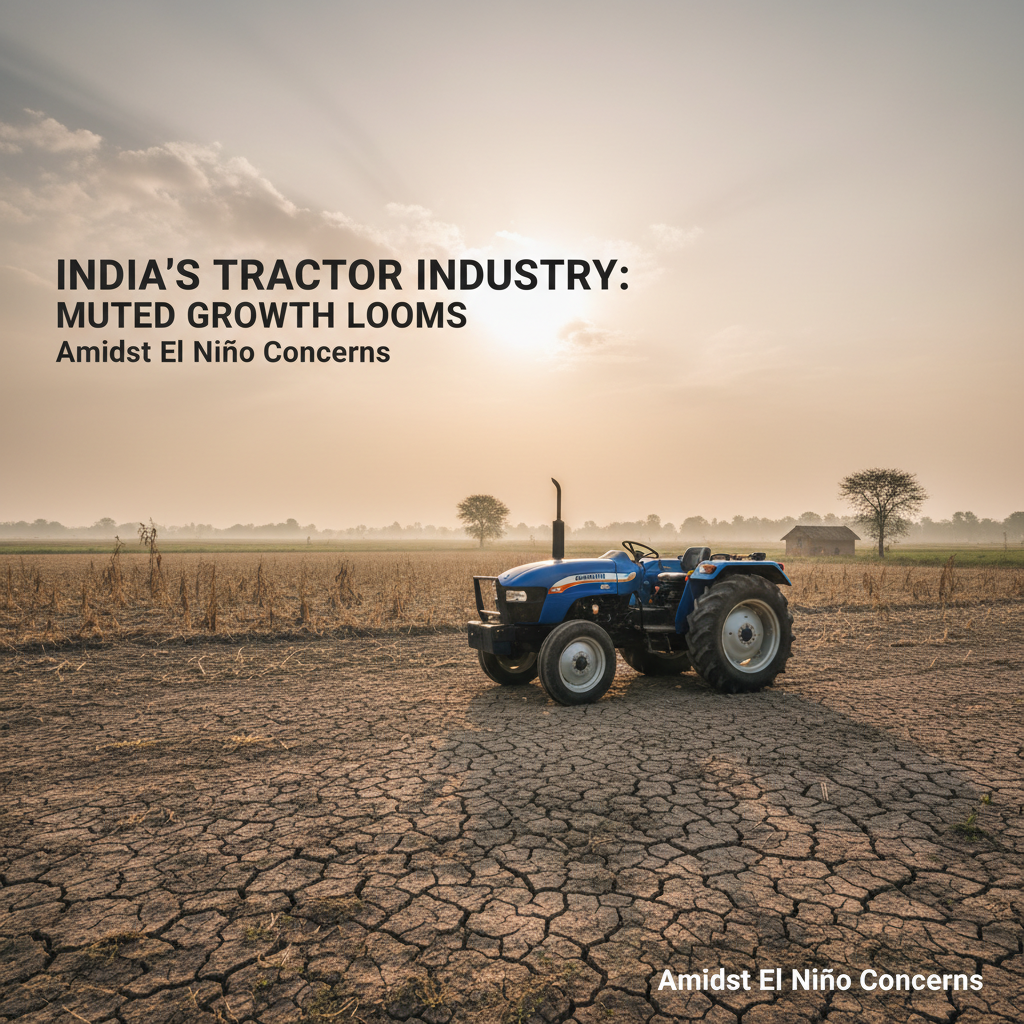
The Indian tractor industry, a bellwether of the nation’s agricultural economy, is facing a period of subdued growth, according to recent analysis. HSBC, a prominent financial institution, projects a gradual slowdown in the sector’s expansion over the next few years. This forecast stems primarily from concerns surrounding the impact of El Niño on monsoon patterns, which could subsequently affect demand in rural areas.
The El Niño Effect and Its Implications
The core of the issue lies in the potential for a subpar monsoon. The Indian monsoon is the lifeblood of the agricultural sector, and a weak monsoon can significantly reduce crop yields, impacting farmers’ incomes and, consequently, their ability to invest in new tractors or related equipment. The El Niño weather pattern, known for causing warmer-than-average sea surface temperatures in the central and eastern tropical Pacific Ocean, often leads to altered weather patterns globally, including weaker monsoons in certain regions. This creates a challenging environment for the tractor industry, which is heavily reliant on the prosperity of the rural economy.
HSBC’s assessment underscores the interconnectedness of various macroeconomic factors. The tractor industry, falling under the broader categories of automotive and industrial machinery, is sensitive to fluctuations in the Indian economy. Furthermore, the agricultural sector’s performance is intrinsically linked to the monsoon, making it a crucial element in determining the overall health of the tractor market. The forecast serves as a reminder of how global climate patterns can have tangible consequences for specific industries and the broader economy.
Silver Linings and Factors for Stability
Despite the negative outlook, there are factors that could help mitigate the downturn. One significant element is the robust levels of water reservoirs across the country. These reservoirs provide a crucial buffer against the potential impacts of a weak monsoon, offering farmers an alternative source of irrigation and potentially supporting crop yields. This, in turn, could help to maintain some stability in tractor demand, as farmers may still need to replace older machinery or invest in new equipment to optimize their operations.
Moreover, the ongoing need for tractor replacements represents a steady source of demand. Tractors, like any other machinery, have a limited lifespan and require periodic replacement. This constant need for replacements helps to cushion the industry from the full force of cyclical downturns. HSBC’s analysis recognizes this factor as a key component in maintaining some level of stability within the sector. The replacement cycle, alongside the water reservoir levels, could help the tractor industry to weather the challenges posed by El Niño and the potential for a weaker monsoon.
Conclusion: Navigating the Road Ahead
The Indian tractor industry stands at a crossroads. While the shadow of El Niño and the associated concerns about the monsoon loom large, factors such as strong water reservoirs and the constant need for replacements offer a degree of resilience. The industry’s performance in the coming years will depend on a confluence of factors, including the actual impact of El Niño, government policies related to agriculture, and the overall health of the Indian economy. As HSBC suggests, the sector’s growth trajectory will likely be more moderate than in previous periods, requiring businesses to adapt and strategize accordingly.
Source: Industry-Economic Times
About the Author