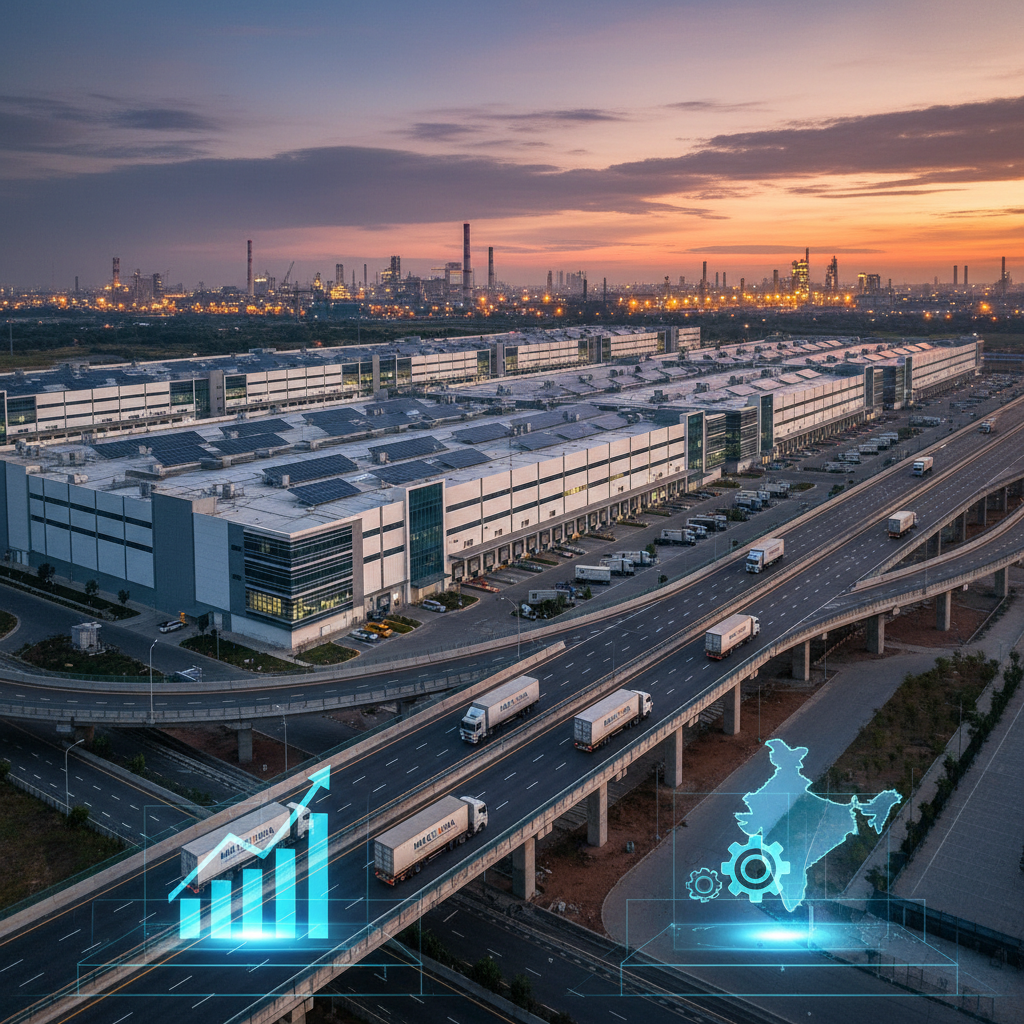
India’s Industrial Boom: Warehousing Soars with Make in India and PLI Schemes
India is currently experiencing a period of significant industrial growth, driven by a confluence of factors that are reshaping its economic landscape. The demand for manufacturing is at the heart of this transformation, leading to unprecedented absorption rates in industrial warehousing. This surge is not merely a statistical anomaly; it represents a fundamental shift in how businesses are approaching supply chains and operations within the country. The ‘Make in India’ initiative and production-linked incentives (PLI) are pivotal in this remarkable expansion, propelling industrial warehousing to new heights.
The Driving Forces Behind the Growth
Several key elements contribute to the current boom. Firstly, the ‘Make in India’ program, a flagship government initiative, encourages both domestic and international companies to manufacture within India. Secondly, production-linked incentives (PLI) provide financial and strategic support to companies, making India an attractive destination for investment and expansion. These incentives are specifically designed to boost domestic manufacturing, leading to a ripple effect that benefits various sectors, particularly industrial warehousing. As companies ramp up their manufacturing operations, the need for efficient storage and distribution facilities grows exponentially.
The ‘Make in India’ program is not just about increasing production; it’s about building resilient supply chains. Companies are increasingly focused on stability and efficiency, which translates into a greater need for strategically located and well-equipped industrial warehousing. This trend is further amplified by the burgeoning e-commerce and logistics sectors. The rise of online retail and the demand for faster, more reliable delivery services have made India a pivotal hub for manufacturing and distribution. The ‘Make in India’ push and production-linked incentives (PLI) are therefore mutually reinforcing, creating a virtuous cycle of growth and investment.
The Role of Industrial Warehousing
Industrial warehousing is at the core of this industrial transformation. As companies expand their operations, they require more space to store raw materials, work-in-progress, and finished goods. This demand is met by the rapid development of modern, technologically advanced warehousing facilities. These facilities are not just storage spaces; they are integral parts of the supply chain, equipped with sophisticated inventory management systems, automated processes, and strategic locations to optimize logistics. The growth in industrial warehousing is a direct reflection of the expansion in the manufacturing and e-commerce sectors. It signifies an increasing confidence in India’s economic prospects and a commitment to building robust and efficient supply chains.
The Impact of E-commerce and Logistics
The e-commerce and logistics sectors have been major beneficiaries of this industrial boom. The rapid expansion of online retail has created an unprecedented demand for warehousing and distribution centers. E-commerce companies need strategically located warehouses to fulfill orders quickly and efficiently. This demand has spurred significant investment in logistics infrastructure, including new warehouses, transportation networks, and technology solutions. The growth in logistics is not just about moving goods; it’s about providing end-to-end solutions that meet the complex needs of modern businesses. As India solidifies its position as an essential hub for manufacturing and distribution, the importance of these sectors will only continue to grow.
Looking Ahead
India is at a critical juncture. The combination of supportive government policies, increasing investment, and the growth of key sectors is setting the stage for sustained economic growth. The trends in industrial warehousing are a clear indicator of this positive momentum. As companies continue to build resilient supply chains, India is poised to become an even more significant player in the global economy. This transformation is not just about numbers; it’s about creating jobs, fostering innovation, and improving the overall standard of living.
The ‘Make in India’ initiative and production-linked incentives (PLI) are critical to this success. These programs are designed to encourage investment, boost manufacturing output, and create a more competitive business environment. As India moves forward, it is essential to maintain this momentum by continuing to support these initiatives and investing in the infrastructure needed to sustain growth. The pivotal moment for India is now, as it capitalizes on the opportunities presented by a rapidly changing global economy. The future looks bright for India’s industrial sector, with industrial warehousing leading the way.
About the Author