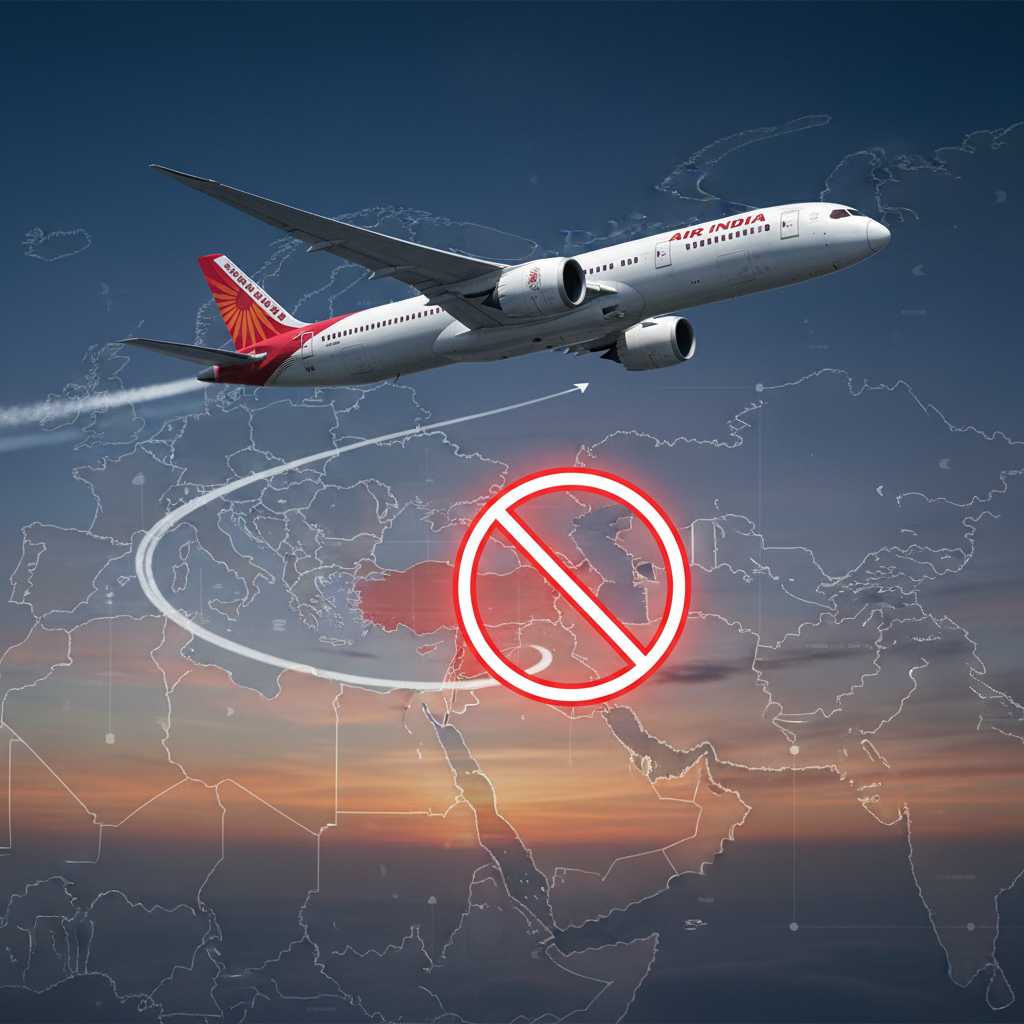
Air India Dismisses Claims of Flying Over Restricted Middle East Airspace
In a recent statement, Air India has addressed and refuted claims circulating on social media regarding its aircraft flying over restricted airspace in the Middle East. The airline, a prominent player in the aviation sector, labeled these reports as “fake news,” reaffirming its dedication to passenger safety and operational integrity. This response underscores the critical importance of accurate information and adherence to established protocols within the aviation industry, especially given the current geopolitical landscape.
Meticulous Route Planning and Safety Measures
The core of Air India’s defense rests on its meticulous approach to flight planning. The airline stated that its routes are meticulously planned with real-time intelligence and global advisories. This proactive strategy is designed to ensure that all flights comply with international regulations and avoid potentially hazardous areas. The emphasis on real-time data and global advisories allows Air India to adapt swiftly to changing circumstances, thus maintaining a high standard of safety for its passengers and crew. This operational rigor is a hallmark of the airline’s commitment to excellence in aviation.
Prioritizing Safety and Compliance
Air India prioritizes safety and compliance. The airline’s proactive approach to route planning is particularly crucial given the ongoing regional tensions. Air India’s adherence to global standards is a testament to its commitment to passenger safety and operational excellence. By carefully monitoring and responding to global advisories, the airline aims to mitigate risks and ensure that all flights operate within the safest possible parameters. This commitment extends beyond mere regulatory compliance, embodying a culture of continuous improvement and vigilance.
Responding to Misinformation
The swift denial by Air India highlights the impact of fake news in the aviation sector. The airline’s immediate response demonstrates its dedication to transparency and its commitment to correcting misinformation that could potentially undermine public confidence. By quickly addressing these claims, Air India reinforces its credibility and maintains its reputation as a reliable and trustworthy carrier. This proactive approach is essential in an era where information, both accurate and misleading, spreads rapidly through social media channels.
The Broader Context of Aviation Safety
The incident also provides an opportunity to reflect on the broader context of aviation and flight safety. As the industry navigates an increasingly complex global environment, the importance of robust safety protocols and adherence to international standards becomes even more critical. Air India’s actions serve as a reminder of the industry’s commitment to maintaining the highest levels of safety and security for all travelers. This commitment is supported by continuous investment in technology, training, and operational procedures.
In conclusion, Air India’s swift denial of the claims regarding its flights over restricted Middle Eastern airspace underscores its dedication to safety, compliance, and transparency. By emphasizing its meticulous route planning and adherence to global advisories, the airline aims to reassure passengers and maintain its reputation as a trusted carrier. This incident serves as a reminder of the importance of accurate information and the critical role of aviation in a world marked by regional tensions and evolving geopolitical dynamics.
About the Author