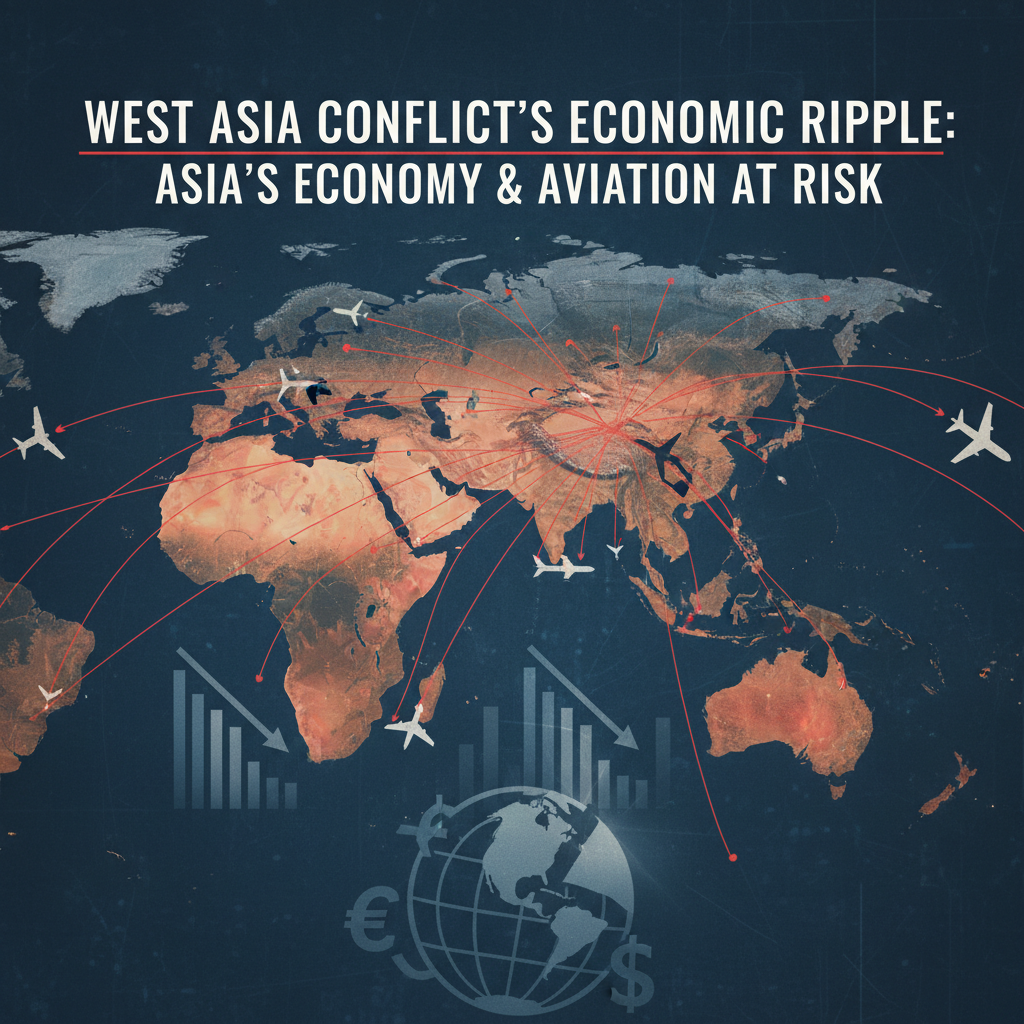
West Asia Conflict Impact: Asia’s Economy and Aviation Sector Under Scrutiny
The shadow of the ongoing conflict in West Asia looms large over Asia, casting a pall of uncertainty across its economic landscape. A recent report by Invesco paints a concerning picture, highlighting the region’s vulnerability to geopolitical shocks and the potential for significant economic disruption. The core issue? Rising oil prices, a direct consequence of the instability, threaten to destabilize Asia’s economic equilibrium.
Economic Risks and Vulnerabilities
The Invesco report underscores a critical factor: Asia’s heavy dependence on imported energy. This reliance makes the region particularly susceptible to the fallout from the conflict, especially any disruptions to Gulf exports. The potential impact is far-reaching. Sustained higher oil prices are expected to negatively affect stock markets across the region, with certain countries identified as being at greater risk than others.
Specifically, the report flags Thailand, India, Korea, and the Philippines as being particularly vulnerable to the negative effects of rising oil prices. These nations, with their significant energy import needs, face the prospect of increased costs across various sectors, potentially dampening economic growth and impacting consumer spending. However, the report also notes that Malaysia, as an energy exporter, could potentially benefit from the situation, highlighting the varied impact across the continent.
Aviation Sector Under the Microscope
Beyond the broader economic concerns, the aviation sector is also feeling the heat. Amidst the escalating tensions, the Airports Authority of India (AAI) found itself in the spotlight. The AAI, however, moved quickly to clarify its role. The organization stated that it had not requested aviation fuel stock data from international airports, emphasizing that its mandate is limited to airport operations and air navigation services. The AAI’s statement serves as a reminder of the complex web of responsibilities and the need for clear communication during times of heightened geopolitical risk.
The Role of Rising Oil Prices
The crux of the economic threat lies in the potential for sustained high oil prices. As the conflict in West Asia continues, the possibility of disruptions to oil supplies increases. This, in turn, can lead to a cascade of negative effects, including inflation, reduced consumer spending, and decreased business investment. The Invesco report serves as a warning, urging businesses and policymakers to prepare for potential headwinds.
The Broader Macro Outlook
The ongoing conflict is poised to influence the macro outlook of the region. The interplay between geopolitical instability and economic performance is undeniable. While the specific impacts will vary across countries, the overarching trend points towards a period of increased economic uncertainty. The situation demands careful monitoring and proactive measures to mitigate potential risks. The Invesco report provides a crucial baseline for understanding the challenges ahead.
The situation underscores the interconnectedness of the global economy and the far-reaching consequences of geopolitical events. As Asia navigates these challenges, the decisions made by governments, businesses, and individuals will play a crucial role in shaping the region’s economic trajectory. The AAI’s clarification regarding its role in aviation fuel stock data is a small but telling example of the need for clarity and preparedness in the face of uncertainty.
Source: Industry-Economic Times
About the Author