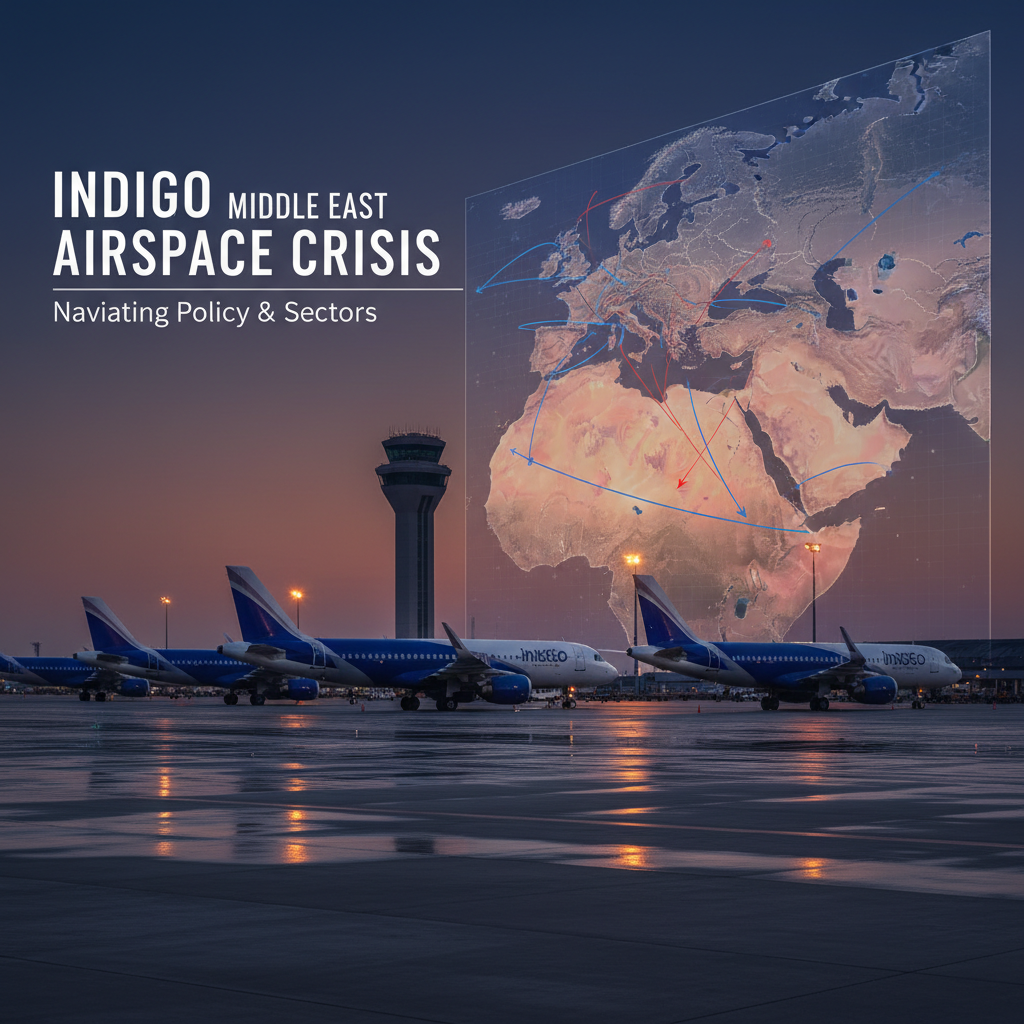
IndiGo Flight Disruptions: Navigating the Middle East Airspace Crisis
The aviation sector is often subject to unforeseen challenges, and the recent developments in the Middle East have presented a significant hurdle for IndiGo. Between February 28 and March 3, IndiGo was forced to cancel over 500 flights to the Middle East and other international destinations. This disruption, as reported by the Economic Times, underscores the impact of evolving airspace restrictions over Iran and other Gulf countries.
The Core Issue: Airspace Restrictions
The primary driver behind these flight cancellations is the implementation of airspace restrictions. These restrictions, stemming from the ongoing geopolitical situation, have prompted airlines to reassess their flight paths and, in many cases, cancel flights altogether. IndiGo, like other carriers, is continuously monitoring regional developments to understand how best to operate within these limitations, with the ultimate aim to minimize disruption for passengers.
Impact and Scope of the Cancellations
The sheer number of cancelled flights highlights the severity of the situation. Over 500 flights represent a considerable disruption to travel plans, affecting both passengers and the airline’s operational capabilities. The Civil Aviation Ministry has also noted the significant number of cancellations by both Indian and foreign carriers, indicating a widespread impact across the aviation industry. The Middle East, a critical hub for international travel, has become a focal point of these disruptions.
The Role of the Civil Aviation Ministry
The Civil Aviation Ministry is playing a crucial role in monitoring the situation and coordinating efforts to address the challenges. The ministry’s awareness of the flight cancellations highlights the importance of governmental oversight in managing crises within the aviation sector. The ministry’s involvement indicates an industry-wide concern and a need for collaborative solutions.
Why are these cancellations happening?
The why behind these cancellations is driven by evolving airspace restrictions. This situation means that airlines must navigate complex regulatory environments and prioritize passenger safety and operational feasibility. The need to reassess flight paths and, at times, cancel flights is a direct consequence of these restrictions.
How IndiGo is Responding
IndiGo is taking several measures to handle the crisis. The airline is actively assessing regional developments. This continuous evaluation of the situation allows the airline to adapt its strategies and make informed decisions to minimize the impact on passengers. While the immediate effects are undeniable, the airline’s commitment to mitigating disruptions is evident.
Conclusion
The recent flight cancellations by IndiGo serve as a stark reminder of the dynamic nature of the aviation industry and the impact of geopolitical events. The airspace restrictions in the Middle East have created significant challenges, forcing airlines to adapt and prioritize passenger safety. As the situation evolves, continuous monitoring and strategic adjustments will be critical for airlines and regulatory bodies alike. The Civil Aviation Ministry and IndiGo are working to find solutions.
Source: Economic Times
About the Author