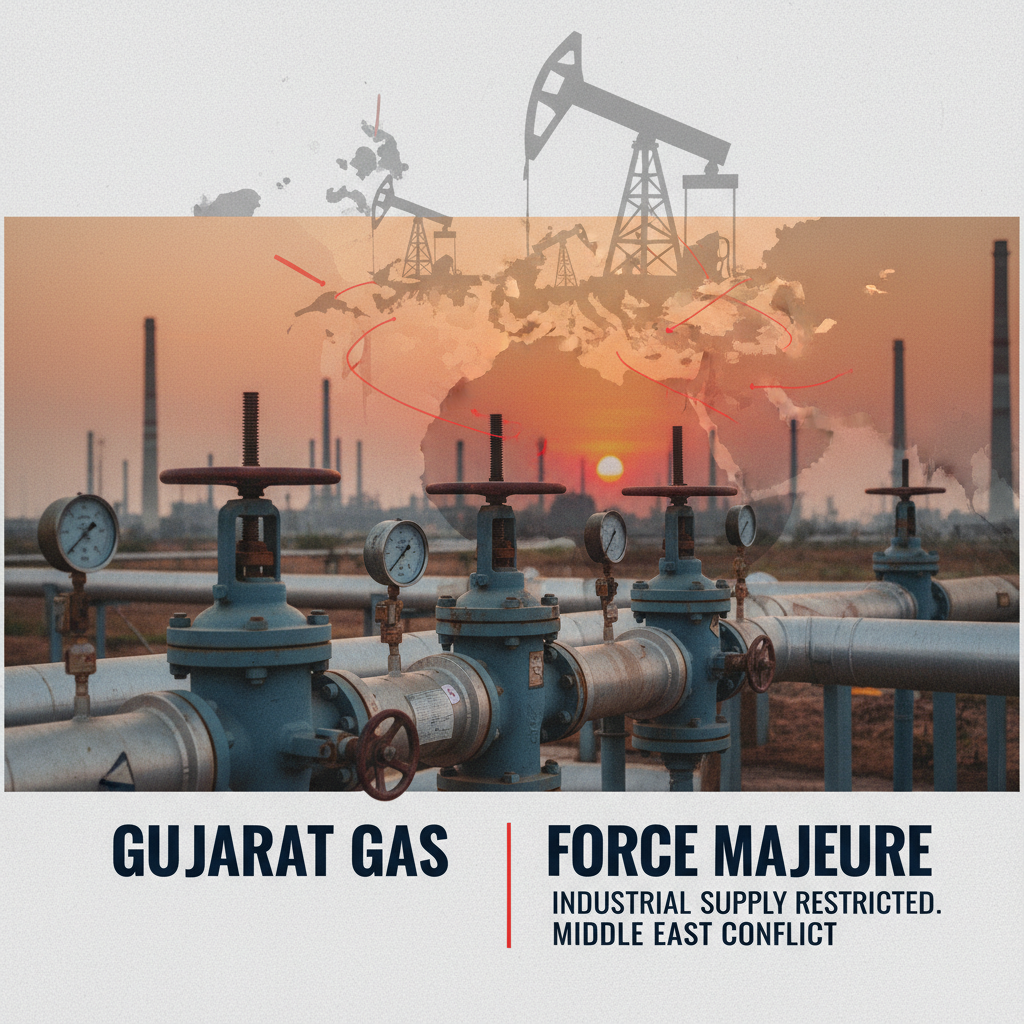
Gujarat Gas Restricts Industrial Supply, Cites Force Majeure and Middle East Conflict
In a move with significant implications for industrial consumers, Gujarat Gas has invoked force majeure, leading to restrictions on gas supply. This decision, as reported by the Economic Times, highlights the challenges facing the energy sector, particularly in light of global events. The company’s action underscores the complex interplay of international politics, supply chain vulnerabilities, and the critical role of energy in industrial operations.
Force Majeure and Supply Constraints
The invocation of force majeure by Gujarat Gas, a key player in India’s energy market, signals a critical disruption. This legal clause allows a party to be excused from contractual obligations due to unforeseen events beyond its control. In this instance, Gujarat Gas cites severe constraints in the availability of regasified liquefied natural gas (LNG) as the primary reason for restricting the daily contracted quantities for industrial users. This constraint directly impacts the operational capacity of numerous industries reliant on a consistent gas supply.
The Middle East Conflict’s Impact
The ongoing war in the Middle East is identified as a contributing factor to the current gas supply scenario. The geopolitical instability in the region has a ripple effect on global energy markets, affecting the supply chains of essential resources like LNG. The volatility and uncertainty stemming from the conflict create an environment where supply disruptions become more frequent and challenging to mitigate. Gujarat Gas is closely monitoring these developments, indicating the dynamic and evolving nature of the situation.
Implications for Industrial Users
The restrictions imposed by Gujarat Gas have direct consequences for industrial users. These businesses, which depend on a reliable gas supply for their operations, face potential disruptions, increased costs, and the need to adjust their production plans. The situation underscores the importance of diversifying energy sources and building resilience within the industrial sector to withstand external shocks. The restrictions affect the daily contracted quantities for industrial users, which may lead to operational challenges and potential financial implications for the affected businesses.
Broader Sectoral and Policy Implications
This situation also raises broader questions about energy policy and supply chain security. The incident highlights the vulnerability of relying on specific sources of LNG and the need for strategic planning to ensure a stable energy supply. Policymakers and industry stakeholders must consider the implications of geopolitical risks and develop strategies to mitigate disruptions. This includes exploring alternative supply routes, investing in domestic energy production, and promoting energy efficiency measures.
Conclusion
The decision by Gujarat Gas to restrict industrial gas supply, driven by force majeure and the impact of the Middle East conflict, serves as a stark reminder of the interconnectedness of global events and their effect on local economies. The situation demands a proactive approach, involving both industry and government, to ensure energy security and mitigate the risks associated with supply chain disruptions. The company’s actions highlight the need for robust risk management strategies and the importance of adapting to a rapidly changing global landscape.
Source: Industry-Economic Times
About the Author