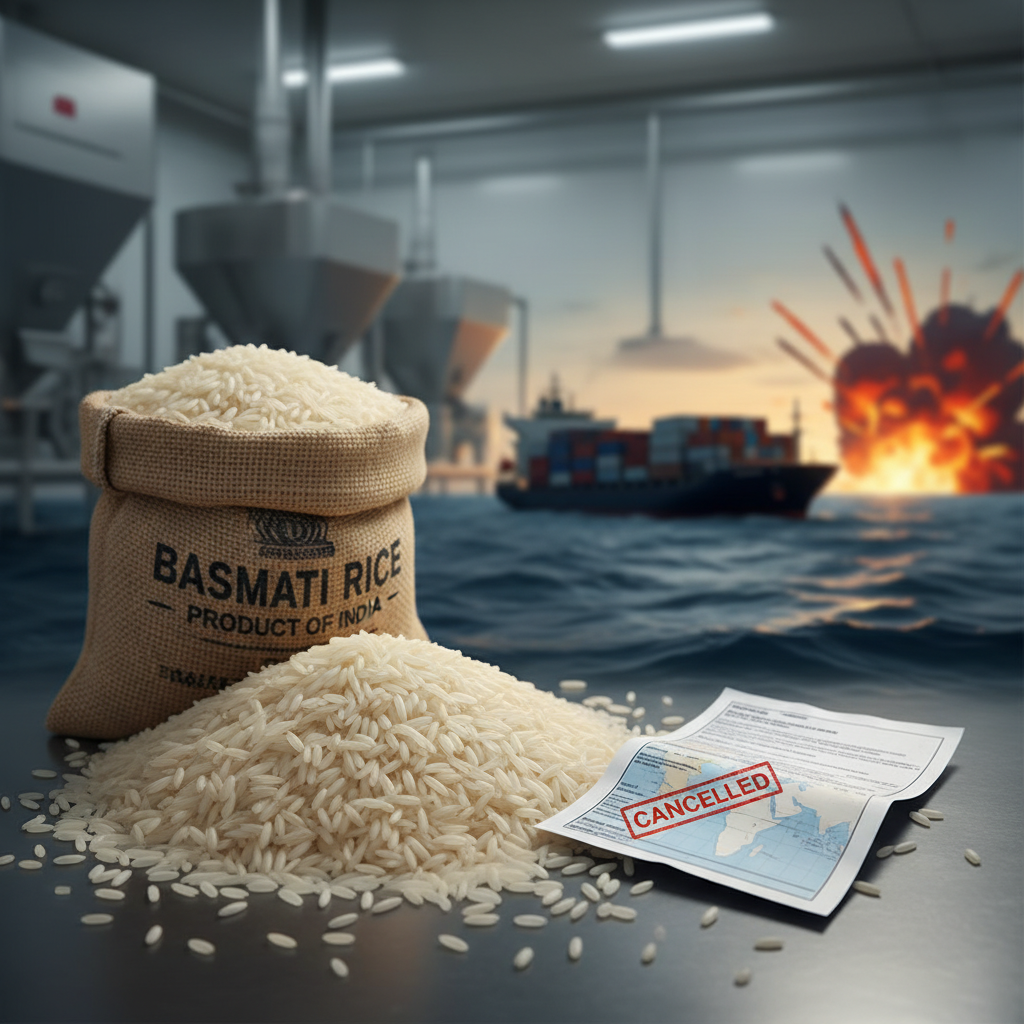
Basmati Rice Prices Plummet Amidst Export Disruptions from Iran Conflict
The basmati rice market in India is facing a downturn, with prices experiencing a noticeable drop. This shift is primarily attributed to significant disruptions in exports, particularly to the Middle East, a crucial market for Indian basmati rice. Industry experts are closely monitoring the situation, as the ongoing conflict is expected to further impact the market dynamics.
The Ripple Effect of Conflict on Basmati Rice Exports
The core issue stems from the impact of the Iran war on trade routes and export capabilities. The Middle East is a vital destination, accounting for a substantial portion of India’s basmati rice shipments. The current disruptions have created a logjam, with approximately 400,000 tonnes of basmati rice currently held up at ports and in transit. This bottleneck is a direct consequence of the conflict, which has hindered the smooth flow of goods.
Market Dynamics and Price Fluctuations
The reduced export capacity has led to an oversupply in the local market, subsequently driving down prices. This scenario presents a challenge for Indian exporters and farmers, who depend on the robust demand from the Middle East to sustain their businesses. The longer the conflict persists, the more pronounced the price declines are likely to become, potentially affecting the profitability of those involved in the basmati rice supply chain.
Expert Insights and Future Outlook
Industry experts are closely watching the developments, offering insights into the potential trajectory of the market. The duration and intensity of the conflict will play a crucial role in determining the extent of the price drops and the overall impact on the sector. The current situation underscores the vulnerability of international trade to geopolitical events and the importance of diversifying markets and supply chains to mitigate risks.
Understanding the Key Elements
- Who: Industry experts are closely monitoring the situation.
- What: Basmati rice prices are falling due to disruptions in exports. Approximately 400,000 tonnes of rice are held up.
- Where: The impact is felt in the local market in India and affects exports to the Middle East.
- When: The disruptions are happening currently.
- How: Disruptions in exports are caused by the Iran war.
- Why: The Iran war disrupts exports, leading to price drops.
The situation highlights the complex interplay between global events and local markets. The basmati rice sector, like many others, is susceptible to external factors that can significantly influence its performance. The coming months will be critical in assessing the long-term impact of the current disruptions and the strategies that stakeholders will employ to navigate these challenges.
Source: Industry-Economic Times
About the Author