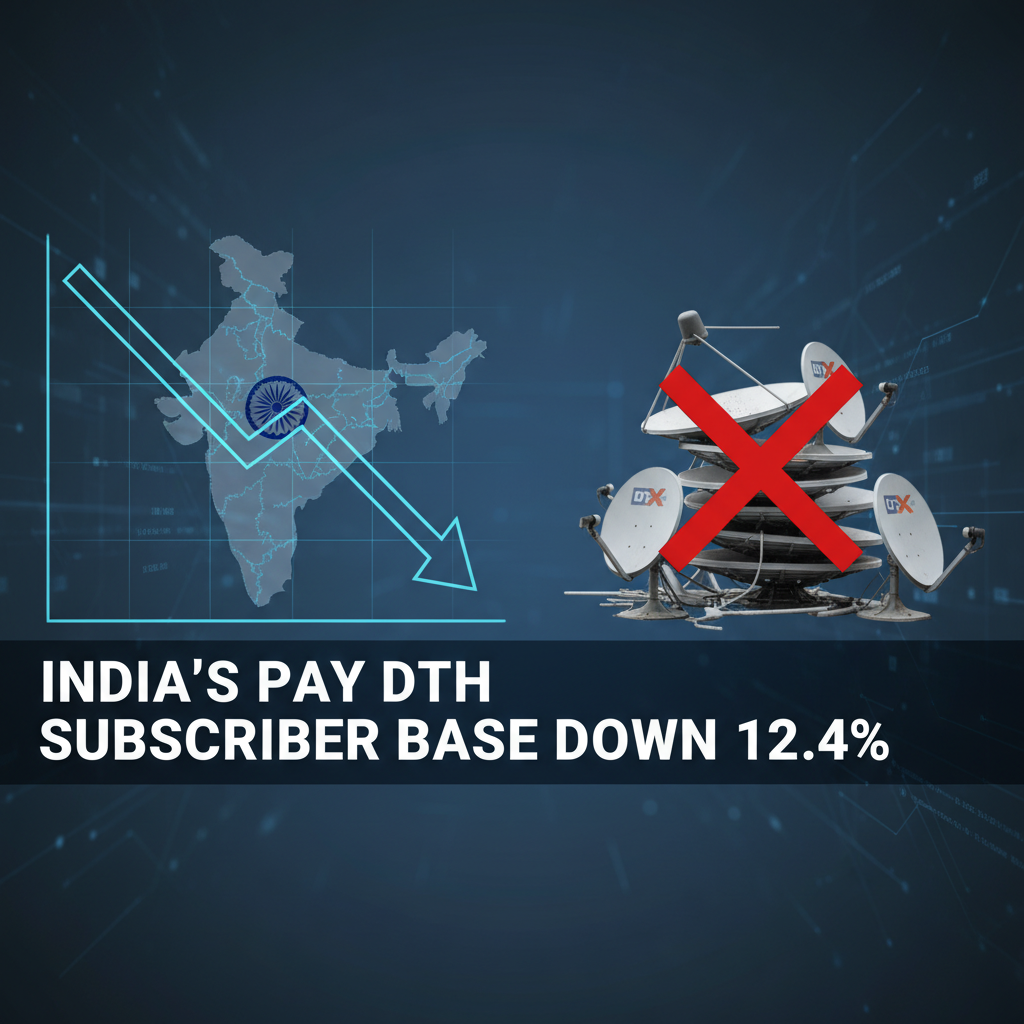
India’s Pay DTH Sector Shrinks: Subscriber Base Down 12.4%
The Indian pay direct-to-home (DTH) sector is facing a period of contraction. According to recent reports, the subscriber base in India fell by a considerable 12.4% during the December quarter. This decline brings the total number of subscribers down to 51 million. The data indicates a significant shift in the media and entertainment landscape, with several factors contributing to this trend.
Key Trends in the DTH Market
The shrinking subscriber base is a critical indicator of the challenges faced by the pay DTH sector. Several elements are influencing this downward trajectory. The rise of Internet protocol television (IPTV) is one such factor, as it provides an alternative platform for content delivery. Furthermore, the decline in private FM radio channels and the reduction in advertising revenue for these channels also point towards a broader shift in consumer preferences and media consumption habits. Registered cable distribution operators continue to operate, however, they are also navigating a changing market. Satellite television channels remain available for downlinking, but they are subject to the same market dynamics.
The Impact of Subscriber Decline
The primary reason for the shrinking subscriber base is the shift in consumer behavior and technological advancements. The availability of content through IPTV and other over-the-top (OTT) platforms offers consumers more choices. This shift in viewing habits is affecting the traditional DTH market. The reduction in advertising revenue for private FM radio channels suggests a broader trend of advertisers reallocating their budgets across different media platforms. This is impacting the overall revenue streams within the media sector.
Market Dynamics and Future Outlook
The pay DTH sector in India, which includes several key players, is navigating a complex market environment. The trend of declining subscriber numbers is a critical challenge. The increasing popularity of IPTV and OTT platforms is reshaping the competitive landscape. The ability of DTH operators to adapt to these changes will be key to their future success. Factors such as content offerings, pricing strategies, and technological innovations will play a crucial role in determining the future of the pay DTH sector. The industry must evolve to meet the changing demands of consumers and remain competitive in the face of these evolving market dynamics.
The analysis of the December quarter data provides valuable insights into the current state of the media sector in India. The trends observed are indicative of broader shifts in consumer behavior, technological advancements, and the competitive landscape. The pay DTH sector is at a crossroads, and its future will depend on its ability to innovate and adapt to the changing market dynamics. The industry’s response to these challenges will shape the future of television consumption in India. The data underscores the need for strategic adjustments to stay relevant and competitive.
Conclusion
The decline in the pay DTH subscriber base in India during the December quarter reflects a significant shift in the media and entertainment sector. The rise of IPTV, the decline in FM radio advertising revenue, and the evolving consumer preferences all contribute to this trend. The ability of DTH operators to adapt and innovate will be crucial for their survival in a competitive market. The industry’s future hinges on its capacity to respond to the changing dynamics and consumer demands. This data offers a snapshot of the challenges and opportunities facing the sector. The evolving landscape of media consumption in India continues to present both challenges and opportunities for industry players.
Source: Industry-Economic Times
About the Author