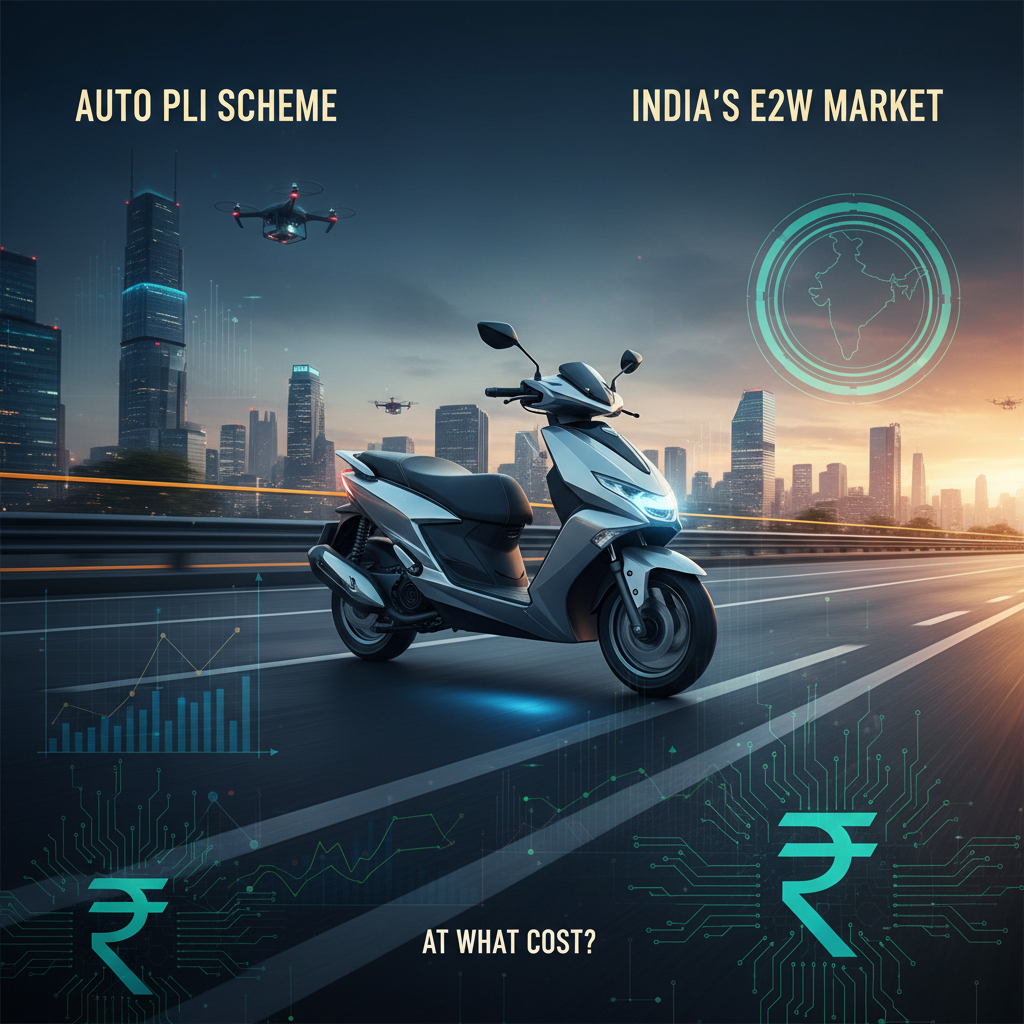
Auto PLI Scheme: Boosting India’s E2W Market, but at What Cost?
India’s electric two-wheeler (e2W) sector is experiencing a surge in production, largely attributed to the government’s auto Production Linked Incentive (PLI) scheme. However, a recent analysis by the Centre for Economic Data and Analytics (C-DEP) reveals a nuanced picture, suggesting that the scheme’s impact is primarily concentrated on the domestic market, with less emphasis on fostering export competitiveness. This shift raises critical questions about the long-term sustainability and global competitiveness of India’s e2W industry.
The Auto PLI Scheme: A Double-Edged Sword
The auto PLI scheme was introduced with the ambitious goal of boosting the electric two-wheeler sector and accelerating the transition to electric mobility in India. The scheme offers financial incentives to manufacturers, aiming to encourage investment in local production and technological advancements. While the scheme has undeniably spurred a rise in production scale, its effects are not uniformly distributed. The primary beneficiaries appear to be the companies approved under the PLI scheme, who enjoy a cost advantage due to the incentives.
This situation presents a challenge for Non-PLI manufacturers, who face a shrinking market share. The competitive landscape is becoming increasingly tilted in favor of those who can leverage the scheme’s benefits. This dynamic risks marginalizing innovation-led players who may not have the scale or resources to navigate the PLI requirements, potentially stifling the very innovation the scheme was designed to promote.
Focus on the Domestic Market
The core issue is that the auto PLI scheme has seemingly redirected the focus of e2W manufacturers towards the domestic market, rather than enhancing their export readiness. While a strong domestic market is crucial, an over-reliance on it can make the industry vulnerable to fluctuations in local demand and limit its global growth potential. The scheme’s incentives, while attractive, may be inadvertently creating a protective environment that hinders the development of globally competitive products and manufacturing processes.
Risks and Concerns
The C-DEP analysis highlights several potential risks associated with the current trajectory. One significant concern is the potential for market share loss to global competitors. As the Indian e2W market expands, it will inevitably attract international players. If Indian manufacturers are not equipped to compete on a global scale, they risk being overtaken by more established and innovative companies. Furthermore, the concentration of market power among a few PLI-approved companies could lead to reduced competition and potentially higher prices for consumers.
Another concern is the impact on innovation. The scheme’s focus on cost advantages may inadvertently de-emphasize the importance of research and development, which is crucial for creating differentiated products and staying ahead of the competition. If innovation-led players are marginalized, the entire industry could suffer from a lack of dynamism and technological progress.
The Path Forward
To ensure the long-term success of India’s e2W sector, policymakers and industry stakeholders must carefully consider the scheme’s impacts. While the auto PLI scheme has achieved its goal of boosting production, a more balanced approach is needed. This includes:
- Promoting Export Competitiveness: Incentives should be designed to encourage manufacturers to focus on global markets, not just the domestic market.
- Supporting Innovation: Measures should be taken to support innovation-led players and ensure they can compete with larger, PLI-approved companies.
- Fostering Competition: Policymakers should monitor market concentration and take steps to prevent monopolies or oligopolies that could harm consumers and stifle innovation.
The future of India’s e2W sector hinges on striking the right balance between domestic market growth and global competitiveness. The auto PLI scheme has laid a foundation for growth, but its long-term success depends on addressing the challenges it has created and adapting to the evolving dynamics of the global electric vehicle market.
About the Author