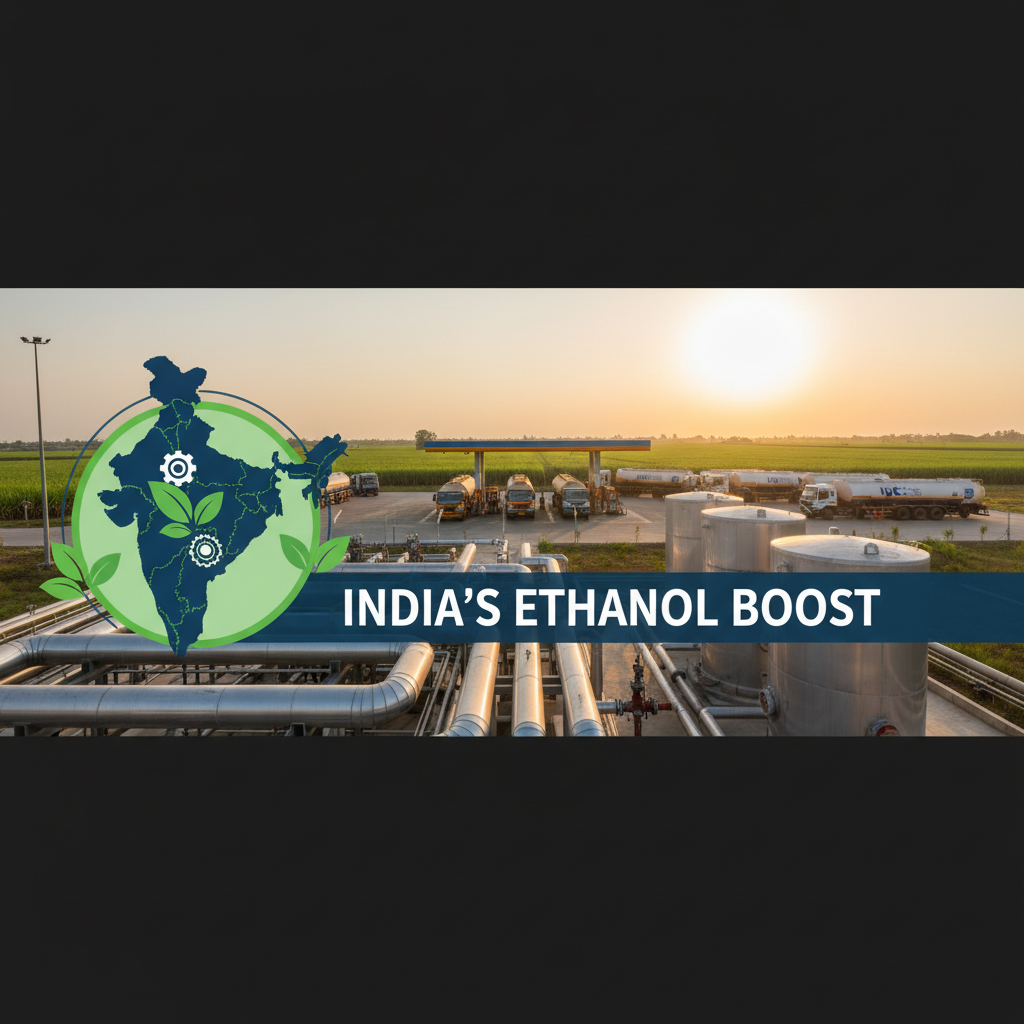
India Mandates Sale of 20% Ethanol-Blended Petrol from April 2026
In a significant move towards cleaner energy and economic self-reliance, India will implement a nationwide mandate for 20% ethanol-blended petrol, commencing April 1, 2026. This policy decision, as reported by the Economic Times, marks a pivotal step in the country’s efforts to reduce its dependence on fossil fuels and mitigate environmental impact. The initiative underscores India’s commitment to a sustainable energy future, benefiting both the environment and the agricultural sector.
The Core of the Policy: Ethanol-Blended Petrol
At the heart of this policy is the blending of petrol with ethanol, a renewable fuel derived primarily from agricultural products. The mandate specifies that petrol sold across India will contain up to 20% ethanol, ensuring a minimum octane rating of 95. This blending process reduces the reliance on traditional petrol, which in turn helps to curb oil imports. Furthermore, the use of ethanol contributes to a reduction in emissions, aligning with global efforts to combat climate change.
Environmental and Economic Benefits
The decision to mandate ethanol-blended petrol is driven by several key factors. Firstly, the use of ethanol as a fuel additive is a practical approach to lower emissions. Ethanol burns cleaner than conventional gasoline, producing fewer greenhouse gases and pollutants. Secondly, the initiative supports farmers by creating increased demand for agricultural products, such as sugarcane and grains, which are used in ethanol production. This policy thus serves a dual purpose: environmental protection and economic empowerment.
Implementation and Compatibility
The transition to ethanol-blended petrol is designed to be seamless for consumers. Most new vehicles are already compatible with the 20% ethanol blend. This ensures that the policy can be implemented without requiring significant changes in infrastructure or vehicle modifications. The how of blending petrol with ethanol is straightforward, integrating the ethanol into the existing fuel supply chain. This approach is intended to ensure widespread availability and ease of adoption across India.
Supporting the Renewable Energy Sector
By mandating the sale of ethanol-blended petrol, India is actively promoting the renewable fuel sector. This policy creates a stable market for ethanol, encouraging further investment in ethanol production and distribution infrastructure. It’s a strategic move that not only addresses environmental concerns but also fosters economic growth within the country. The why behind this policy is clear: to reduce oil imports and emissions, while simultaneously supporting domestic agriculture and the renewable energy industry.
Conclusion
India’s mandate for 20% ethanol-blended petrol represents a forward-thinking approach to energy and environmental policy. By embracing ethanol as a renewable fuel, India is taking a significant step towards a more sustainable and self-reliant future. This initiative underscores the country’s dedication to reducing its carbon footprint, supporting its farmers, and fostering growth in the renewable energy sector. The policy, set to take effect April 1, 2026, is poised to reshape India’s energy landscape for the better.
Source: Economic Times
About the Author