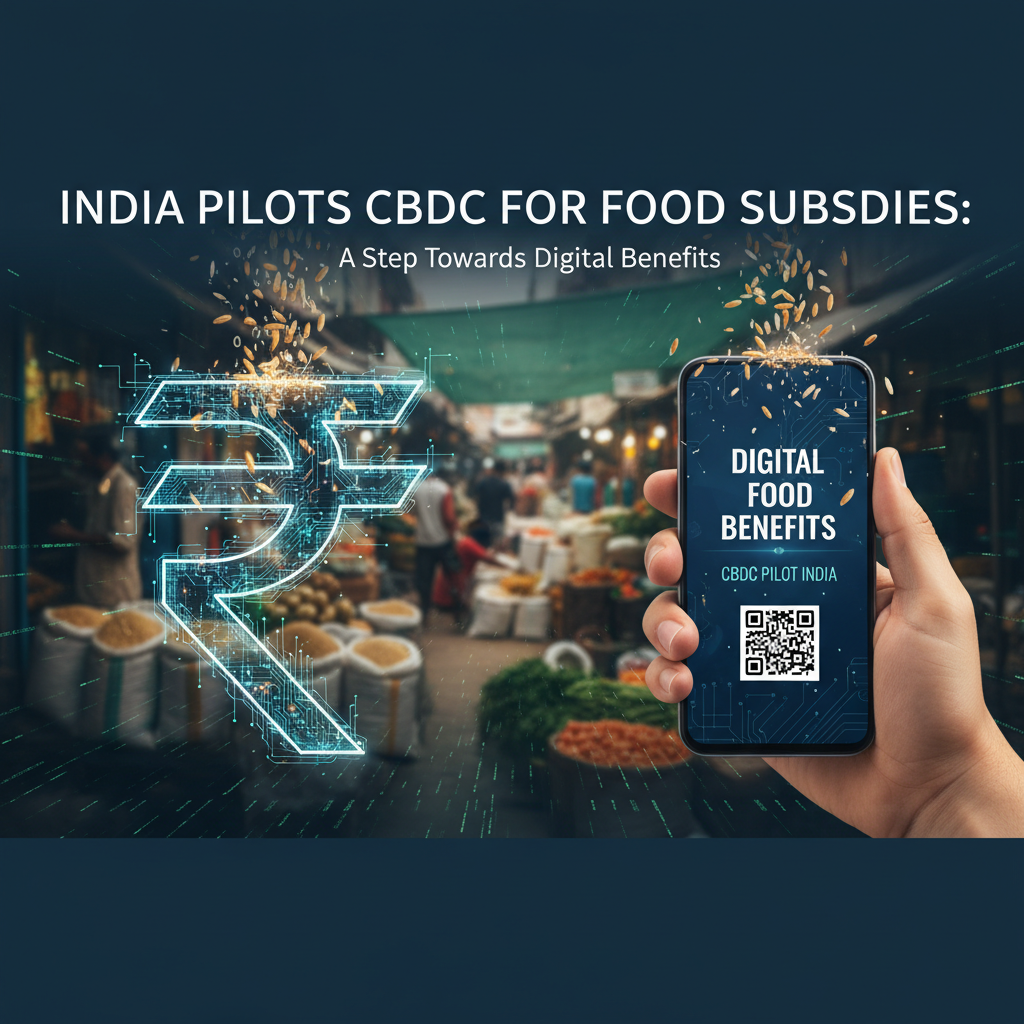
India Pilots CBDC for Food Subsidies: A Step Towards Digital Benefits
In a move signaling the evolution of India’s financial landscape, The Centre has launched a pilot program leveraging central bank digital currency (CBDC) for the distribution of food subsidies. This initiative, announced yesterday, marks a significant step towards modernizing the transfer of benefits under the Pradhan Mantri scheme and integrating digital payments into the food processing sector. This is a positive development, aiming to enhance the efficiency and transparency of government aid programs.
Understanding the CBDC Pilot Program
The core of this pilot involves the utilization of CBDCs, a digital form of currency issued by the Reserve Bank of India. What this means is that instead of traditional cash transfers, beneficiaries will receive their food subsidies in a digital format. How this works is through a system that facilitates direct and secure transactions, potentially reducing leakages and ensuring that the benefits reach the intended recipients efficiently. The pilot program is part of a broader effort to leverage financial technology (fintech) to improve governance and service delivery.
Key Objectives and Benefits
Why the government is pursuing this pilot is clear: to streamline food subsidy distribution. The use of CBDCs is expected to bring several advantages. These include:
- Efficiency: Digital transactions are generally faster and can reduce the time taken for subsidy disbursement.
- Transparency: Digital records create an audit trail, making it easier to track transactions and reduce opportunities for corruption.
- Financial Inclusion: Digital currencies can facilitate access to financial services for those who may be excluded from the traditional banking system.
- Cost Reduction: The move to digital can lower the costs associated with printing, distributing, and managing physical currency.
The pilot program is also aligned with the government’s broader digital India initiative, which seeks to transform India into a digitally empowered society and knowledge economy.
Implications for the Food Processing Sector
The integration of CBDCs into the food subsidy program has notable implications for the food processing sector. By digitizing payments, the government aims to create a more efficient ecosystem for farmers, retailers, and consumers. This can lead to better traceability of food products, improved supply chain management, and enhanced food security.
The pilot program is a forward-thinking initiative, and its success could pave the way for wider adoption of CBDCs in other government benefit programs. As the program evolves, it will be crucial to monitor its impact and address any challenges that arise to ensure its effectiveness and maximize its benefits.
Conclusion
The Centre’s move to pilot a CBDC-based system for food subsidy distribution is a testament to India’s commitment to embracing digital innovation. This initiative promises to enhance the efficiency, transparency, and reach of government benefits, contributing to a more financially inclusive and digitally empowered India. The success of this pilot will set a precedent for future digital currency applications in the country’s social and economic programs.
About the Author