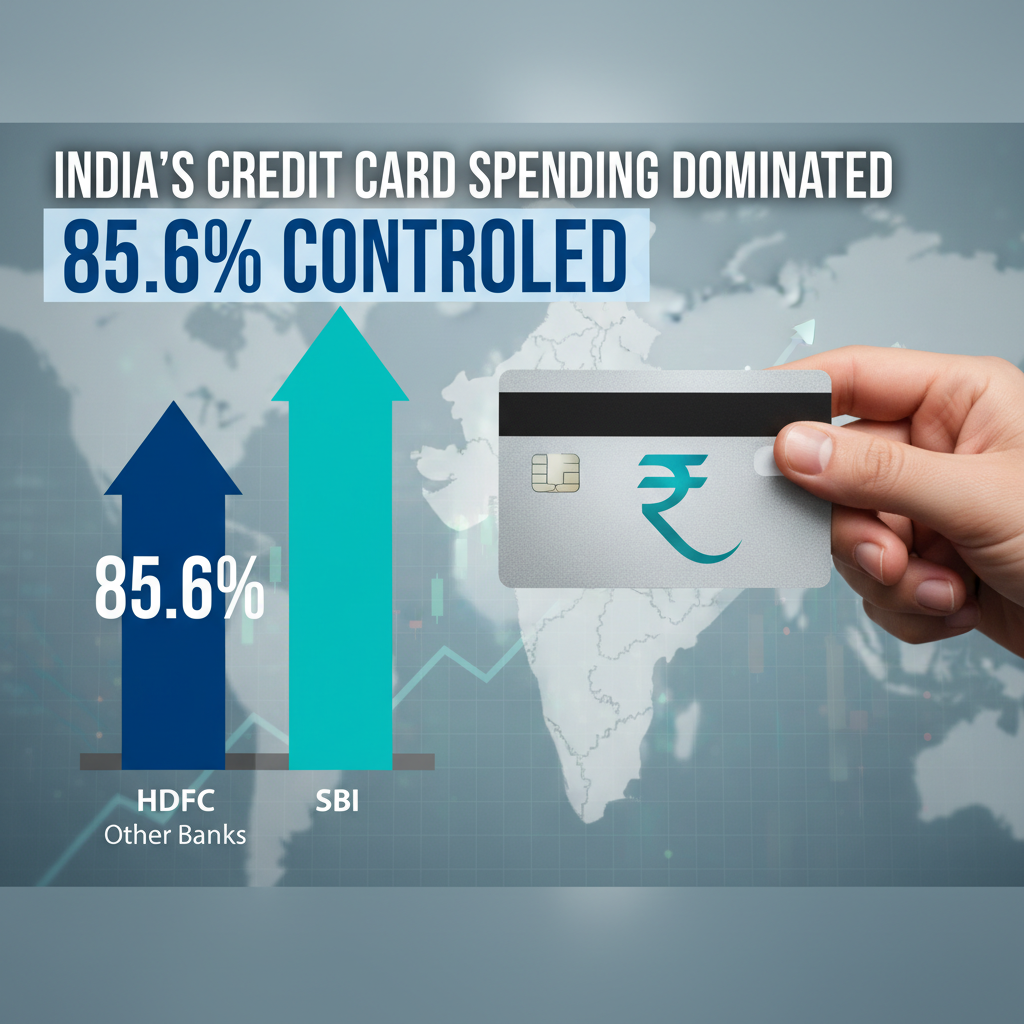
HDFC & SBI Dominate India’s Credit Card Market: 85.6% of Spending Controlled
The Indian credit card market is undergoing a significant transformation, marked by increasing consolidation. As of the present, the dominance of a few key players is becoming increasingly pronounced. This shift has considerable implications for consumers and the financial services sector as a whole. According to recent reports, the trend highlights a concentration of market share among the largest banks, reshaping the competitive landscape.
The Rise of Market Leaders
Two major entities, HDFC Bank and SBI (State Bank of India), are at the forefront of this consolidation. Together, these two banks account for a substantial portion of the overall credit card spending in India. This concentration of spending underscores the trust and reliance that consumers place in these established financial institutions. The data indicates a clear preference for cards issued by these major players, particularly for significant purchases.
The trend shows a clear shift in consumer behavior. With consumers increasingly turning to the convenience and rewards offered by credit cards, the choice of the issuing bank becomes crucial. The top banks have invested heavily in building robust customer service, attractive rewards programs, and secure transaction platforms, thereby attracting a larger customer base. This strategy has proven successful, as evidenced by the growing market share controlled by these key players.
Top 5 Banks Control Over 85% of Transactions
The consolidation isn’t limited to just two banks. The top five lenders in the Indian credit card market collectively control more than 85% of all credit card transactions. This statistic paints a vivid picture of the market’s structure, where a handful of major players dominate the landscape. This concentration of market power can influence various aspects, including pricing, product offerings, and customer service standards.
The dominance of these top banks has several contributing factors. Firstly, their extensive branch networks and digital infrastructure enable them to reach a broader customer base. Secondly, these banks often have the resources to offer competitive interest rates, attractive rewards, and enhanced security features, making their credit cards more appealing to consumers. Finally, the brand reputation and trust associated with these established financial institutions play a vital role in attracting and retaining customers. The increasing reliance on these banks for big-ticket purchases further cements their position in the market.
Implications and Future Outlook
The consolidation of the credit card market in India has several implications. For consumers, it could mean a more standardized set of offerings and a potential for increased competition among the top banks to provide better rewards and services. For smaller players, the challenge lies in differentiating themselves and attracting customers in a market dominated by giants.
Looking ahead, the trend of consolidation is expected to continue. As the digital economy grows and more transactions move online, credit cards are likely to remain a preferred mode of payment. The major players, like HDFC Bank and SBI, are well-positioned to capitalize on this growth. Their investments in technology, customer service, and strategic partnerships will be crucial in maintaining and expanding their market share. This dynamic market is a crucial part of India’s financial ecosystem.
Source: Industry-Economic Times
About the Author