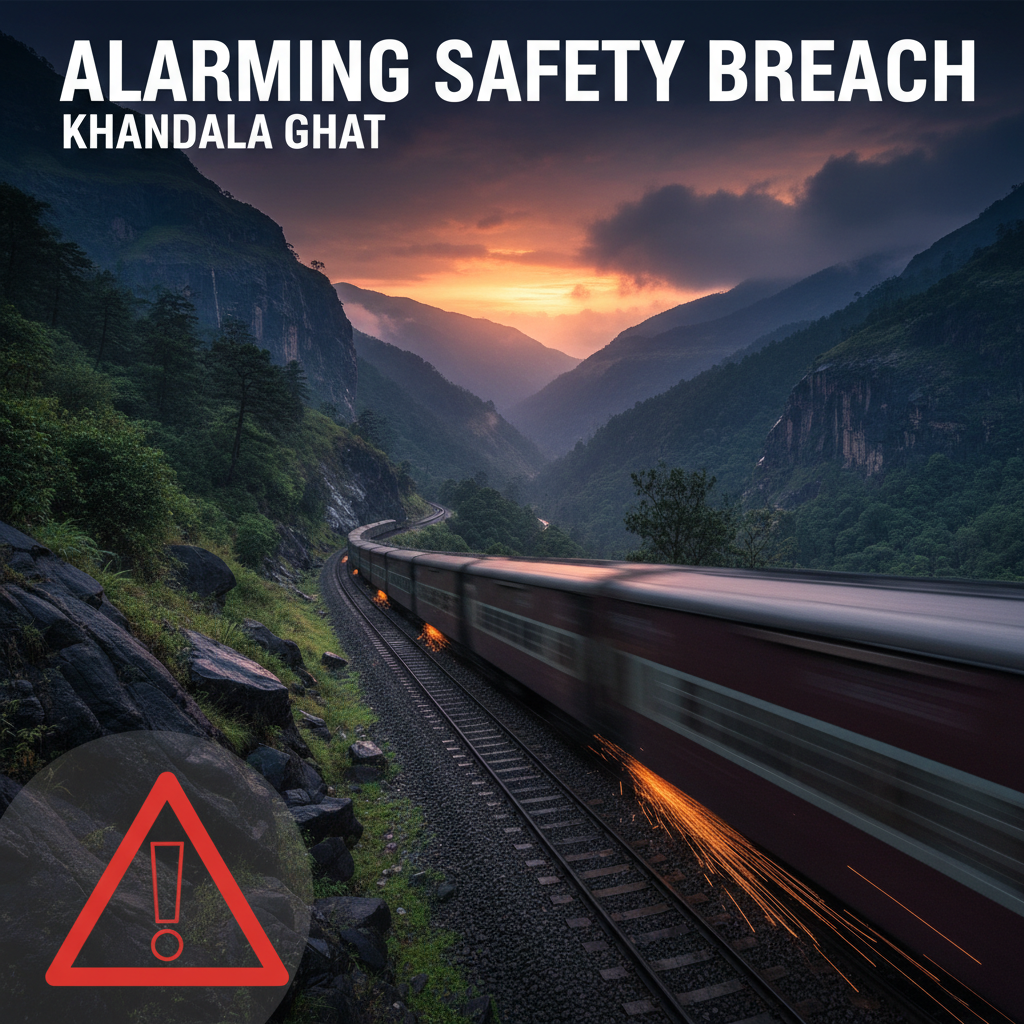
Alarming Safety Breach: Goods Train Speeds Down Khandala Ghat, Triggering Probe
A significant railway safety incident has raised serious concerns regarding operational protocols on the Mumbai-Pune route. A goods train, comprising 50 wagons, was found to be traveling at an alarming 75 kmph while descending the steep gradients of the Khandala Ghat, exceeding the 60 kmph speed limit. This incident has prompted an immediate investigation by Central Railway, highlighting a potential failure in train control.
The Incident Unfolds
The incident occurred between the Palasdari and Karjat railway stations, critical sections of the Mumbai-Pune route known for their challenging terrain. The high speed of the goods train, as reported by the Economic Times, indicated a severe lapse in safety measures. The primary concern revolves around the crew’s ability to control the train, particularly its braking systems, while navigating the demanding descent.
Investigation and Accountability
Central Railway has initiated a thorough probe into the incident. The investigation will focus on determining the precise cause of the speeding, with the primary suspicion falling on crew failure. Authorities will examine whether the train’s braking systems were functioning correctly and if the crew adhered to established safety protocols. The investigation aims to pinpoint the root causes and prevent future occurrences of such critical safety lapses.
Key Aspects Under Scrutiny
- Brake Functionality: A detailed assessment of the train’s braking systems is underway to ensure they were operational during the descent.
- Crew Performance: The investigation will scrutinize the actions of the train crew to ascertain if they followed all necessary procedures.
- Speed Compliance: Authorities will analyze the train’s speed logs to confirm the extent of the speeding and identify any contributing factors.
Implications for Railway Safety
This incident underscores the critical importance of stringent safety protocols in railway operations. The safety lapse involving the goods train highlights the need for continuous vigilance, rigorous training, and effective oversight to prevent potential accidents. Such incidents not only endanger lives but also disrupt essential transport services.
The investigation by Central Railway is a crucial step in addressing the systemic issues that led to this event. The findings and subsequent actions will be vital in reinforcing safety standards and ensuring the reliability of railway transport, particularly on routes like the Mumbai-Pune line, which are vital for both passenger and freight movement.
Conclusion
The speeding goods train incident at Khandala Ghat serves as a stark reminder of the potential risks inherent in railway operations. The ensuing probe by Central Railway is essential to uncover the causes and implement necessary corrective measures. Enhancing safety protocols, rigorous monitoring, and comprehensive crew training are vital to avert similar incidents and maintain the integrity of the railway network. As the investigation progresses, the railway sector and the public will be keenly awaiting the findings and the resulting improvements in safety standards.
About the Author