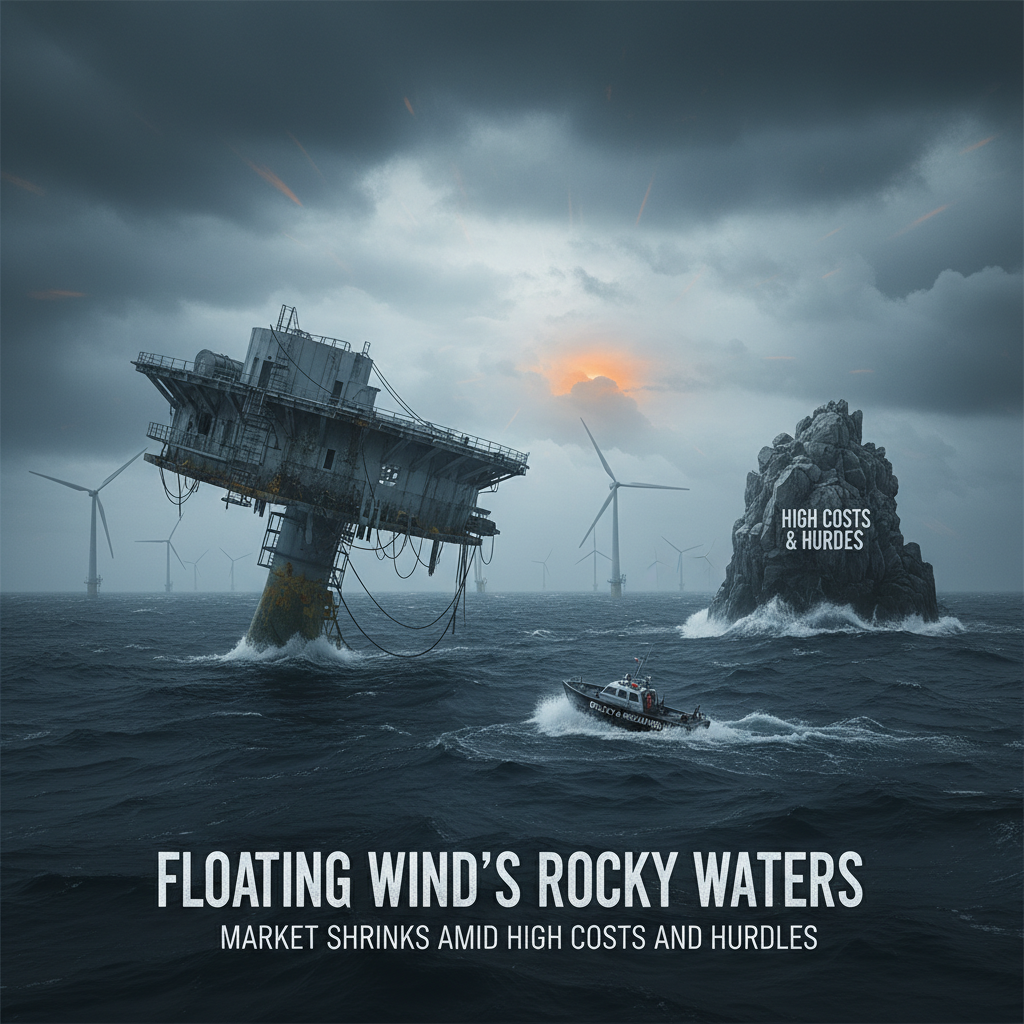
Floating Wind’s Rocky Waters: Market Shrinks Amidst High Costs and Hurdles
The renewable energy sector, once buoyed by ambitious projections, is facing a stark reality check in the realm of floating wind technology. According to recent reports, the market for floating wind turbines is significantly smaller than initially anticipated. This downturn, as highlighted by Technip Energies CEO Arnaud Pieton, underscores a critical juncture for the wind energy industry, particularly in Europe, where several nations are struggling to attract investors for new wind farm projects.
The Reality Check: Demand Fails to Meet Expectations
The core issue, as pointed out by Arnaud Pieton, is the shortfall in demand for floating wind turbines. While these technologies were hailed as a solution to tap into deeper offshore wind resources, their deployment has been hampered by several challenges. The offshore wind industry, in general, is struggling with headwinds that are now evident in the floating wind sector.
High Costs: A Barrier to Entry
One of the primary factors contributing to this contraction is the high cost associated with floating wind projects. The technology is still relatively nascent compared to fixed-bottom turbines, making it more expensive to develop, install, and maintain. These elevated costs have made it difficult for project developers to secure the necessary funding and achieve the desired returns on investment. The financial burden is a significant deterrent, especially in a market where competition from other renewable sources is intensifying.
Limited Suitable Sites: A Geographic Constraint
Another critical hurdle is the limited number of suitable sites for floating wind farms. These turbines require specific conditions, including deep waters and favorable wind resources. Finding locations that meet these criteria while also minimizing environmental impact and avoiding conflicts with other marine activities is a complex undertaking. The scarcity of viable sites further restricts the market’s growth potential.
Broader Implications for the Offshore Wind Industry
The challenges faced by the floating wind sector reflect broader issues within the offshore wind industry. Several European countries, once at the forefront of renewable energy development, are now struggling to attract bidders for new wind farm projects. This slowdown is attributed to a combination of factors, including rising material costs, supply chain bottlenecks, and regulatory hurdles. These issues have created uncertainty in the market, making it less attractive for investors and developers.
Policy and Market Dynamics
The current situation highlights the intricate interplay between policy and market dynamics in the renewable energy sector. Government support, such as subsidies, tax incentives, and streamlined permitting processes, plays a crucial role in driving investment and innovation. However, if these policies are insufficient or inconsistent, they can hinder market growth. The European market, in particular, is grappling with the need to balance ambitious climate targets with the economic realities of project development.
Looking Ahead
As the wind energy sector navigates these challenges, there is a clear need for strategic adjustments. This includes efforts to reduce costs, enhance project economics, and streamline regulatory processes. Moreover, there is a growing recognition of the need for collaborative approaches, bringing together governments, industry players, and research institutions to foster innovation and accelerate the deployment of renewable energy technologies. The insights from Arnaud Pieton and Technip Energies serve as a crucial reminder of the complexities inherent in transitioning to a sustainable energy future.
About the Author