Chirag Paswan Sounds Alarm: Misleading Claims by Influencers Threaten Food Processing
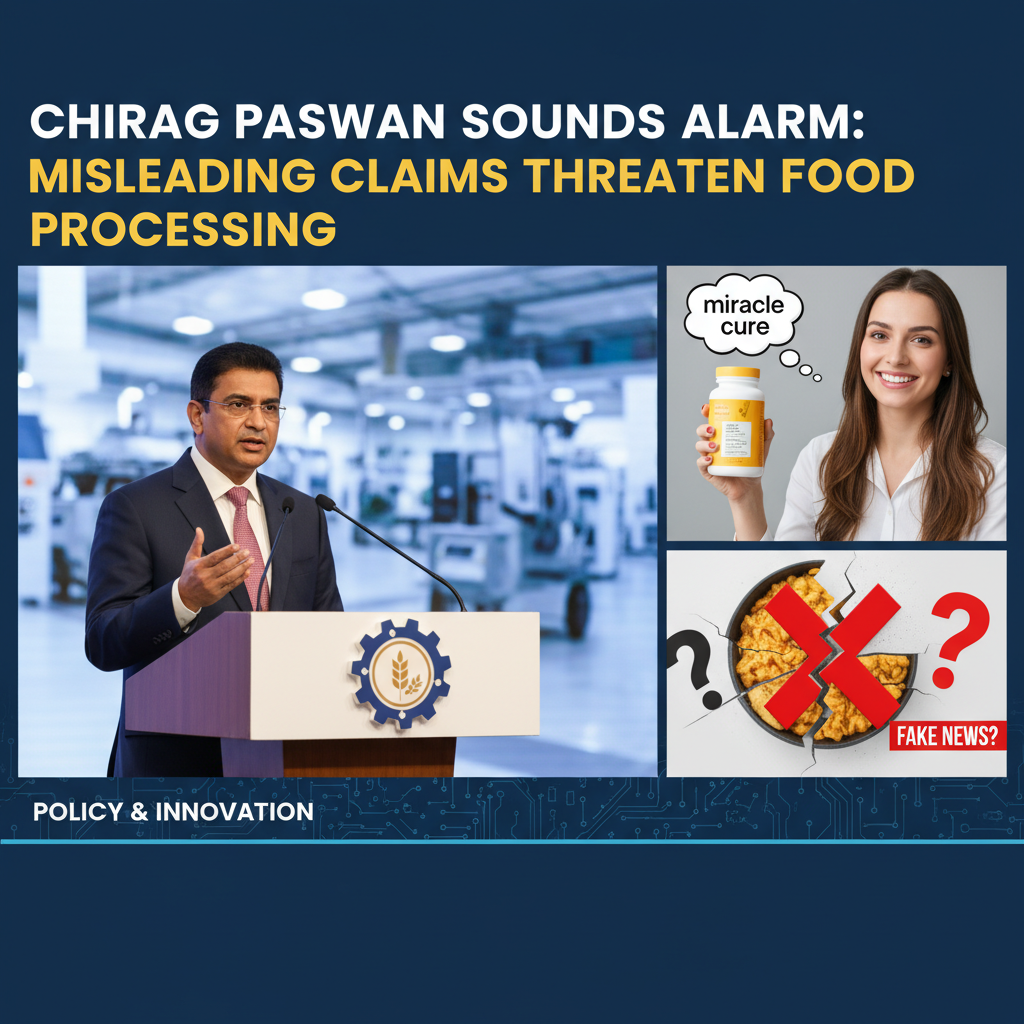
In a move highlighting the growing influence of online narratives on industry, Union Minister Chirag Paswan has voiced serious concerns regarding the proliferation of misleading claims about processed foods. The minister’s statement underscores a critical intersection of social media, consumer perception, and the economic health of the food processing sector. This issue demands careful consideration from all involved, from policymakers to the influencers themselves.
The Core of the Concern
At the heart of Chirag Paswan’s warning is the alleged spread of misinformation by social media influencers regarding processed foods. The minister explicitly stated that these claims are detrimental, not only to the reputation of the food processing industry but also to its overall development. The core issue revolves around the potential for these narratives to erode consumer confidence, thereby impacting the industry’s growth trajectory. The minister’s stance reflects a broader concern about the need for accuracy and responsibility in online content, particularly when it concerns public health and economic sectors.
The Call to Action and the Stakeholders Involved
Recognizing the severity of the situation, Chirag Paswan has issued a call to action, urging various stakeholders to collaborate in addressing the problem. He specifically mentions the need for cooperation among stakeholders, experts, and social media platforms. The collaborative approach is essential to effectively counter the spread of misinformation and promote fact-based communication. This involves challenging the false narratives with credible information and ensuring that consumers have access to accurate and reliable data. The success of this initiative hinges on the willingness of all parties to prioritize transparency and consumer well-being.
Key Participants:
- Chirag Paswan: The Union Minister who brought attention to the issue.
- Social Media Influencers: Those allegedly spreading misleading information.
- Stakeholders: Industry representatives and other interested parties.
- Experts: Professionals who can provide accurate information about processed foods.
Why This Matters: Safeguarding Industry and Consumers
The primary motivations behind Chirag Paswan’s call to action are twofold: to safeguard the growth of the food processing industry and to protect consumer confidence. The industry faces potential financial losses and reputational damage if false narratives persist. Simultaneously, consumers risk making uninformed decisions about their diets, which could affect their health and well-being. By challenging misinformation and promoting fact-based communication, the initiative aims to create a more informed environment for both the industry and consumers. This proactive approach is crucial in an era where social media significantly shapes public perception.
The Role of Policy and Future Directions
The issue highlighted by Chirag Paswan also has significant implications for policy. The government may need to explore regulatory frameworks to address the spread of misinformation on social media, especially when it concerns critical sectors such as food processing. This could involve collaborations with social media platforms to ensure content accuracy and transparency. Furthermore, it necessitates the development of educational campaigns to empower consumers with the knowledge to discern between credible and misleading information. The long-term goal is to foster an environment where the food processing industry can thrive while consumers are well-informed and confident in their choices.
In conclusion, the concerns raised by Chirag Paswan highlight a critical need for vigilance and collaboration in the face of misinformation. Addressing the challenges posed by misleading claims requires a concerted effort from all stakeholders. By promoting accurate information and fostering transparency, the industry can protect its growth and maintain consumer trust. This approach is essential for the sustainable development of the food processing sector and the overall well-being of consumers.
About the Author