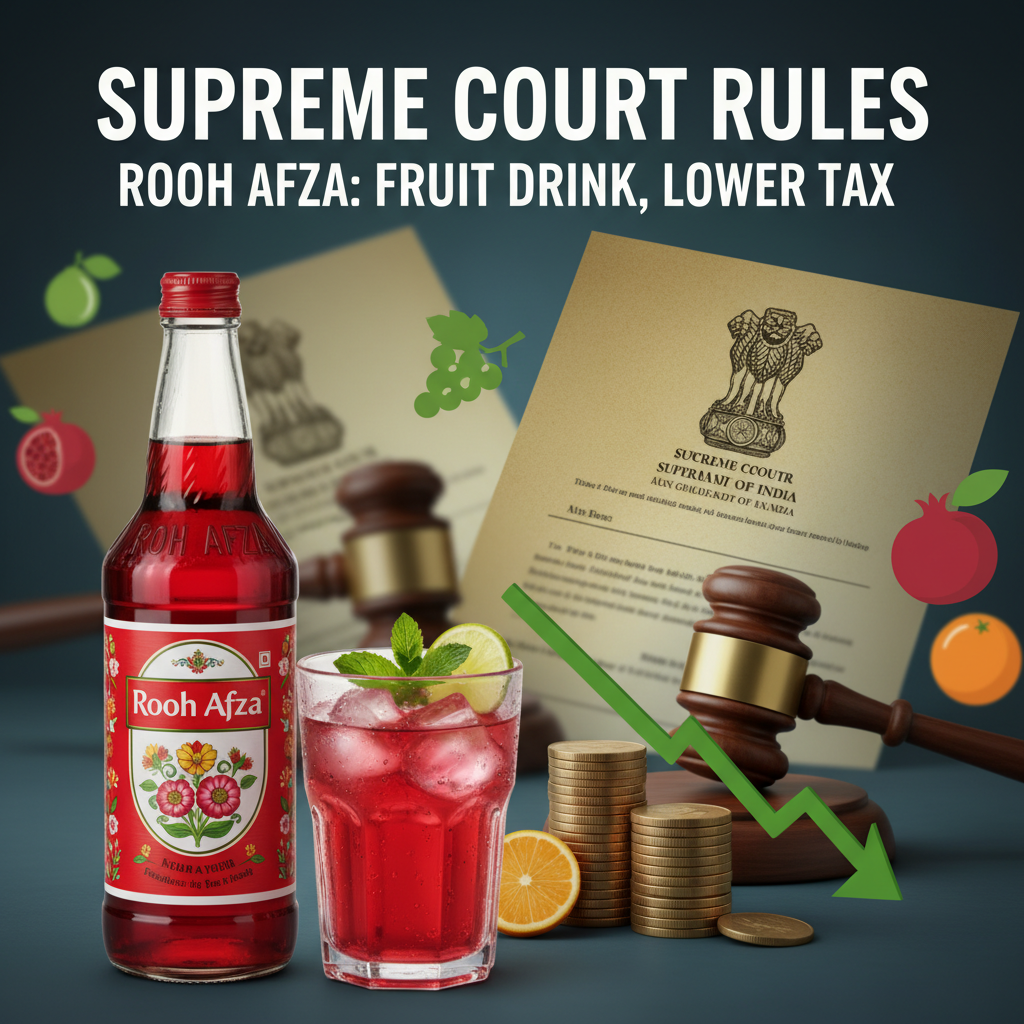
Supreme Court Ruling: Rooh Afza Classified as Fruit Drink, Eligible for Lower Tax
In a significant decision impacting the food processing industry, the Supreme Court has classified Hamdard’s beloved beverage, ‘Sharbat Rooh Afza,’ as a fruit drink. This ruling has substantial implications, primarily concerning the applicable Value Added Tax (VAT) rate. The court’s decision affirms that Rooh Afza is eligible for a lower tax rate, setting a precedent that could affect similar products in the market. This article explores the details of the ruling, its context, and its potential impact.
The Core of the Ruling
At the heart of the matter was the classification of ‘Sharbat Rooh Afza.’ The Supreme Court’s decision stemmed from a dispute with the Uttar Pradesh commercial tax department, which sought to place the drink in a higher tax bracket. However, the court’s ruling affirmed that because Rooh Afza is fundamentally derived from fruit ingredients, it qualifies as a fruit drink. Consequently, it is subject to a VAT of only 4%, a considerable difference from the potentially higher tax rate the Uttar Pradesh department had sought to impose.
The Supreme Court’s decision underscores the importance of accurate product classification in tax matters. The ruling highlights that the composition of a product is paramount in determining its tax liability. This clarification provides much-needed legal certainty for Hamdard and potentially other beverage manufacturers, offering a clearer understanding of tax obligations.
Background and Context
The case originated from an attempt by the Uttar Pradesh commercial tax department to reclassify Rooh Afza. This effort underscores the ongoing challenges faced by businesses in navigating complex tax regulations, particularly in the food and beverage sector. The department’s move prompted a legal battle that eventually reached the highest court in the land.
The Supreme Court’s intervention was crucial in resolving the dispute. By upholding the classification of Rooh Afza as a fruit drink, the court provided clarity, preventing potential financial burdens for Hamdard and setting a precedent for similar cases. The ruling aligns with the broader aim of ensuring fair and transparent taxation in the food industry.
Implications for the Food Processing Industry
The Supreme Court’s decision has broader implications for the food processing industry. By setting a precedent for classifying fruit-based beverages, the ruling could influence how similar products are taxed across India. This clarification is particularly relevant given the diverse range of fruit drinks and beverages available in the market.
For Hamdard, the ruling is a significant victory. It ensures that the company can continue to offer its popular product at a price that reflects the lower tax rate, maintaining its market competitiveness. The decision also provides a degree of financial stability, safeguarding the company from potential tax liabilities.
The ruling could also spur further discussions on tax policies within the food industry. It emphasizes the need for clear, consistent guidelines to prevent future disputes and ensure fair tax practices. The decision serves as a reminder of the importance of product classification and its impact on both businesses and consumers.
Conclusion
The Supreme Court’s classification of ‘Sharbat Rooh Afza’ as a fruit drink is a notable development in tax law, particularly within the context of the food processing industry. The ruling, which stemmed from a dispute initiated by the Uttar Pradesh commercial tax department, provides clarity on the applicable VAT and underscores the importance of accurate product classification.
This decision not only benefits Hamdard but also sets a precedent that could influence the taxation of similar products. It serves as a reminder of the critical role the judiciary plays in interpreting and applying tax laws, ensuring fairness and transparency in the market. The ruling reaffirms that the foundation of a product—in this case, the fruit ingredients in Rooh Afza—is key in determining its tax classification. The case highlights the importance of clear, consistent tax policies to support businesses and ensure consumer confidence.
Source: Economic Times
About the Author