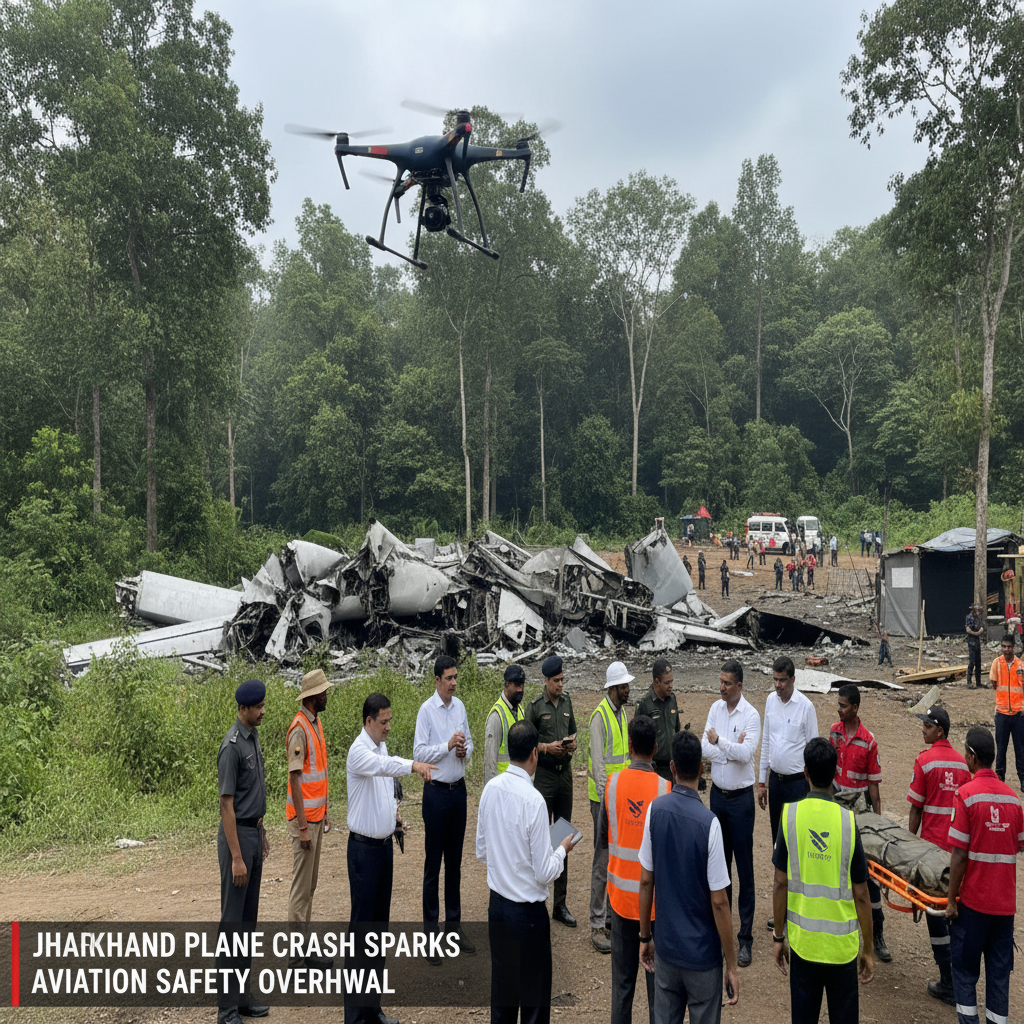
Jharkhand Plane Crash Sparks Aviation Safety Overhaul
The aviation industry is reeling from the recent crash of a RedBird Airways air ambulance in Jharkhand. This tragic event, which claimed the lives of all seven people on board, has triggered a wave of responses, including intensified scrutiny and the implementation of new safety measures. The incident underscores the critical need for constant vigilance and proactive measures within the aviation sector.
Investigation and Immediate Responses
Following the crash, the Aircraft Accident Investigation Bureau (AAIB) has launched a thorough investigation. The AAIB has already seized documents from RedBird Airways’ office as part of its inquiry. RedBird Airways has stated that the aircraft had no known defects, and the pilots were experienced. However, the investigation’s findings will be crucial in determining the exact cause of the accident and preventing similar incidents in the future.
DGCA’s Stringent Safety Measures
In response to the Jharkhand incident and a prior Learjet accident in January, the Directorate General of Civil Aviation (DGCA) is taking decisive action. The DGCA is implementing stringent safety measures, particularly for non-scheduled flight operators. These measures include the public disclosure of aircraft maintenance history and the introduction of a safety ranking system. The DGCA emphasizes that accountability extends beyond pilots, with accountable managers and senior leadership being held responsible for any non-compliance with safety regulations. This approach signifies a move towards a more comprehensive safety culture within the aviation industry, where every level of operation is under scrutiny.
Industry-Wide Safety Initiatives
The Business Jet Operators’ Association (BAOA) is also playing a key role in enhancing safety standards. The BAOA has urged its members to conduct internal safety audits and reinforce crew briefings. These initiatives aim to proactively address potential safety gaps and foster a stronger safety culture throughout the industry. By encouraging self-assessment and continuous improvement, the BAOA hopes to bolster overall safety performance. The emphasis on internal audits and crew briefings reflects a commitment to a proactive approach, rather than solely reacting to incidents.
The Broader Implications for Aviation Safety
The Jharkhand plane crash highlights the ongoing challenges in aviation safety. While RedBird Airways has stated the aircraft had no defects, and the pilots were experienced, the industry is responding with a renewed focus on prevention and accountability. The DGCA’s measures and the BAOA’s recommendations demonstrate a commitment to learning from incidents and continuously improving safety protocols. These actions are vital to maintaining public trust and ensuring the long-term sustainability of the aviation sector.
Looking Ahead
The aviation industry must remain vigilant, constantly reviewing and updating its safety protocols. The investigations into the Jharkhand crash and the subsequent actions by the DGCA and the BAOA will shape the future of aviation safety. By prioritizing transparency, accountability, and continuous improvement, the industry can work towards preventing future tragedies and ensuring the safety of all passengers and crew. The implementation of robust safety measures and a proactive approach to risk management are essential to navigating the complexities of modern aviation. The goal is to create a safer environment where every flight is as secure as possible.
Source: Industry-Economic Times
About the Author