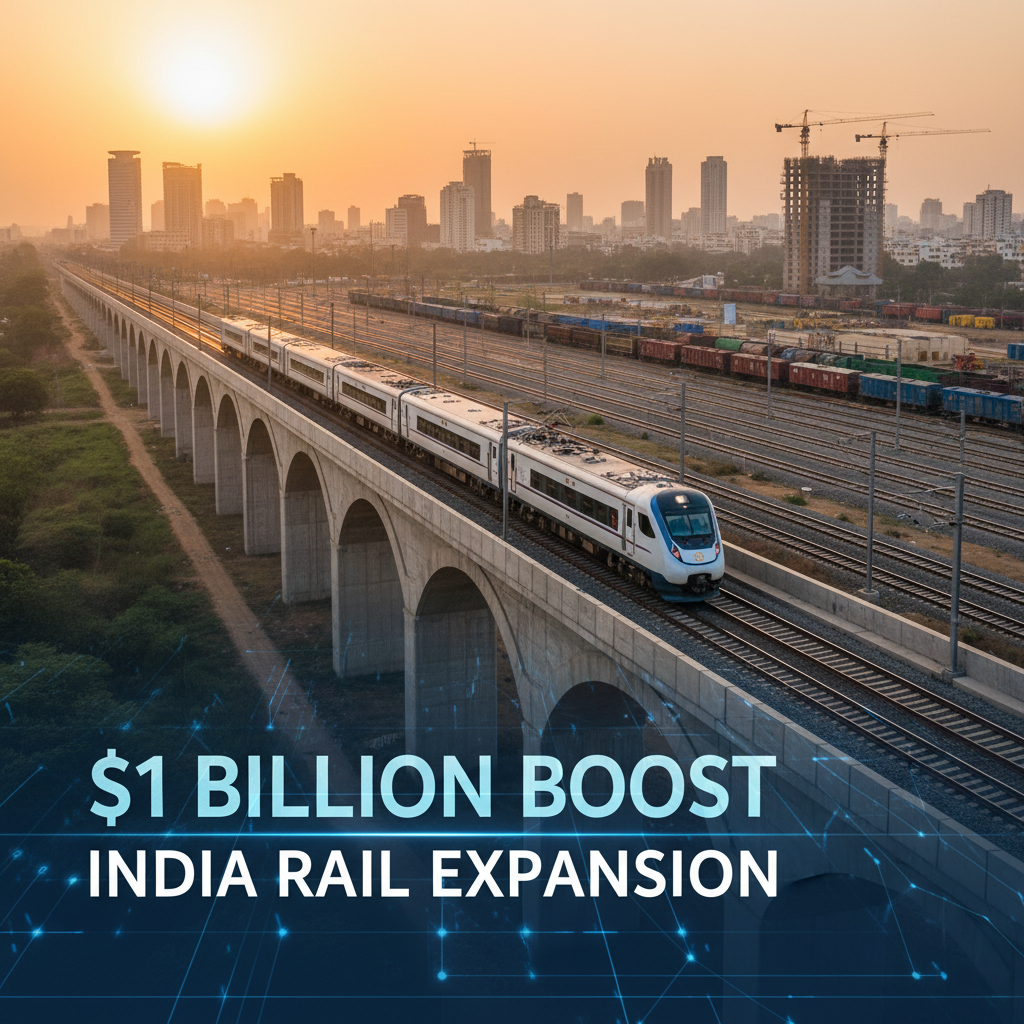
India’s Rail Network Gets a $1 Billion Boost: Expansion Projects Approved
In a significant move to bolster India’s infrastructure and economic growth, the Union Cabinet has approved a series of multitracking projects, signaling a major investment in the nation’s railway network. This initiative, valued at ₹9,072 crore, is set to expand the railway infrastructure across four states, promising to ease congestion, enhance freight movement, and improve overall connectivity. The projects are slated for completion by 2030–31, reflecting a long-term vision for the modernization of India’s transportation sector.
Strategic Expansion Across Key States
The approved projects will span approximately 307 kilometers across Maharashtra, Madhya Pradesh, Bihar, and Jharkhand. The Indian Railways, the implementing body, aims to significantly improve the efficiency of freight transport, a crucial component of economic activity. The initiative is not just about expanding tracks; it’s about fostering better connectivity for around 5,400 villages, thereby impacting the lives of millions by improving access to markets, services, and opportunities. The expansion is strategically designed to support the transport of key bulk commodities, which is essential for industrial growth and trade.
Key Objectives and Benefits
The primary objectives of these multitracking projects are multifaceted. The “why” behind this investment is clear: to ease congestion on existing lines, which frequently leads to delays and inefficiencies. The projects will improve the flow of freight, reducing transit times and costs for businesses. Furthermore, the enhanced connectivity will stimulate economic development across the regions involved, opening up new avenues for trade and commerce. The “what” of the project includes the expansion of the railway network, improving freight movement, and boosting connectivity. The “how” involves the physical expansion of the railway lines through multitracking, which allows for increased capacity and efficiency.
Impact on Economic Development and Connectivity
The projects are expected to have a far-reaching impact on the economic landscape of the states involved. By improving the efficiency of the railway network, the government aims to reduce logistics costs, making Indian businesses more competitive in the global market. The enhanced connectivity will also facilitate the movement of goods and people, boosting trade and tourism. The Union Cabinet’s decision underscores the government’s commitment to infrastructure development as a catalyst for economic growth. The “who” in this project is the Union Cabinet and the Indian Railways, driving the expansion and ensuring the projects are completed successfully. The “where” is specific: Maharashtra, Madhya Pradesh, Bihar, and Jharkhand—each of these states will experience a direct benefit from the enhanced rail infrastructure. The “when” is also set—the projects are targeted for completion by 2030–31.
Conclusion: A Vision for a Modernized Railway System
The approval of these multitracking projects marks a significant step towards modernizing India’s railway system. By investing in infrastructure, the government is not only addressing current challenges but also laying the foundation for future economic growth and development. This initiative highlights the critical role of railways in India’s economic strategy and reinforces the commitment to building a robust and efficient transportation network.
Source: Industry-Economic Times
About the Author