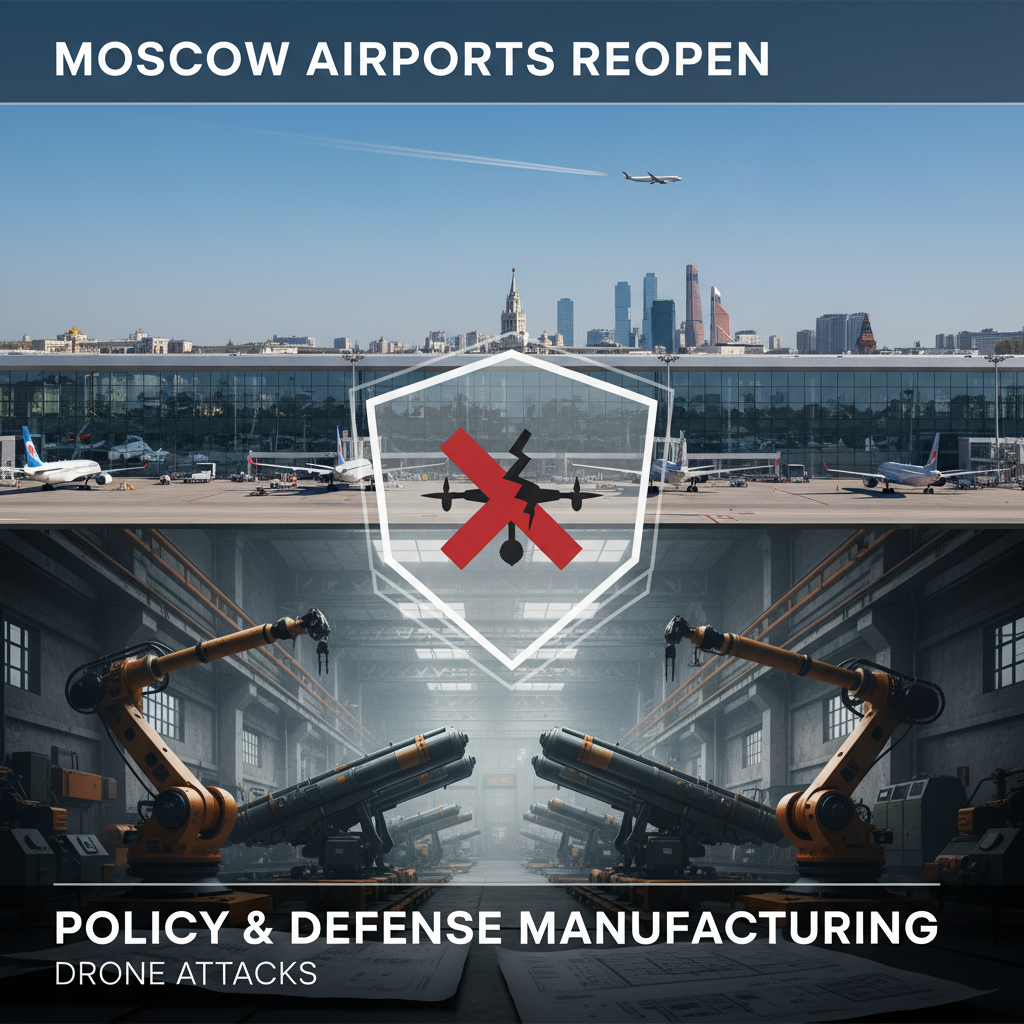
Moscow Airports Reopen After Drone Attacks: A Policy and Defense Manufacturing Perspective
The skies above Moscow, and the intricate machinery of its air travel, have once again become operational. After a period of disruption, Moscow airports have reopened, marking a significant development following a series of drone attacks. This incident, as reported by the Industry-Economic Times, underscores the complex interplay of policy, defense manufacturing, and national security in the modern era.
The Immediate Aftermath and Response
The immediate impact of the drone attacks was the temporary closure of Moscow’s airports. However, as confirmed by aviation authorities, operations resumed on Sunday evening. This swift return to normalcy, though welcome, masks the underlying concerns regarding the vulnerability of critical infrastructure. Mayor Sergei Sobyanin reported that 24 Ukrainian drones were intercepted en route to the capital, highlighting the scale of the threat. The Russian Defence Ministry further reported that 130 drones were either destroyed or intercepted across central Russian regions, indicating a widespread effort to counter the aerial threats. The successful deployment of air defense units played a crucial role in mitigating the damage and preventing potentially more severe consequences.
Policy Implications and Defense Manufacturing
The incident has far-reaching implications, particularly in the realms of policy and defense manufacturing. The attacks expose potential vulnerabilities in Russia’s air defense systems, spurring a need for enhanced protection measures. This could lead to increased investment in defense manufacturing, specifically in the development and deployment of more sophisticated anti-drone technologies. This, in turn, could trigger a cycle of innovation and counter-innovation, as both sides seek to gain an advantage in the ongoing aerial warfare. The policy response to such attacks is likely to be multifaceted, involving stricter regulations, enhanced security protocols, and international collaborations to combat drone proliferation.
Security and Aviation
The attacks have also brought the security of aviation infrastructure into sharp focus. Airports, as vital hubs of economic activity, are attractive targets for adversaries. The incident raises questions about the effectiveness of current security measures and the need for more robust, multi-layered defense systems. This includes not only physical barriers and surveillance systems but also advanced technologies capable of detecting, tracking, and neutralizing drones. The aviation industry faces the challenge of balancing security concerns with the need to maintain efficient operations and minimize disruptions to air travel.
The Broader Context
These events must be viewed within the larger context of the ongoing geopolitical tensions. The use of drones as a weapon has become increasingly prevalent, and the Moscow attacks are a stark reminder of the evolving nature of modern warfare. As such, the incident will likely influence defense strategies and international relations. The effectiveness of air defense systems, the policies governing the use of drones, and the potential for escalation are all critical factors to consider. The incident also underscores the importance of intelligence gathering and threat assessment in anticipating and responding to potential attacks. The ability to identify, analyze, and neutralize threats before they materialize is essential for protecting national interests and ensuring the safety of citizens.
Conclusion
The reopening of Moscow airports following the drone attacks is a significant development, but it does not erase the underlying concerns. The incident serves as a wake-up call, highlighting the need for vigilance, innovation, and strategic foresight. Policymakers, defense manufacturers, and security agencies must work collaboratively to address the challenges posed by drone warfare and protect critical infrastructure. The events in Moscow serve as a critical case study in the evolving landscape of modern security and the complex interplay of technology, policy, and international relations.
About the Author