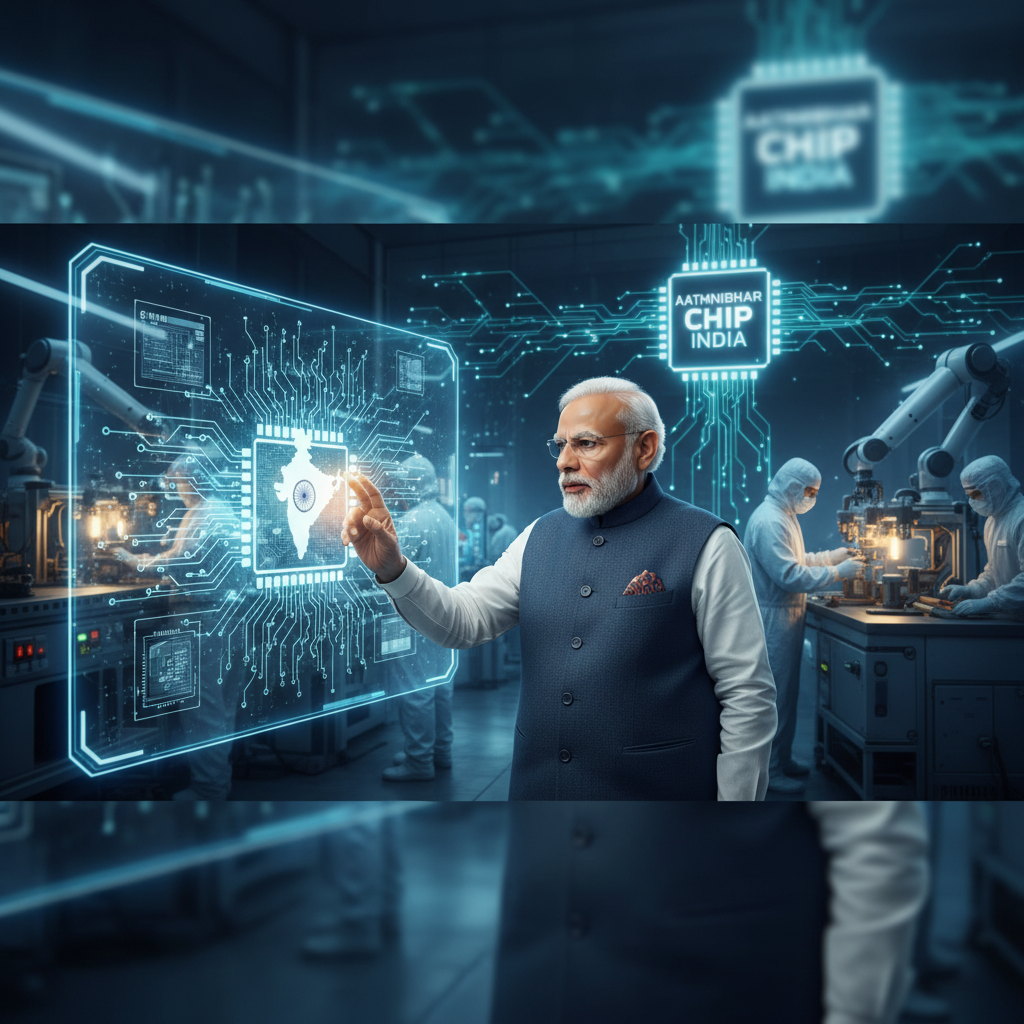
India’s ‘Aatmnirbhar’ Vision: PM Modi on Chip Manufacturing Self-Reliance
In a significant move towards technological self-reliance, Prime Minister Narendra Modi recently underscored India’s commitment to becoming ‘aatmnirbhar’ (self-reliant) in chip manufacturing. Speaking at the groundbreaking ceremony for the HCL-Foxconn project, the Prime Minister highlighted the strategic importance of domestic chip production, emphasizing its role in India’s economic and technological advancement.
The Vision of ‘Aatmnirbhar Bharat’
The Prime Minister’s remarks reflect a broader vision of ‘Aatmnirbhar Bharat’ (Self-Reliant India), a policy initiative aimed at boosting domestic manufacturing and reducing dependence on imports. This initiative is particularly crucial in the electronics sector, where the demand for semiconductors is rapidly increasing. As PM Modi stated, the goal is to ensure that India does not have to rely on other nations for manufacturing modern equipment, paving the way for a more resilient and self-sufficient economy.
Key Highlights from the Ceremony
The groundbreaking ceremony for the HCL-Foxconn project marks a concrete step towards realizing this vision. The collaboration between HCL and Foxconn, two major players in the technology and electronics manufacturing sectors, signifies a strategic partnership aimed at establishing a robust chip manufacturing ecosystem within India. This project is expected to create numerous jobs, stimulate technological innovation, and attract further investment in the sector. According to the Prime Minister, when India’s chip is ‘made in India’, the nation will be better equipped to meet its own needs and contribute to global supply chains more effectively.
Strategic Importance of Chip Manufacturing
The push for domestic chip manufacturing is driven by several strategic factors. Firstly, it reduces the vulnerability to disruptions in the global supply chain, as highlighted by recent geopolitical events. Secondly, it enhances India’s technological capabilities, enabling the country to design and manufacture cutting-edge electronic products. Moreover, a thriving chip manufacturing industry can spur innovation across various sectors, including automotive, telecommunications, and defense. This multifaceted approach is central to the Indian government’s policy framework for electronics manufacturing, as it creates a ripple effect of positive impacts across the economy.
Policy Implications and Future Outlook
The ‘aatmnirbhar’ initiative in chip manufacturing is supported by various policy measures, including financial incentives, infrastructure development, and skill-building programs. These efforts aim to create a conducive environment for both domestic and foreign companies to invest in India’s semiconductor industry. The collaboration between HCL and Foxconn is a prime example of how these policies are translating into tangible results. As India continues to invest in this sector, the country is poised to become a significant player in the global electronics market, contributing to both its economic growth and technological prowess.
Source: Top ET Manufacturing | Latest Manufacturing News : ETManufacturing.in
About the Author