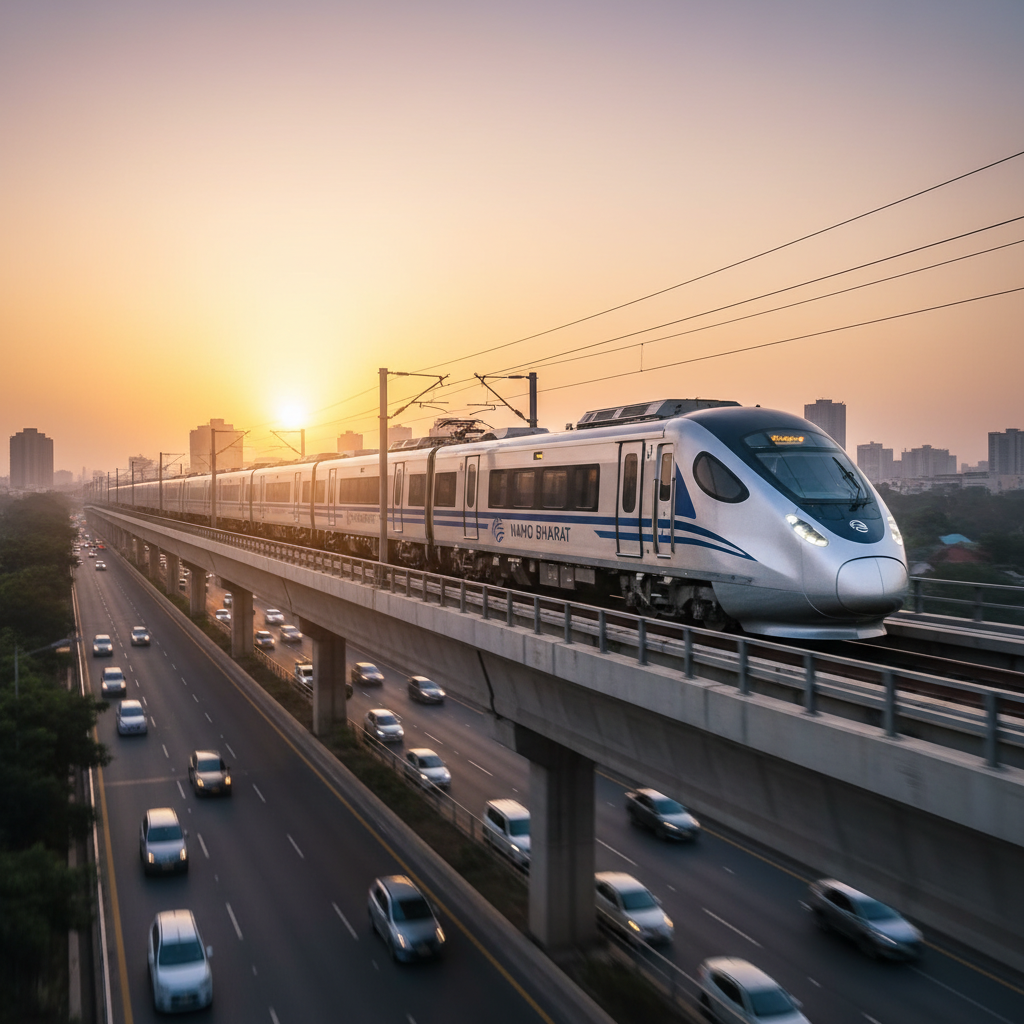
Namo Bharat: Revolutionizing Travel with India’s Fastest Metro
In a landmark achievement for India’s infrastructure, Prime Minister Narendra Modi inaugurated the Regional Rapid Transit System (RRTS), ushering in a new era of fast and efficient transportation. This initiative, highlighted by the operationalization of the Delhi-Ghaziabad-Meerut Namo Bharat corridor, promises to significantly reduce travel time between Delhi and Meerut. This advancement is not just about speed; it’s a strategic move to enhance regional connectivity and spur economic growth.
Connecting Delhi and Meerut in Record Time
The core of this transformation is the Namo Bharat corridor, an 82.15-km stretch that now seamlessly links Delhi with Meerut. The most striking benefit is the drastically reduced travel time. Commuters can now traverse this distance in a mere 55 minutes, a significant improvement over previous travel durations. This efficiency is further amplified by the operationalization of the Meerut Metro, which is now recognized as India’s fastest metro system. The RRTS and the Meerut Metro are poised to redefine the commuting experience for millions, enhancing their daily lives and opening up new opportunities.
A Boost to Infrastructure and Economic Growth
This project goes beyond just improving transport; it’s a catalyst for broader development. The launch includes various development projects dedicated to the nation, showing a commitment to infrastructure development. The integration of the RRTS with existing transport networks is expected to boost economic activities across the Delhi-Meerut region. The improved connectivity is likely to attract investments, stimulate local businesses, and create new employment opportunities, thereby contributing to the overall economic upliftment of the area. This initiative aligns with the government’s vision of fostering sustainable and inclusive growth.
The Role of Narendra Modi in Advancing Transportation
The vision and leadership of Prime Minister Narendra Modi have been instrumental in driving this project forward. His commitment to modernizing India’s infrastructure is evident in the rapid execution and operationalization of the RRTS. By prioritizing projects like the Namo Bharat corridor, the government is not only improving transportation but also enhancing the quality of life for citizens. This dedication to progress underscores a broader strategy of leveraging infrastructure to drive economic and social development across the nation. The successful launch of the RRTS is a testament to his administration’s focus on efficient and effective governance.
Looking Ahead: The Future of Rapid Transit in India
The successful launch of the Delhi-Meerut RRTS marks a pivotal moment in India’s journey toward advanced transportation systems. This project sets a benchmark for future infrastructure endeavors and highlights the potential for similar rapid transit solutions in other regions. As the Namo Bharat corridor continues to serve its purpose, it will provide valuable insights and lessons that can be applied to future projects, thereby enhancing the efficiency and effectiveness of urban and regional transportation networks nationwide. The focus on sustainability and user-centric design will ensure that these advancements are both environmentally friendly and accessible to all.
About the Author