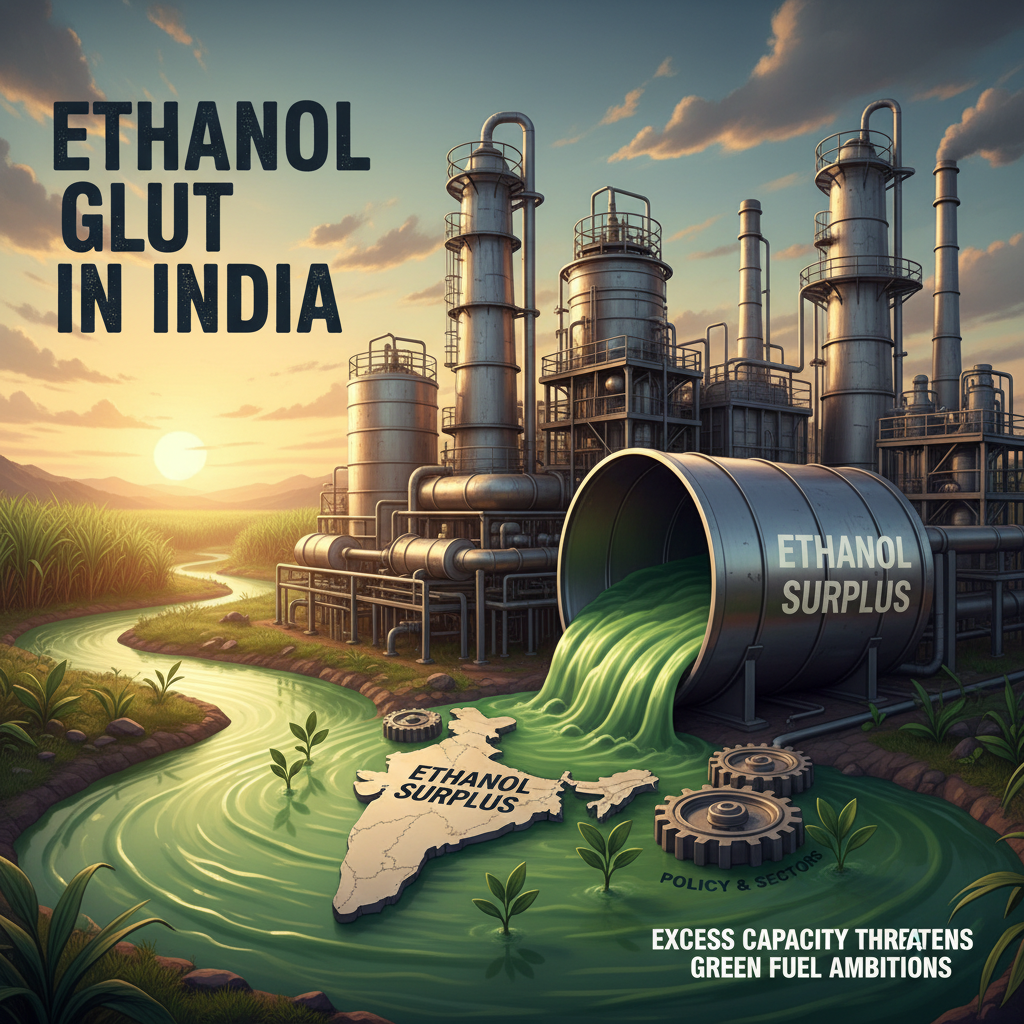
Ethanol Glut in India: Excess Capacity Threatens Green Fuel Ambitions
India’s ambitious push towards green energy is hitting a significant roadblock. The nation has aggressively expanded its ethanol production capacity, but a mismatch in demand is creating an unsustainable surplus. This situation casts a shadow over the future of a burgeoning Rs 50,000 crore industry, putting investments and the incomes of farmers at risk. This article delves into the intricacies of this emerging crisis, examining the challenges and potential solutions.
The Ethanol Conundrum
The core of the problem lies in the imbalance between supply and demand. India, driven by its green energy dream, has substantially increased its ethanol production capacity. The goal was to blend ethanol with petrol, reducing reliance on fossil fuels and cutting down on emissions. However, the anticipated demand for blending of ethanol with petrol hasn’t materialized to the extent predicted, resulting in an ethanol glut. This excess capacity is now creating a ripple effect, impacting various stakeholders.
Consequences of Surplus Ethanol
The surplus ethanol has several detrimental effects. Firstly, it threatens the financial viability of the investments made in establishing ethanol production capacity. Companies that invested heavily in anticipation of robust demand are now struggling to find buyers for their ethanol. Secondly, the surplus puts pressure on farmer incomes. Ethanol is primarily produced from sugarcane and other agricultural products, and reduced demand can lead to lower prices for these crops, affecting the livelihoods of farmers. This situation calls for immediate intervention to prevent further damage to the green fuel industry.
Policy Responses and Potential Solutions
Policymakers in India are now scrambling to address the crisis. The central challenge is to find ways to utilize the surplus ethanol. Several strategies are being considered. One approach is to increase the ethanol blending targets, aiming to compel a higher percentage of ethanol in petrol. However, increasing blending targets alone may not be sufficient to absorb the excess supply. Therefore, other avenues are being explored, including the possibility of diesel blending. Blending ethanol with diesel could open up a new market for the surplus, but this approach requires careful consideration of technical and regulatory aspects.
Looking Ahead: Navigating the Ethanol Crisis
The ethanol glut presents a complex challenge for India‘s green fuel industry. The situation requires a multi-pronged approach involving policy adjustments, market interventions, and technological innovations. Policymakers must act swiftly to ensure the long-term sustainability of the green fuel industry, protect investments, and safeguard farmer incomes. The success of India‘s green energy dream hinges on effectively navigating this crisis and finding sustainable solutions.
Key Entities and Their Roles
- India: The primary stakeholder, grappling with the challenges of excess ethanol production capacity.
- Policymakers: Responsible for formulating and implementing policies to address the ethanol glut.
- Farmers: Their incomes are directly impacted by the demand for and price of crops used in ethanol production.
- Green Fuel Industry: The sector that is at the heart of this crisis, with investments at stake.
About the Author