
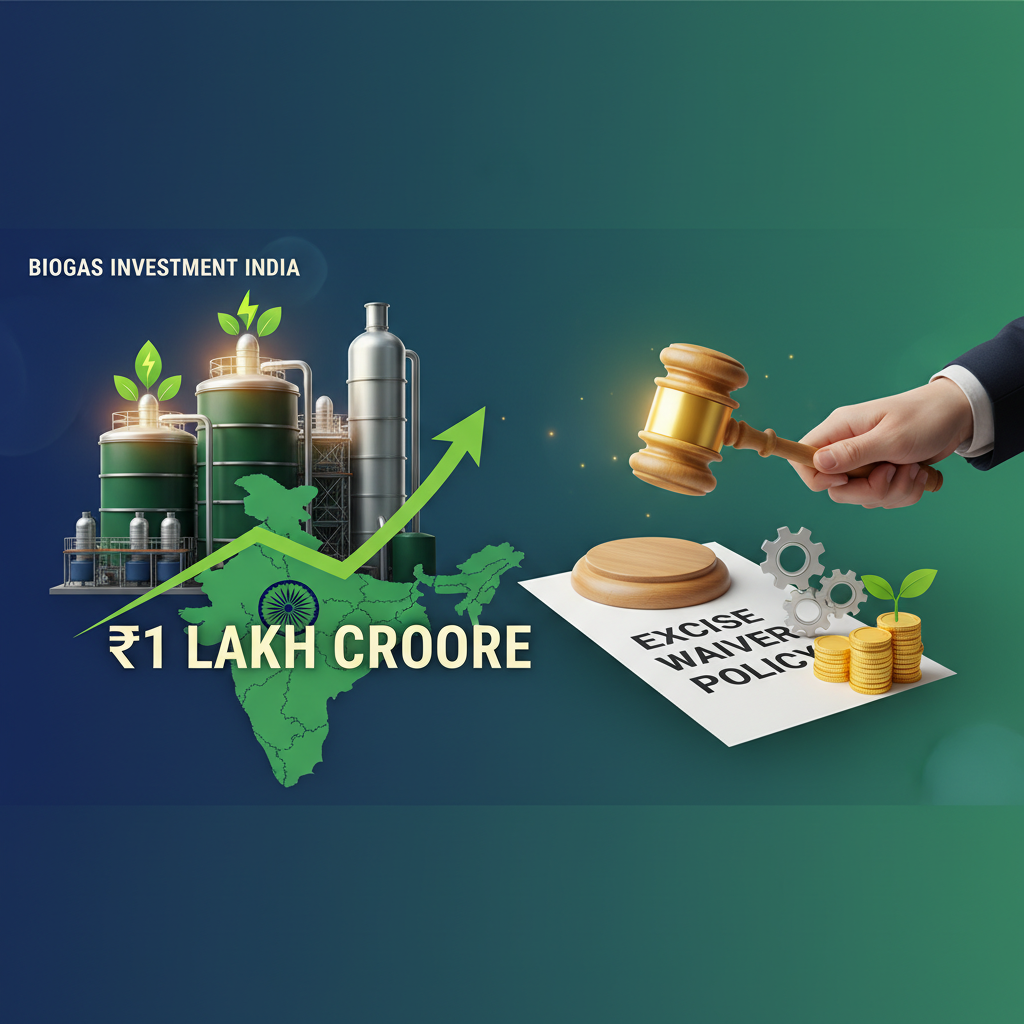
Biogas Excise Waiver: A Policy Boost for ₹1 Lakh Crore Investment in India
In a significant move for India’s renewable energy sector, the Indian Biogas Association (IBA) has emphasized the potential of the recently proposed excise duty waiver on biogas blended with compressed natural gas (CNG). This policy, announced in the Union Budget 2026, could be a game-changer, potentially unlocking investments of up to ₹1 lakh crore. The IBA’s perspective underscores the pivotal role of clear and stable policies in fostering growth within the renewable energy domain.
Unlocking Investment and Energy Transition
The core of this initiative lies in blending compressed biogas (CBG) with CNG. This approach is designed to accelerate India’s energy transition, a crucial step towards achieving the Net Zero target set for 2070. The excise duty waiver acts as an incentive, making the blending process more economically viable and attractive for investors. This, in turn, is expected to drive substantial investments into the biogas sector, supporting the nation’s broader sustainability goals.
The Role of Policy and Key Players
The IBA, as the leading industry body, highlights the importance of a clear and consistent policy framework. Such a framework is essential for building investor confidence and ensuring long-term project viability. The excise duty waiver, as a component of this framework, is a positive step. It is a signal of the government’s commitment to renewable energy. The success of this initiative hinges on the stable policy landscape it creates. This will encourage more participation from key players in the sector.
Compressed Biogas: A Key Component
Compressed biogas (CBG) is central to this strategy. Produced from various organic sources, CBG offers a sustainable alternative to conventional fossil fuels. By blending CBG with CNG, India can reduce its reliance on imported fuels. It also cuts down on greenhouse gas emissions. The excise duty waiver makes CBG a more competitive option. It encourages its wider adoption across the country. The integration of CBG into the existing CNG infrastructure is a practical step. It is a crucial one towards a cleaner energy future.
Impact and Future Outlook
The potential impact of this policy is significant. The anticipated ₹1 lakh crore investment could stimulate economic growth. It also creates numerous job opportunities within the renewable energy sector. Furthermore, it supports India’s commitment to the global effort to combat climate change. As India moves towards its Net Zero target by 2070, policies such as the excise duty waiver will play a crucial role in shaping the energy landscape. This will ensure a sustainable and environmentally responsible future.
Conclusion
The excise duty waiver on biogas blending with CNG represents a forward-thinking policy decision. This decision is poised to unlock substantial investment and accelerate India’s energy transition. With the backing of clear and consistent policies and the active participation of industry stakeholders, India is well-positioned to achieve its renewable energy objectives. This will help meet its Net Zero goals in the years to come.
Source: Industry-Economic Times
About the Author




![[A descriptive alt text for accessibility, max 125 characters]](https://globalsouthcapitaltimes.sortd.pro/wp-content/uploads/sites/7/2026/03/image-1772650928443-768x768.png)