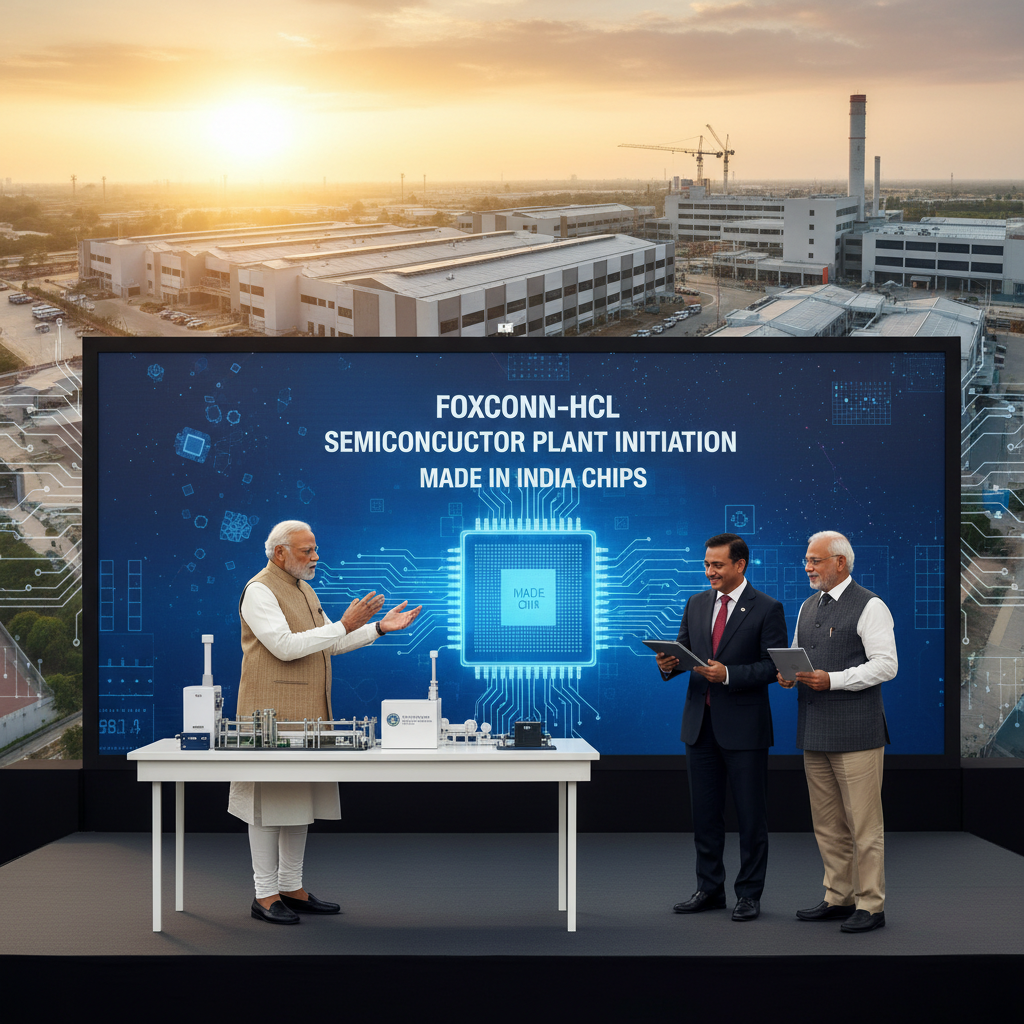
Modi Launches Foxconn-HCL Chip Plant: Paving the Way for ‘Made in India’ Semiconductors
In a significant step towards India’s technological and economic self-reliance, Prime Minister Narendra Modi laid the foundation stone for a semiconductor chip manufacturing plant in Jewar, Uttar Pradesh. This initiative, spearheaded by Foxconn and HCL, marks a pivotal moment in India’s ambition to become a major player in the global electronics manufacturing landscape. The project aligns with the ‘Made in India’ vision, aiming to reduce dependence on foreign imports and boost domestic technological capabilities.
A ‘Made in India’ Chip for a Developed India
The Prime Minister emphasized that a ‘Made in India’ chip is crucial for the nation’s development. This statement underscores the strategic importance of semiconductor manufacturing, which is the backbone of modern electronics. The project’s location in Jewar, Uttar Pradesh, is strategically chosen to leverage the state’s growing infrastructure and potential for economic growth. This plant is expected to contribute significantly to job creation and technological advancement within the region.
Twin-Track Approach: Software and Hardware Synergy
Modi highlighted India’s twin-track approach, focusing on both software and hardware development. This integrated strategy recognizes the symbiotic relationship between these two critical components of the technology sector. The government’s efforts extend to securing essential resources, including rare earth minerals, vital for semiconductor production. This comprehensive approach reflects a commitment to building a robust and resilient ecosystem for electronics manufacturing within the country.
Key Players and Strategic Importance
The collaboration between Foxconn and HCL brings together significant expertise and resources. Foxconn’s global manufacturing prowess, combined with HCL’s domestic market knowledge, creates a powerful synergy. The project’s success is expected to attract further investment in the electronics sector, fostering a virtuous cycle of innovation and growth. This initiative is a testament to India’s commitment to technological self-sufficiency and its ambition to become a global manufacturing hub.
Securing the Future: Rare Earth Minerals
Recognizing the critical role of rare earth minerals in semiconductor manufacturing, the government is taking proactive measures to secure these essential resources. This proactive approach ensures a stable supply chain and reduces vulnerabilities to external disruptions. By addressing the needs of the semiconductor industry, India is positioning itself to become a significant player in the global technology landscape.
The Broader Impact on Sectors
This initiative will have a cascading effect across various sectors, from electronics manufacturing to related industries. The development of a domestic semiconductor industry will spur innovation, create new job opportunities, and enhance the overall competitiveness of the Indian economy. The project is a clear indication of India’s commitment to technological advancement and its vision for a self-reliant future.
Conclusion
The foundation stone laying for the Foxconn-HCL chip manufacturing plant in Jewar is a landmark event, signifying India’s determination to lead in the semiconductor industry. Under the leadership of Prime Minister Narendra Modi, this project is poised to drive significant economic growth, technological advancement, and self-reliance. This venture not only signifies a strategic shift towards domestic manufacturing but also reinforces India’s ambition to be a key player in the global electronics market. The ‘Made in India’ chip is not just a product; it represents a vision for a developed and technologically advanced India. (Source: Economic Times)
About the Author