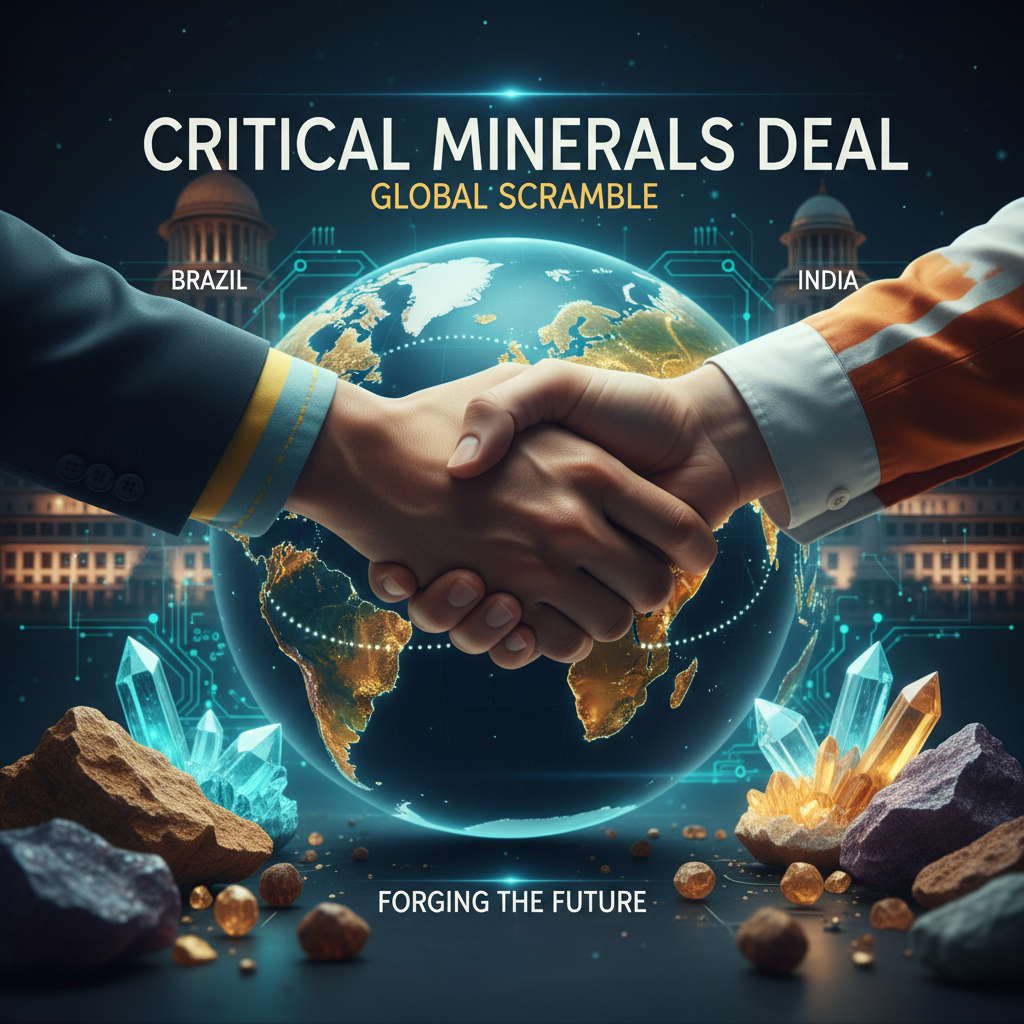
Brazil and India Forge Critical Minerals Deal Amidst Global Scramble
In a move that underscores the evolving geopolitical landscape and the strategic importance of resource control, India and Brazil are actively pursuing a deal focused on critical minerals and rare earths. The discussions, which took place in New Delhi on Saturday, saw Indian Prime Minister Narendra Modi and Brazilian President Luiz Inacio Lula da Silva leading the charge, aiming to bolster cooperation in this vital sector.
The Strategic Imperative: Why Critical Minerals Matter
The quest for a secure supply of critical minerals has intensified in recent years, driven by the increasing demand for these resources in various high-tech industries. From electric vehicles to renewable energy technologies, these minerals are indispensable. The motivation behind this deal is clear: to boost cooperation on critical minerals and rare earths. With China currently holding a dominant position in the production of rare earths, many nations are actively seeking alternative sources to mitigate supply chain risks and reduce reliance on a single entity.
Key Players and Their Objectives
The meeting between Narendra Modi and Luiz Inacio Lula da Silva highlights the commitment of both nations to strengthen their economic ties. For India, securing access to critical minerals is crucial for its ambitious growth plans, particularly in sectors like manufacturing and infrastructure. Brazil, rich in natural resources, sees this as an opportunity to expand its global economic influence and diversify its export markets. This cooperation signifies more than just a trade agreement; it’s a strategic partnership aimed at fostering mutual economic growth and resilience in a world where resource security is paramount.
The Mechanics of Cooperation: How the Deal Works
While the specifics of the deal are still under negotiation, the focus is on establishing a framework for cooperation in the exploration, extraction, and processing of critical minerals. This could involve joint ventures, technology transfer, and coordinated investment strategies. The “how” of the deal involves holding talks and seeking to boost cooperation. Such initiatives aim to create a more resilient and diversified supply chain, reducing vulnerabilities to geopolitical tensions and market fluctuations. The talks on Saturday are a crucial step toward realizing these objectives.
Geopolitical Implications and Broader Context
The pursuit of this critical minerals deal is happening against the backdrop of broader geopolitical shifts. The desire to diversify away from China reflects a global trend of countries reevaluating their reliance on single-source suppliers. This strategic move by Brazil and India not only strengthens their bilateral relationship but also contributes to the reshaping of global trade dynamics. By fostering cooperation, the two nations are sending a clear message: that they are committed to building a more diversified and secure supply chain for essential resources.
Looking Ahead
As negotiations progress, the details of the critical minerals deal will become clearer. The successful conclusion of this agreement could set a precedent for other nations seeking to secure their access to essential resources. This partnership between Brazil and India is a testament to the growing importance of strategic alliances in the 21st century and the shared goal of achieving economic self-reliance and geopolitical stability.
About the Author