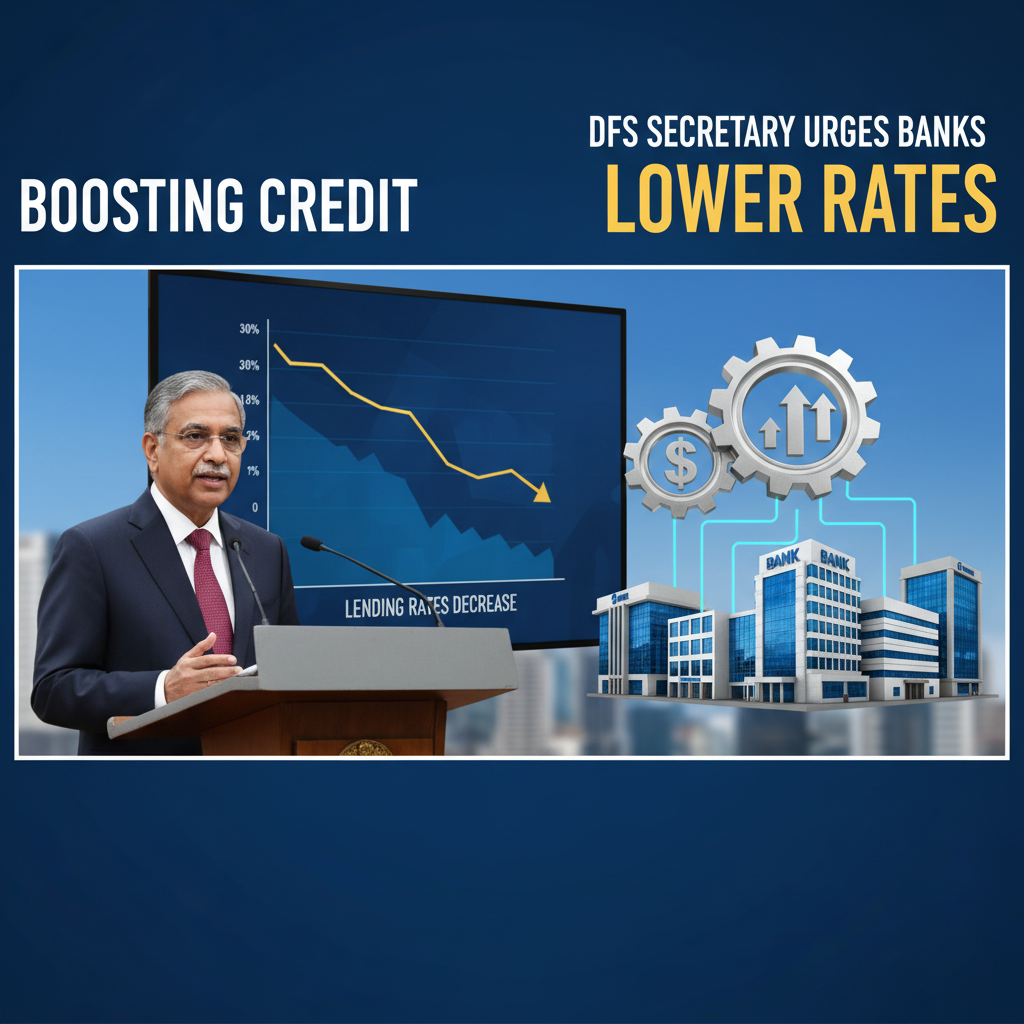
Boosting Credit: DFS Secretary Urges Banks to Lower Lending Rates
In a move aimed at bolstering economic growth and expanding financial inclusion, DFS Secretary M. Nagaraju has urged banks to consider a strategic shift in their lending practices. This call to action focuses on reducing lending rates for small borrowers and businesses to a range of 6-7%. The objective, as outlined by the Secretary, is to significantly enhance credit penetration within the Indian economy, aligning with the broader vision of Vikshit Bharat 2047.
The Rationale Behind Lowering Lending Rates
The core argument presented by DFS Secretary M. Nagaraju centers on the need to address the substantial gap in India’s bank credit to GDP ratio. Currently standing at 57%, this figure lags behind global benchmarks. By lowering lending rates, banks can make credit more accessible and affordable for a wider segment of the population, thereby stimulating economic activity. This approach is rooted in the understanding that lower interest rates can encourage greater borrowing, which in turn can fuel investment, create jobs, and foster overall economic expansion. The initiative targets small borrowers and businesses, recognizing their crucial role in driving economic growth and job creation.
Key Objectives and Expected Outcomes
The primary goal of this policy recommendation is to boost credit penetration. This involves increasing the proportion of the population and businesses that have access to and utilize bank credit. By making credit more accessible, the government hopes to empower small businesses to expand operations, invest in new technologies, and create more employment opportunities. Furthermore, the initiative is directly linked to the Vikshit Bharat 2047 vision, a comprehensive strategy aimed at transforming India into a developed nation by the year 2047. Enhanced credit penetration is viewed as a critical component in achieving this ambitious goal.
Strategic Implications for Banks
For banks, this recommendation presents both challenges and opportunities. The challenge lies in managing profitability while lowering lending rates. Banks will need to carefully assess their risk profiles, streamline operational efficiencies, and potentially explore innovative financial products to mitigate potential losses. However, the opportunity is significant. By increasing credit penetration, banks can expand their customer base, diversify their portfolios, and contribute to the overall economic growth of the country. This can lead to long-term sustainability and enhanced stakeholder value. DFS Secretary M. Nagaraju’s call to action encourages banks to prioritize lending to small borrowers and businesses, recognizing their essential role in the economic landscape.
Broader Economic Context and Policy Implications
This initiative is taking place within a broader macroeconomic context. The government is actively pursuing policies aimed at fostering financial inclusion and promoting economic growth. Lowering lending rates for small borrowers and businesses is just one component of this comprehensive strategy. Other related policies may include measures to improve the ease of doing business, enhance access to digital financial services, and provide financial literacy programs. The success of this initiative will depend on the collaborative efforts of banks, the government, and other stakeholders. By working together, they can create an environment that encourages responsible lending, promotes economic growth, and helps India achieve its vision of becoming a developed nation by 2047.
Source: Industry-Economic Times
About the Author