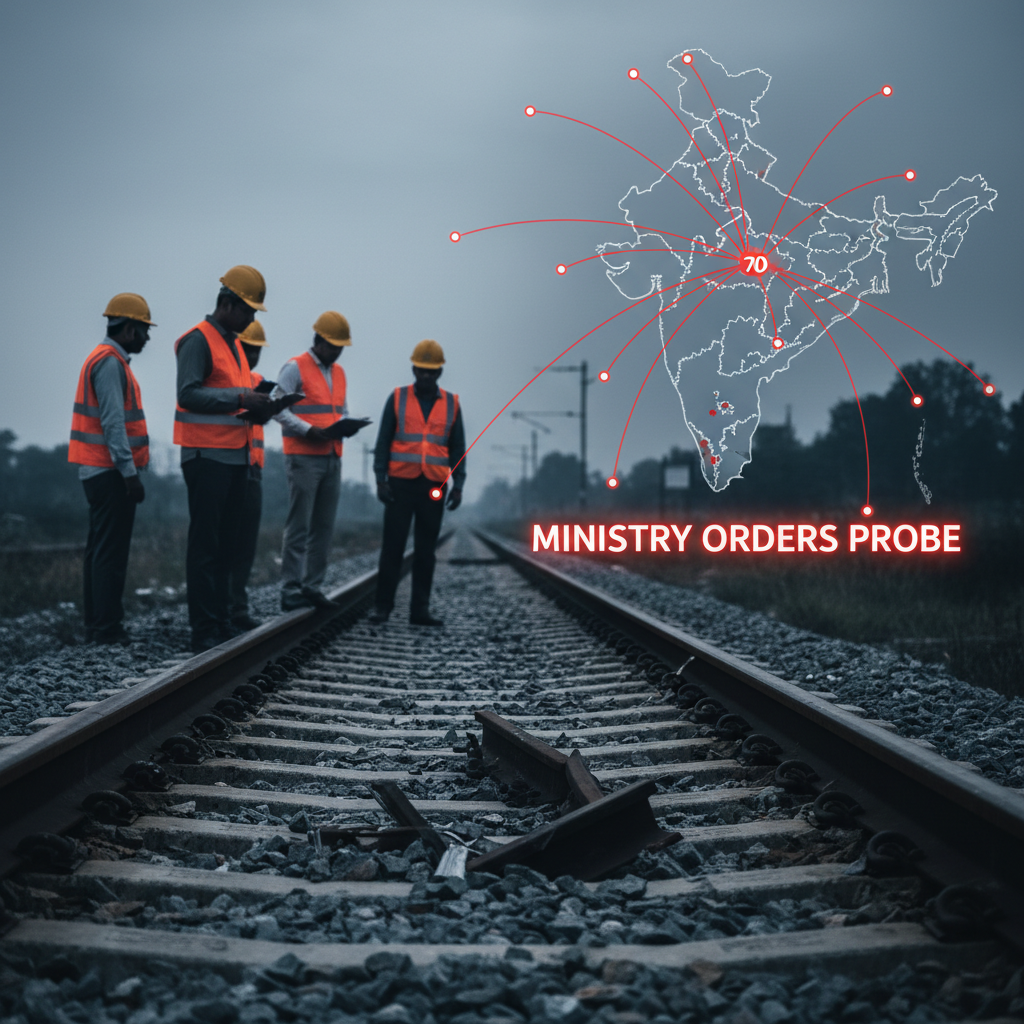
Investigate each case of rail fracture: Railway Ministry to DRMs amidst rising instances
In response to escalating safety concerns, the Railway Ministry has initiated a critical directive: a comprehensive investigation into the rising incidence of rail fractures. This move underscores the Ministry’s commitment to maintaining track integrity and preventing potential accidents. The focus is particularly sharp on fractures originating from bolt holes, a trend that warrants immediate attention and detailed analysis.
The Scope of the Investigation
The directive targets 70 rail divisions, tasking Divisional Railway Managers (DRMs) with the responsibility of investigating each fracture case. This proactive approach aims to identify the underlying factors contributing to these failures. A recent review revealed an increase in fractures stemming from bolt holes, potentially linked to improper chamfering. The investigation seeks to pinpoint such issues and implement corrective measures.
Key Areas of Focus
The primary objective of the investigations is to identify the root causes of rail fractures. The Railway Ministry, through this initiative, hopes to address the ‘why’ behind these incidents. The DRMs are instructed to examine several aspects, including:
- The quality of the rail material
- The maintenance practices of the track
- The impact of environmental factors
- The effectiveness of current inspection protocols
By thoroughly examining these areas, the Ministry aims to establish a clear understanding of the contributing factors to these fractures. This detailed analysis is crucial for formulating effective strategies to mitigate future incidents.
The Role of DRMs
Divisional Railway Managers (DRMs) are at the forefront of this initiative. They are responsible for overseeing the investigations within their respective divisions. This includes coordinating with relevant departments, collecting data, and analyzing findings. The DRMs’ diligence in this task is vital for ensuring the success of the investigation and the overall safety of the railway network. The ‘how’ of the investigation involves a meticulous examination of each fracture case, ensuring all potential factors are considered.
Potential Causes and Preventive Measures
The rise in fractures originating from bolt holes suggests that improper chamfering could be a significant contributing factor. Chamfering, the process of beveling the edges of a bolt hole, is essential for reducing stress concentrations and preventing cracks. If this process is not carried out correctly, it can lead to premature failure of the rail. The investigation will examine the chamfering processes and other potential contributing factors to rail fractures. The Ministry’s ‘why’ is to ensure track integrity.
Ensuring Track Integrity
The ultimate goal of this investigation is to ensure the integrity of the railway tracks. By identifying and addressing the causes of rail fractures, the Ministry aims to enhance the safety and reliability of the rail network. This proactive approach is essential for preventing accidents and maintaining public trust. The Railway Ministry’s focus on ‘what’ – rail fractures, investigation, bolt holes, and track integrity – is a testament to its commitment to passenger safety.
Conclusion
The Railway Ministry’s decision to investigate each case of rail fracture signifies a proactive step toward enhancing rail safety. By tasking DRMs with this critical responsibility, the Ministry is taking direct action to address a growing concern. This initiative, focusing on ‘where’ – the 70 rail divisions – will undoubtedly contribute to a safer and more reliable railway system for all. The ‘when’ of the recent review highlights the urgency of this matter, reinforcing the need for immediate action. The investigation’s results will be crucial in shaping future safety protocols and maintenance practices, ensuring that the Indian Railways continues to serve its passengers safely and efficiently. (Source: Industry-Economic Times)
About the Author