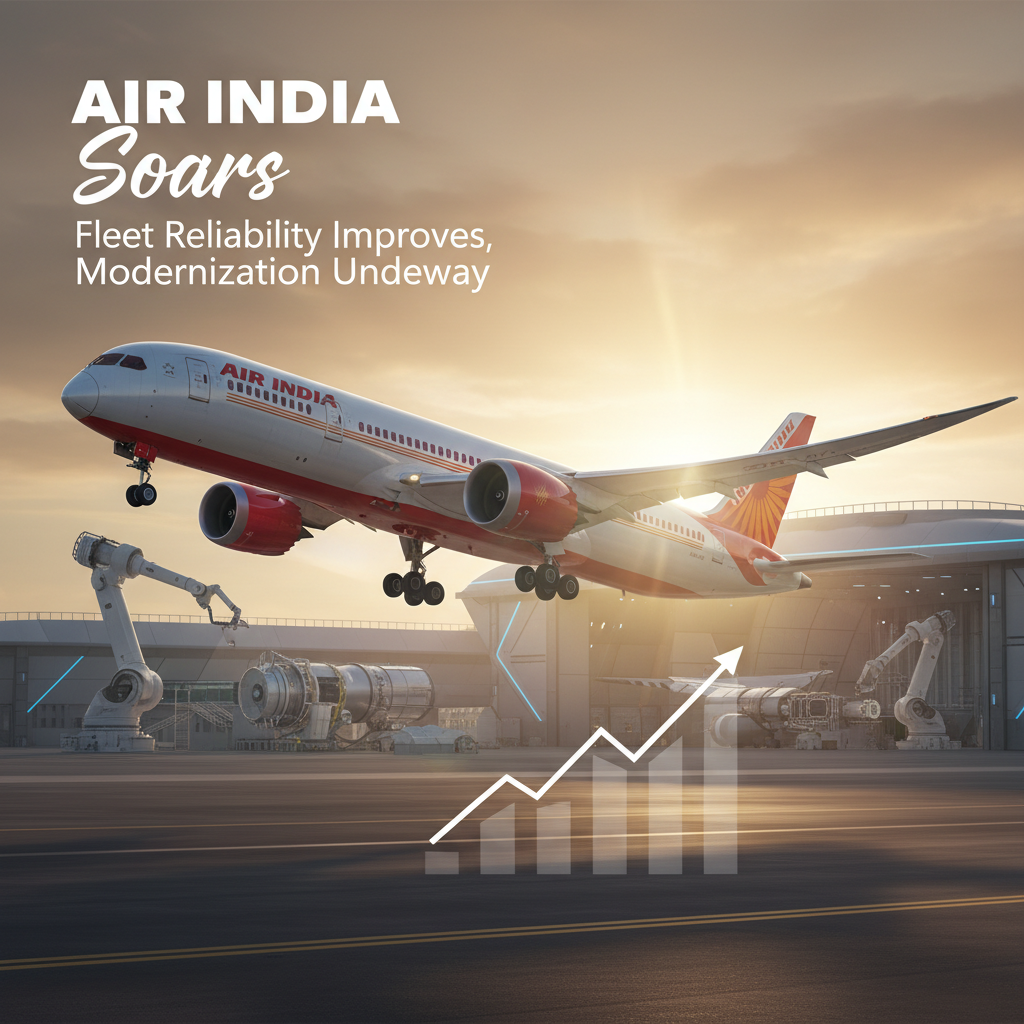
Air India Soars: Fleet Reliability Improves, Modernization Underway
In a significant boost for the airline, Air India’s CEO, Campbell Wilson, has announced a marked improvement in the reliability of the company’s aircraft fleet. This positive development highlights the ongoing efforts by Air India to enhance its operational efficiency and customer experience. The announcement reflects a strategic focus on fleet modernization and investment in critical resources.
Strategic Investments Drive Reliability
A core element of Air India’s strategy involves substantial investment in spare parts inventory. This proactive approach ensures that aircraft maintenance is streamlined and that potential downtime is minimized. This investment is crucial within the aerospace components sector, as it directly impacts an airline’s ability to maintain flight schedules and provide a dependable service. As Campbell Wilson points out, this initiative is a cornerstone of their reliability improvement plan.
The improvements in fleet reliability are not just a matter of financial investment; they also reflect a commitment to operational excellence. Air India is working diligently to optimize its maintenance schedules and to adopt best practices throughout its operational procedures. These efforts are designed to ensure that the airline’s aircraft are consistently in top condition, reducing the likelihood of delays and cancellations.
Fleet Modernization: A Key Priority
Alongside the investment in spare parts, Air India is undertaking a comprehensive fleet modernization program. A key component of this program involves upgrades to the Boeing 787 fleet. These upgrades are designed to enhance the aircraft’s performance, improve passenger comfort, and integrate the latest technological advancements. The modernization efforts are not limited to a single aircraft type; Air India aims to modernize over half of its wide-body aircraft by the end of 2026.
The airline’s ambitious goal of modernizing a significant portion of its wide-body aircraft fleet by the end of 2026 demonstrates a long-term vision for sustainable growth and competitiveness in the aviation industry. This commitment to modernization is a clear signal of Air India’s dedication to providing a superior travel experience and maintaining its position as a leading airline.
The Broader Impact on the Aviation Sector
Air India’s initiatives have a wider impact on the aviation sector. Increased fleet reliability and modernization efforts contribute to the overall stability and efficiency of the industry. These improvements benefit not only Air India’s passengers but also the aerospace components sector, which supplies the necessary parts and services to support these upgrades. The airline’s actions set a benchmark for other airlines to follow, promoting continuous improvement and innovation within the industry.
The positive developments at Air India, as highlighted by Campbell Wilson, underscore the importance of strategic investments and a forward-thinking approach to fleet management. The airline’s commitment to improving aircraft reliability and modernizing its fleet positions it well for future success in a competitive market. This involves not only financial investment but also a dedication to operational excellence and customer satisfaction.
In conclusion, the advancements at Air India reflect a strategic focus on enhancing operational efficiency and providing a superior travel experience. The investments in spare parts and the ongoing fleet upgrades, particularly for the Boeing 787, are pivotal to achieving these goals. With aspirations to modernize a significant portion of its wide-body aircraft by the end of 2026, Air India is poised to maintain its trajectory as a leading player in the aviation industry.
Source: Industry-Economic Times
About the Author