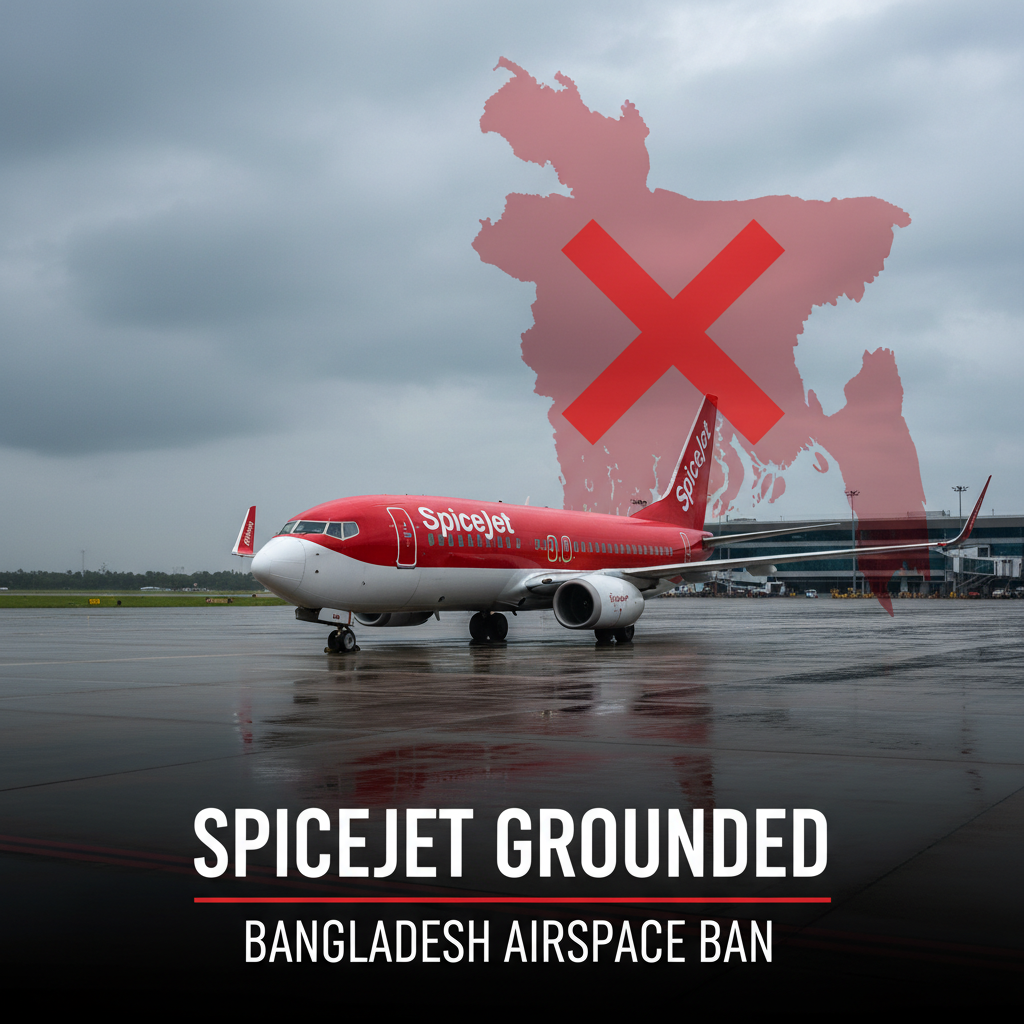
SpiceJet Grounded: Bangladesh Airspace Ban Adds to Airline’s Woes
In a move that underscores the ongoing challenges within the aviation sector, Bangladesh has barred SpiceJet from utilizing its airspace. This decision, stemming from unpaid air navigation charges, presents a significant hurdle for the budget carrier, forcing it to navigate longer routes and subsequently incur increased fuel costs. This situation, as reported by the Industry-Economic Times, comes at a critical juncture for SpiceJet, which has been grappling with financial difficulties despite recent fundraising efforts.
The Fallout of the Airspace Ban
The implications of this ban are multifaceted. The most immediate impact is the operational disruption it causes. SpiceJet is now compelled to reroute its flights, a process that adds both time and expense. Longer flight paths translate directly into higher fuel consumption, a substantial cost factor in the airline industry. This financial strain is particularly challenging for a budget carrier operating in a competitive market.
The Industry-Economic Times highlights the core issue: unpaid air navigation charges. These charges are essential for maintaining the safety and efficiency of air travel, and their non-payment can lead to serious consequences, as SpiceJet is now experiencing. The ban serves as a reminder of the financial pressures that airlines face, especially in the wake of global economic uncertainties and fluctuations in fuel prices.
SpiceJet’s Response and Future Outlook
SpiceJet has acknowledged the situation and is reportedly in communication with the Bangladeshi authorities to resolve the matter. The airline’s ability to swiftly address these outstanding dues is crucial for resuming normal operations. The longer the ban persists, the greater the impact on SpiceJet’s operational efficiency and financial stability. The recent fundraising efforts suggest a strategy to overcome these financial hurdles, but the airspace ban adds a layer of complexity to their recovery plan.
The airline industry is inherently susceptible to various economic and policy-related risks. This case highlights how policy decisions, such as the enforcement of air navigation charge payments by Bangladesh, can have a direct and immediate impact on an airline’s operations. The situation also underscores the importance of financial health and proactive management in the aviation sector.
Key Takeaways
- Policy Impact: The policy decision by Bangladesh to ban SpiceJet from its airspace directly affects the airline’s operational capabilities.
- Financial Strain: The unpaid air navigation charges are at the heart of the issue, leading to longer routes and increased fuel costs for SpiceJet.
- Operational Challenges: The overflying ban forces SpiceJet to navigate around Bangladesh’s airspace, affecting its flight schedules and efficiency.
- Industry Context: This situation reflects the broader challenges within the aviation sector, particularly in terms of financial stability and regulatory compliance.
The situation serves as a cautionary tale for airlines, emphasizing the need for robust financial management and proactive engagement with regulatory bodies. The outcome of the discussions between SpiceJet and the Bangladeshi authorities will be pivotal in determining the airline’s immediate operational future and its ability to navigate these financial headwinds.
Source: Industry-Economic Times
About the Author