India’s Oil Imports: Russia’s Share Declines Amidst Shifting Geopolitics
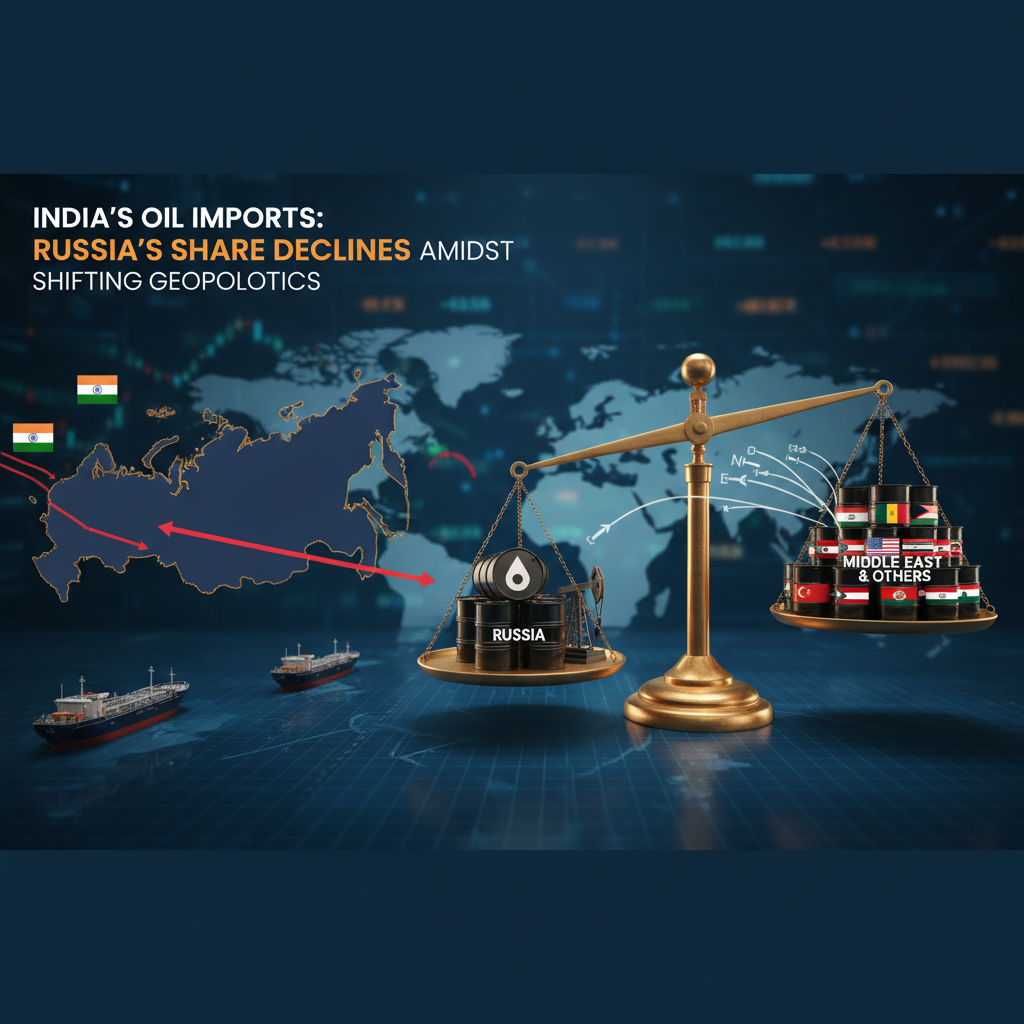
The energy market is a dynamic arena, and India’s recent oil import trends offer a fascinating case study in how geopolitical shifts and economic policies can reshape global trade patterns. According to recent data, India’s reliance on Russian oil has experienced a notable decline. This change reflects the country’s strategic navigation of Western sanctions and its proactive engagement in evolving trade agreements. The implications of this shift extend beyond mere statistics, touching upon broader issues of energy security, international relations, and economic strategy.
A Turning Point in Oil Imports
The month of January marked a significant turning point, with India recording its lowest level of Russian crude imports since late 2022. This decline is not an isolated incident but rather part of a larger trend, as India recalibrates its import strategies. The decrease in Russian oil imports coincides with a surge in imports from the Middle East, which has now reached its highest share in India’s oil supply. This shift underscores India’s adaptability and its ability to diversify its energy sources in response to changing global circumstances.
The Role of Sanctions and Trade Agreements
The primary drivers behind this transformation are multifaceted. Western sanctions imposed on Russia have played a significant role, influencing India’s decisions regarding its oil procurement. As India navigates these sanctions, it is also actively pursuing and implementing new trade agreements. These agreements provide avenues for diversifying its import portfolio and securing more favorable terms. The interplay of sanctions and trade agreements has created a complex environment, prompting India to strategically re-evaluate its energy partnerships.
The Middle East’s Growing Influence
The increasing dominance of Middle Eastern oil in India’s import mix is a noteworthy development. The Middle East, with its vast oil reserves and established trade relationships, is becoming an increasingly important partner for India. This shift is not merely a matter of convenience; it reflects a strategic decision to ensure a stable and diverse supply of crude oil. The Middle East’s growing influence highlights the region’s significance in the global energy market and its capacity to meet India’s evolving energy needs.
Looking Ahead
Industry analysts anticipate further declines in future oil imports from Russia. The long-term implications of this shift are considerable, affecting not only India’s energy security but also its geopolitical standing. As India continues to balance its relationships with various global partners, its energy import strategies will be critical in shaping its economic and diplomatic landscape. The future trajectory of India’s oil imports will likely be influenced by ongoing geopolitical dynamics, the effectiveness of trade agreements, and the country’s commitment to energy diversification.
In conclusion, the recent trends in India’s oil imports provide valuable insights into the intricate interplay of global economics, political strategies, and energy policies. The decline in Russian oil imports, coupled with the rising prominence of Middle Eastern sources, signals a fundamental shift in India’s energy landscape. As India moves forward, its ability to adapt and strategically manage its energy resources will be crucial in ensuring its economic growth and geopolitical influence. This is a story of adaptation, strategic foresight, and the ongoing evolution of global trade dynamics.
Source: Industry-Economic Times
About the Author