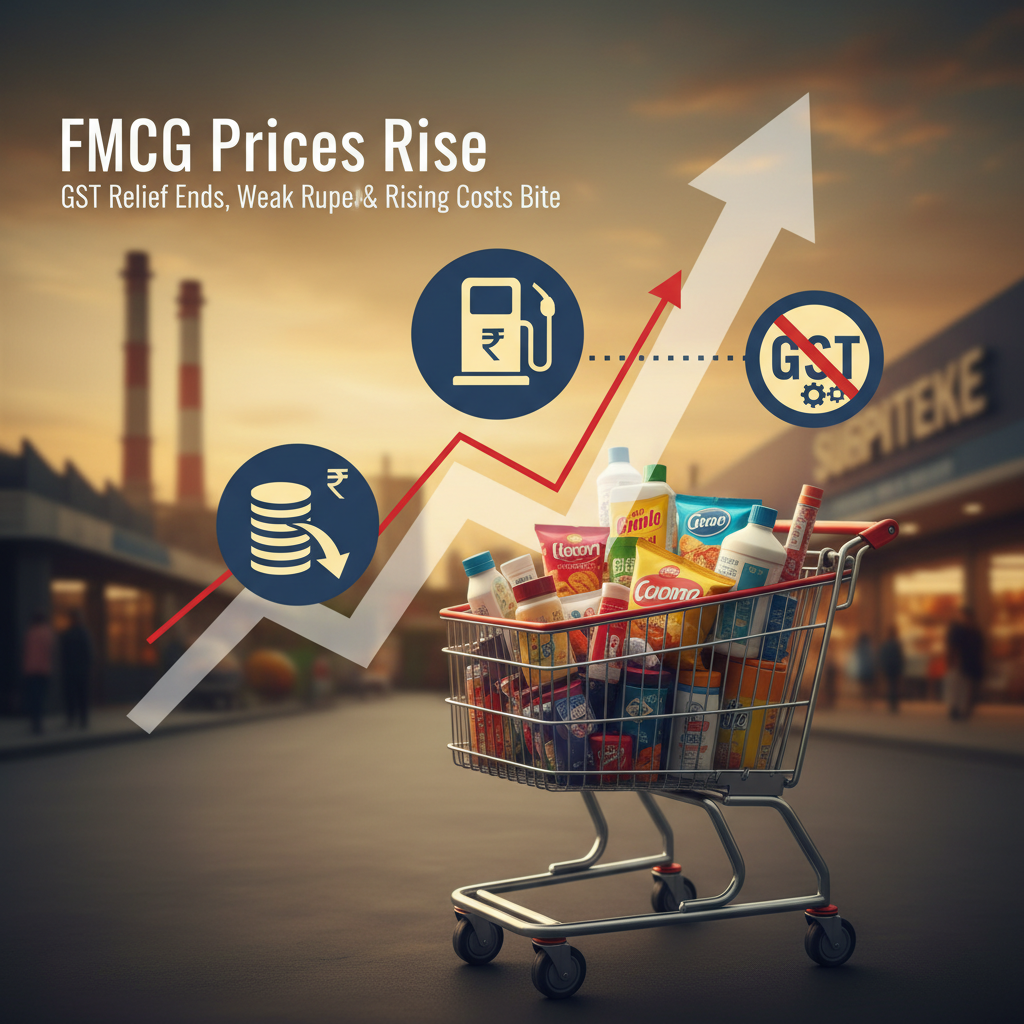
FMCG Prices Rise: GST Relief Ends, Weak Rupee & Rising Costs Bite
The consumer market is witnessing a notable shift as prices of Fast-Moving Consumer Goods (FMCG) are on the rise. This uptick, as reported by industry sources, is impacting a range of everyday items, signaling a challenging period for both consumers and businesses. The price adjustments, which have begun to surface on store shelves this quarter, are a direct consequence of several economic pressures.
The Perfect Storm: Why Prices Are Climbing
Several factors have converged to create this inflationary environment. The end of GST (Goods and Services Tax) relief, a weakened rupee, and escalating operational costs are the primary culprits. These elements are collectively squeezing the profit margins of FMCG companies, compelling them to pass on some of these costs to consumers. The situation underscores the intricate interplay of fiscal policy, currency valuation, and operational expenses within the FMCG sector.
GST Relief’s Demise
The cessation of GST relief is a significant contributor to the price increases. This fiscal adjustment has directly increased the tax burden on certain products, which, in turn, has led to higher retail prices. The impact is immediately felt at the point of purchase, affecting consumer spending habits.
The Weakening Rupee
A weak rupee has a cascading effect on the FMCG industry, particularly for companies that import raw materials or have foreign exchange exposures. As the rupee depreciates against other currencies, the cost of imported inputs rises, increasing the overall cost of production. This forces businesses to reassess their pricing strategies to maintain profitability. The fluctuating value of the rupee adds an element of unpredictability, making financial planning more complex for FMCG companies.
Rising Operational Costs
Beyond tax and currency fluctuations, FMCG companies face rising operational costs. These costs span various areas, including raw materials, manufacturing, logistics, and distribution. Increased expenses in these areas further erode profit margins, driving the need for price adjustments. The cumulative effect of these rising costs is a challenging operational environment for FMCG businesses.
What Products Are Affected?
The price increases are not limited to a specific category but are widespread across various FMCG segments. Distributors have reported that items such as detergents, hair oils, chocolates, noodles, and cereals are among those experiencing price hikes. This broad impact means that consumers will likely encounter higher prices for a significant portion of their daily necessities.
Impact on Consumers and the Economy
The rise in FMCG prices has a direct impact on consumer purchasing power. As prices increase, consumers may reduce their consumption of certain products or switch to cheaper alternatives. This shift can affect the overall demand for FMCG products, potentially impacting the sector’s growth. The broader economic implications include a rise in the cost of living, which can influence inflation rates and consumer confidence. The situation necessitates careful monitoring by policymakers and businesses alike to mitigate negative impacts.
The Road Ahead
The FMCG sector faces a complex landscape. The interplay of GST policies, currency valuations, and operational costs requires strategic responses from businesses. While price adjustments are a short-term solution, companies may need to explore other strategies, such as improving operational efficiencies, optimizing supply chains, and innovating with product offerings, to navigate the current economic challenges. The long-term success of FMCG companies will depend on their ability to adapt to these evolving market dynamics.
About the Author